
Sovereign AI Storage: How to Evaluate Residency and Control Claims
Sovereign AI conversations focus on GPUs and models, but AI data spends its life on storage — and the primary-storage vendors (the NetApp, Pure Storage, and Dell class) have all repositioned around sovereignty with AI-era platforms and residency claims. Marketing pages answer control questions with architecture diagrams. This page does the buyer's version: what sovereignty actually means at the storage layer, how the two platform architectures differ in their sovereignty implications, and the five verification questions to ask before a platform holds data your obligations call sovereign.
What Sovereignty Means at the Storage Layer
Storage-layer sovereignty is control over data at rest: where it physically resides, who administers the control plane, which jurisdiction reaches both, and where data services (replication, tiering, telemetry) execute — the decisions beneath compute sovereignty, because AI data spends its life on storage, not GPUs.
| Control question | What it decides | The failure it prevents |
|---|---|---|
| Where does data reside? | Physical location of the corpus | Region-selector compliance theater |
| Who administers the control plane? | Jurisdictional reach over management | Foreign-access exposure via administration |
| Where do data services execute? | Replication, tiering, snapshots, telemetry | Services silently crossing borders |
| What does hybrid extend? | Which clouds the control plane reaches | Hybrid convenience undoing boundary control |
The four questions are the storage translation of the sovereignty distinction the site established for compute: location alone is not control, because administrative reach and data-service execution can cross borders even for on-prem hardware. Analyst coverage of these platforms describes exactly this framing — solutions combining storage components for local data control, security boundaries, and residency compliance — which makes the questions the right lens regardless of vendor: sovereignty obligations imply storage answers, and storage marketing implies nothing until the questions are asked.
The Platform Approaches: Unified vs AI-Scale
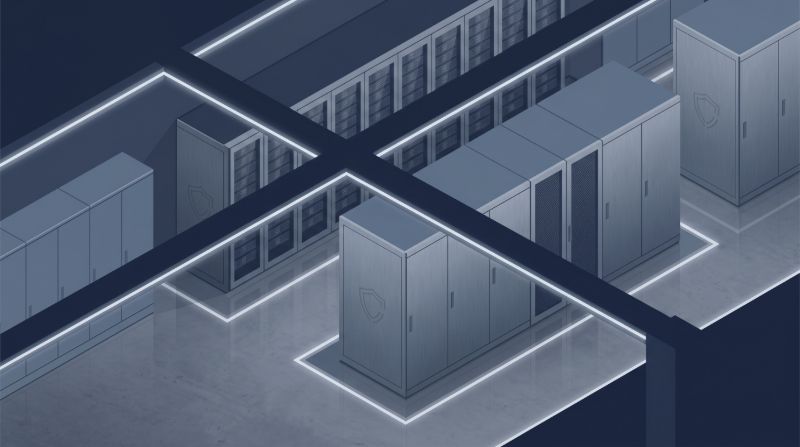
Two architectures dominate: unified primary-plus-AI storage under one operating system with hybrid-cloud reach, versus dedicated AI-scale platforms running alongside primary storage — a real difference for sovereignty because the unified path extends one governed control plane to AI workloads while the distinct path isolates them with separate boundaries to verify.
| Approach | How it works | Sovereignty implication |
|---|---|---|
| Unified (one storage OS spanning hybrid cloud) | Primary and AI data under one control plane with hybrid reach | One governed plane to verify — and one reach to check across clouds |
| Distinct AI-scale platform | Dedicated AI platform alongside primary storage | Isolation by construction — and a second boundary set to verify |
Vendor comparisons document the split directly: one vendor keeping primary and AI storage under a single operating system while the others run distinct AI-scale platforms alongside primary storage, with a further variant positioning dedicated AI data platforms for sovereign healthcare AI across hybrid environments. Neither approach wins on sovereignty in the abstract — the unified path concentrates governance (one plane to secure, one reach to verify), the distinct path isolates it (AI data's boundary is its own) — so the fit follows which failure mode matters more to your obligations: reach concentration or boundary multiplication. Classify any vendor offering by where its AI data services actually execute, not by the branding on the datasheet.
Five Verification Questions Before Trusting a Platform
Five questions separate control from features: where do the control plane and its telemetry run; which jurisdictions reach administration; can data services execute in-boundary; what does hybrid failover expose; and what happens to data services at contract exit — asked before the platform holds sovereign data, not after.
- Control plane and telemetry location: where the management plane runs and what it phones home — sovereignty of data with a foreign telemetry stream is sovereignty with a leak.
- Administrative reach: which jurisdictions can compel action from the vendor's administrators, regardless of where the data sits.
- In-boundary data services: can replication, tiering, and snapshots execute inside your boundary, or do they cross by default?
- Hybrid failover exposure: when failover reaches across clouds, what crosses and under whose control?
- Exit terms: at contract end, what happens to the data, the services, and the formats — the question that keeps sovereignty from ending with the invoice.
Each question converts a marketing claim into an architectural or contractual answer, and the pattern of answers — not any single one — is the evaluation: a platform with in-region data, foreign telemetry, and unclear exit terms is telling you exactly what it controls. For estates whose sovereignty programs conclude that AI compute belongs on boundary-controlled infrastructure, dedicated environments such as OneSource Cloud's private AI infrastructure are the compute-side complement — the storage questions above still apply to whatever those workloads write to.
FAQ
What does sovereign AI mean for storage specifically?
Control at rest: where data resides, who administers it, which jurisdiction reaches administration, and where the data services execute — because AI corpora spend their life on storage, these questions decide sovereignty more often than compute does.
Does on-premises storage make our AI sovereign?
It helps but does not conclude: administrative reach, telemetry destinations, and vendor update paths can cross borders even for on-prem hardware — the same region-versus-sovereignty distinction that applies to compute, answered at the storage layer with the same control questions.
Do we need sovereign storage if compute is already sovereign?
Usually yes, because sovereignty is a chain: sovereign GPUs writing to externally-administered storage surrender at rest what they won in motion — the storage layer needs the same control verification, which is why these platform questions belong in the same program.
Related Articles
Recommended Reading
latest articles
-
GPU Hardware Spares and RMA: Fleet Logistics and Downtime Risk
-
AI Infrastructure Energy Reporting: What Enterprises Should Measure
-
Balanced Bandwidth per GPU: Sizing Cluster Networks for LLM Training
-
Model Flops Utilization: Why Training Efficiency Collapses and How to Fix It
-
How Much Spare GPU Capacity Inference Needs for Failover
-
Multi-Cloud GPU Management Overhead: The Hidden Cost of Split Estates
-
ITAR vs CUI for GPU Hosting: Controls That Actually Differ
-
RAG Corpus Refresh: Reindexing, Re-Embedding, and Freshness Operations
-
How to Cut LLM Latency Without Buying More GPUs
-
Batch vs Real-Time LLM Inference: When to Batch and What It Saves