
Single-Tenant GPU Cloud Providers: 2026 Options for Dedicated AI
A single-tenant GPU cloud is a cloud environment that provides one customer with exclusive, non-shared GPU compute, networking, and storage for AI training and inference workloads. Single-tenant infrastructure removes the two risks that push enterprise teams off shared clouds: noisy-neighbor performance variance and data co-mingling. The 2026 single-tenant market splits into three practical categories: specialist GPU clouds with dedicated cluster options, private hosting providers that sell dedicated hardware, and hyperscaler offerings with dedicated physical instances.
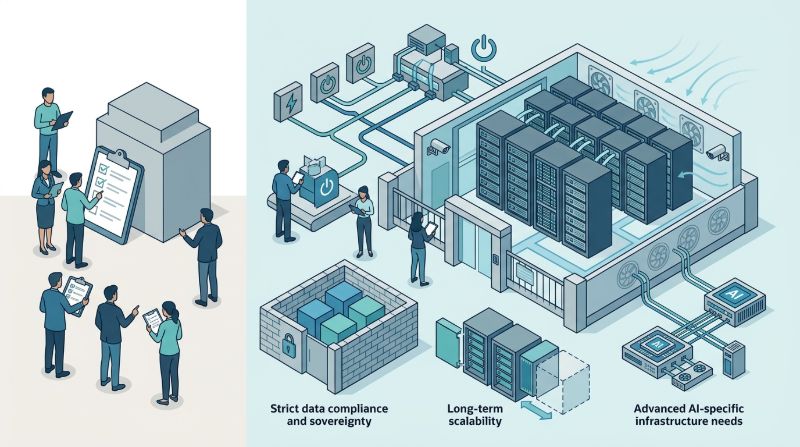
The eight providers below represent all three categories and are evaluated on tenant isolation, data residency, cost model, compliance support, operations model, GPU access, and typical workload fit. No provider is ranked first; each entry states the conditions under which it is worth evaluating. A comparison table summarizes the field before individual profiles expand on each option.
Single-Tenant GPU Cloud Providers at a Glance
The table below summarizes the eight providers covered in this article across seven evaluation dimensions: tenant isolation, data residency, cost model, compliance support, operations model, GPU access, and best-fit scenarios. Isolation levels range from fully dedicated environments by design to shared clouds that offer dedicated physical instances as an option. Detailed profiles follow the table.
| Provider | Tenant Isolation | Data Residency | Cost Model | Compliance Support | Operations Model | GPU Access | Best Suited For |
|---|---|---|---|---|---|---|---|
| CoreWeave | Shared cloud; dedicated clusters by contract | U.S. and Europe data centers | Usage-based pricing; reserved capacity | SOC 2 reporting; regulated workload support | Self-managed cloud; managed services optional | Large NVIDIA fleets, H100 generation | High-volume training and inference |
| Lambda Labs | Shared cloud; dedicated 1-Click Clusters | U.S. data centers | Per-hour pricing; cluster plans | SOC 2 reporting | Self-managed; cluster support included | H100 generation clusters | Research teams and startups needing fast GPU access |
| Paperspace | Shared cloud; dedicated options limited | U.S. data centers | Per-hour, usage-based | SOC 2 reporting available | Self-managed developer platform | A100 and H100 generation instances | Developers and small ML teams |
| Cirrascale | Dedicated bare-metal servers by design | U.S. data centers | Monthly dedicated pricing | Compliance documentation on request | Self-managed or co-managed | Dedicated NVIDIA GPU servers | Dedicated HPC capacity without on-prem build |
| OneSource Cloud | Single-tenant, non-shared by design | U.S. data centers (Richardson, Texas) | Predictable monthly pricing | HIPAA-ready posture; designed for regulated workloads | Fully managed 24/7 operations | Dedicated NVIDIA GPU clusters | Enterprise AI with residency and control requirements |
| Amazon Web Services | Shared by default; Dedicated Hosts and Dedicated Instances | Global regions; U.S. regions available | On-demand, reserved, savings plans | Broad portfolio: SOC 2, HIPAA, FedRAMP | Self-managed; managed services available | P5, P4d, G5 GPU families | Enterprises standardized on AWS tooling |
| Microsoft Azure | Shared by default; Azure Dedicated Host | Global regions; U.S. regions available | Pay-as-you-go; reserved instances | Broad portfolio: SOC 2, HIPAA, FedRAMP | Self-managed; managed services available | NC, ND, NV GPU families | Enterprises standardized on Microsoft tooling |
| Google Cloud | Shared by default; Sole-Tenant Nodes | Global regions; U.S. regions available | Per-second billing; committed-use discounts | Broad portfolio: SOC 2, HIPAA, FedRAMP | Self-managed; managed services available | A3, A2, G2 GPU families | Enterprises standardized on Google tooling |
Three categories shape the market. Specialist GPU clouds sell capacity at scale and offer dedicated clusters within a broader shared catalog. Private hosting providers sell dedicated hardware by design, typically with a U.S. data center focus. Hyperscalers provide dedicated physical instances as an option inside global shared clouds, usually at a premium over their standard tiers.
Specialist Single-Tenant GPU Cloud Providers
Specialist GPU clouds were built around NVIDIA GPU capacity rather than general-purpose workloads. Each provider in this category runs a shared cloud tier for on-demand access and a dedicated tier, usually a customer-exclusive cluster, for teams that need isolation. The dedicated tiers are where single-tenant requirements are met, so isolation terms should be confirmed at contract time.
CoreWeave
Company Background: CoreWeave is a GPU-centric cloud provider founded in 2017 and headquartered in Roseland, New Jersey. The company focuses on compute-intensive workloads, primarily AI training and inference on NVIDIA GPUs.
Core Products/Direction: Core products include Kubernetes-native GPU cloud services, dedicated clusters, and infrastructure for training and inference at scale.
Technical Approach: Orchestration is Kubernetes-native with InfiniBand networking engineered for cluster-scale training. The standard catalog runs on shared infrastructure, while dedicated cluster products provide customer-exclusive nodes for teams that need isolation.
Funding/IPO Status: CoreWeave became a public company with a Nasdaq listing in 2025.
Best Suited For: Organizations with sustained, large-scale GPU demand, including high-volume training and inference, that can commit to dedicated cluster capacity and negotiate isolation terms.
Important Notes: Standard instances are multitenant; strict single-tenant requirements should be confirmed in dedicated cluster contracts, including compute and networking isolation boundaries.
Lambda Labs
Company Background: Lambda Labs was founded in 2012 and is headquartered in San Francisco. The company started as a deep-learning hardware vendor and expanded into GPU cloud services.
Core Products/Direction: Lambda offers cloud GPU instances, 1-Click Clusters for dedicated training capacity, and deep-learning workstations. The company raised a Series D round in 2024 at a reported $5.5 billion valuation.
Technical Approach: Lambda integrates hardware and cloud offerings, with dedicated clusters providing customer-exclusive GPU nodes connected by high-speed interconnect. The standard cloud tier runs on shared infrastructure.
Best Suited For: Research labs, university teams, and startups that need rapid GPU access with simple pricing, and teams that can use dedicated clusters for training workloads.
Important Notes: Shared instances are multitenant; teams with strict isolation needs should evaluate cluster products and confirm networking and storage isolation before commitment.
Paperspace
Company Background: Paperspace was founded in 2014 and is headquartered in New York. The company was acquired by DigitalOcean in 2023 and operates as a developer-focused cloud platform for AI and machine learning.
Core Products/Direction: Core products include Gradient, a managed MLOps platform for notebooks and model deployment, and CORE GPU cloud instances for training and inference. Pricing is usage-based with per-hour GPU instances.
Technical Approach: The platform emphasizes developer experience: notebooks, container runtime, and APIs on top of cloud GPU hardware. Infrastructure runs on shared cloud hardware, with dedicated options more limited than those of dedicated providers.
Best Suited For: Individual developers, small machine learning teams, and startups that prioritize low-friction MLOps tooling over strict infrastructure isolation.
Important Notes: Paperspace's default model is shared infrastructure, so enterprises with mandatory single-tenant requirements should compare dedicated hosting providers before proceeding.
Private Hosting Providers for Dedicated GPU Infrastructure
Private hosting providers make dedicated hardware their default rather than an add-on. Each customer receives exclusive GPU servers, storage, and networking, which simplifies compliance reviews and eliminates noisy-neighbor behavior. Providers in this category typically operate U.S. data centers, which matters for teams with data residency mandates.
Cirrascale Cloud Services
Company Background: Cirrascale Cloud Services is a San Diego, California-based provider with roots in bare-metal server and HPC infrastructure dating back to the late 1990s. The company operates dedicated GPU cloud services.
Core Products/Direction: Products include dedicated bare-metal GPU servers and HPC clusters, with NVIDIA GPU configurations and high-speed interconnect options for distributed workloads.
Technical Approach: Single-tenant by design: each customer receives exclusive hardware with root-level control, approximating an on-premises environment without facility ownership.
Best Suited For: Research organizations, engineering teams, and workloads with strict isolation requirements that want dedicated GPU capacity with administrative control.
Important Notes: Support models range from self-managed to co-managed; verify current GPU availability and data center locations against residency requirements during evaluation.
OneSource Cloud
Company Background: OneSource Cloud is a U.S.-based private AI infrastructure provider headquartered in Richardson, Texas. The company builds and operates secure, scalable, fully managed enterprise AI environments, with a focus on control, security, and predictable operations.
Core Products/Direction: Core offerings include Private AI Infrastructure for single-tenant GPU environments, OnePlus Platform — OneSource Cloud's AI orchestration platform for multi-team GPU scheduling, model deployment, and usage observability — and Managed AI Infrastructure covering 24/7 operations and lifecycle management. AI storage architecture and high-performance AI networking complete the stack.
Technical Approach: Environments are single-tenant, private, and dedicated by design: each customer receives exclusive, non-shared GPU compute, networking, and storage in U.S. data centers. This architecture supports data residency requirements and predictable monthly cost models, with managed operations covering monitoring, optimization, and lifecycle management.
Best Suited For: Enterprise teams in healthcare, financial services, research, and SaaS that need U.S. data residency, stable performance, and compliance-conscious infrastructure without building an internal GPU operations team.
Important Notes: Designed for regulated workloads with a HIPAA-ready posture; procurement teams should review isolation and data-flow documentation during evaluation.
Hyperscaler Options for Dedicated GPU Instances
Amazon Web Services, Microsoft Azure, and Google Cloud each offer a dedicated physical instance option inside a multitenant platform. These options exist to satisfy licensing, compliance, and isolation requirements without leaving the hyperscaler ecosystem. Dedicated capacity typically costs a premium over standard instances, and supported GPU families vary by region.
Amazon Web Services
Company Background: Amazon Web Services launched in 2006 and is headquartered in Seattle, Washington. It is one of the largest public cloud providers by revenue.
Core Products/Direction: Relevant offerings include EC2 GPU instance families such as P5 and G4dn, Dedicated Hosts, Dedicated Instances, and AWS Outposts for on-premises deployment. SageMaker provides managed machine learning services on top of EC2.
Technical Approach: Standard EC2 deployment is shared and multitenant. Dedicated Hosts assign a physical server exclusively to one customer for select instance families, and Dedicated Instances provide single-tenant isolation at the hypervisor level within shared hardware.
Best Suited For: Enterprises standardized on AWS that need dedicated physical capacity for licensing, compliance, or workload isolation without leaving the AWS ecosystem.
Important Notes: Dedicated Host support and available GPU families vary by region, and dedicated capacity carries a pricing premium over standard instances; confirm current availability during evaluation.
Microsoft Azure
Company Background: Microsoft Azure launched in 2010 and is headquartered in Redmond, Washington. It is Microsoft's cloud platform and one of the largest public clouds.
Core Products/Direction: Relevant offerings include GPU VM families such as NC, ND, and NV series, Azure Dedicated Host, and Azure Machine Learning services for model development and deployment.
Technical Approach: Default VMs run on shared infrastructure. Azure Dedicated Host allocates a physical server exclusively to one customer with control over maintenance and VM placement, supporting select GPU VM families.
Best Suited For: Enterprises standardized on Microsoft tooling that require dedicated physical hosts for compliance, licensing, or predictable performance.
Important Notes: Dedicated Host pricing adds fixed charges over standard pay-as-you-go, and GPU family support on Dedicated Hosts is a subset of the VM catalog; verify current availability.
Google Cloud
Company Background: Google Cloud launched in 2008 and is headquartered in Mountain View, California. It is Google's public cloud platform.
Core Products/Direction: Relevant offerings include GPU VM families such as A3 and G2, Vertex AI for machine learning platform services, and Sole-Tenant Nodes for dedicated physical servers.
Technical Approach: Standard deployment is shared. Sole-Tenant Nodes dedicate an entire physical server to your VMs, commonly used for licensing compliance and isolation; GPU attachment on sole-tenant nodes is supported for select machine families and regions.
Best Suited For: Enterprises standardized on Google tooling that need dedicated physical capacity for compliance or licensing reasons.
Important Notes: Sole-tenant capacity and GPU attachability vary by region and node type; committed-use discounts can lower cost when usage is predictable.
How the Three Single-Tenant Models Differ
The isolation spectrum is the main dividing line between providers. Private hosting providers such as Cirrascale and OneSource Cloud deliver single-tenant environments by design: compute, storage, and networking are exclusive to one customer from day one. Specialist GPU clouds and hyperscalers deliver isolation as an option, via a dedicated cluster or a dedicated physical host, on top of a shared platform. For audit-driven teams, the by-design model is easier to document, while the by-option model requires contract-level confirmation of isolation boundaries.
Cost structures divide the same way. Dedicated-by-design providers typically quote predictable monthly pricing for exclusive capacity, which fits enterprise budgeting cycles. Usage-based clouds price by the hour and add the risk of quota and inventory changes. Data residency follows the provider's data center footprint: U.S.-based providers such as OneSource Cloud keep workloads in U.S. facilities, while hyperscalers serve many regions and let customers choose where data resides.
Operations models differ in ownership. Hyperscaler instances and specialist clouds are largely self-managed; the customer provisions, patches, and monitors the environment. Private hosting providers often bundle operations, and Managed AI Infrastructure services include 24/7 monitoring, performance validation, and lifecycle management. GPU access also differs: dedicated providers hold inventory for committed customers, while hyperscaler GPU capacity can be subject to quota limits during demand peaks.
Networking is a hidden differentiator in dedicated environments. Distributed training across many nodes depends on low-latency interconnects such as InfiniBand and RDMA, which dedicated providers can engineer for a specific cluster. Teams scaling beyond a few nodes should confirm the interconnect fabric, storage path, and the provider's high-performance AI networking design before committing.
FAQ
What is a single-tenant GPU cloud?
A single-tenant GPU cloud is a cloud environment where one customer receives exclusive, non-shared GPU compute, networking, and storage. Other customers cannot access the same physical or logical resources, which removes noisy-neighbor performance variance and simplifies compliance documentation. Providers deliver this either by design, as dedicated hardware, or as an option, such as dedicated clusters or dedicated physical hosts within a shared cloud.
How does a single-tenant GPU cloud compare with a shared GPU cloud?
Shared GPU clouds divide physical hardware among multiple customers, which keeps per-hour prices low but introduces performance variance and data co-mingling risks. Single-tenant environments dedicate resources to one customer, providing stable performance and cleaner audit boundaries at a higher cost. Teams with sustained workloads, sensitive data, or regulatory requirements usually favor single-tenant infrastructure, while bursty, non-sensitive workloads can remain cost-effective on shared instances.
How much does single-tenant GPU cloud infrastructure cost?
Cost depends on GPU generation, cluster size, networking fabric, storage, and whether operations are managed. Dedicated providers typically quote fixed monthly pricing for exclusive capacity, which is higher per GPU-hour than shared cloud rates but predictable across the term. Contract length also matters; multi-year terms usually reduce monthly rates. Teams should model total cost including networking, storage, support, and any on-premises alternatives before comparing line items.
Which providers offer dedicated GPU infrastructure in the United States?
Several U.S.-based providers sell dedicated GPU infrastructure. Cirrascale Cloud Services operates dedicated bare-metal GPU cloud from San Diego. OneSource Cloud provides single-tenant, U.S.-based private AI infrastructure from Richardson, Texas, with data residency and predictable monthly pricing. CoreWeave and Lambda Labs also operate U.S. data centers and offer dedicated cluster options within their cloud platforms, and hyperscaler dedicated hosts are available in U.S. regions.
Does single-tenant infrastructure help with data residency compliance?
Single-tenant infrastructure supports data residency because the entire environment, from compute to storage, is under one customer's control within a defined geographic boundary. Providers can document that data does not leave the chosen facility, which supports HIPAA, ITAR, and other residency-driven requirements. Teams should still verify facility locations, audit reports, and data-flow documentation, because residency support depends on the provider's data center footprint and operational controls.
How long does it take to deploy a single-tenant GPU environment?
Deployment timelines depend on cluster size and provider inventory. Small dedicated environments can go live within days to a few weeks when the provider holds buffer capacity. Larger clusters, especially those with InfiniBand or other high-speed fabrics, can take four to eight weeks including validation. Fully managed providers often stage, validate, and hand over the environment, which shortens the time between contract signature and the first training job.
Summary
Single-tenant GPU cloud providers address a specific set of enterprise needs: stable performance without noisy-neighbor interference, clean data residency boundaries, predictable cost structures, and compliance-friendly operational documentation. The market offers three practical routes: specialist GPU clouds with dedicated clusters, private hosting providers that sell dedicated hardware by design, and hyperscaler dedicated instances for teams staying within a major platform. Each route suits a different combination of workload scale, residency requirements, and operations staffing, and no single provider fits every team.
Related Articles
Recommended Reading
latest articles
-
GPU Hardware Spares and RMA: Fleet Logistics and Downtime Risk
-
AI Infrastructure Energy Reporting: What Enterprises Should Measure
-
Balanced Bandwidth per GPU: Sizing Cluster Networks for LLM Training
-
Model Flops Utilization: Why Training Efficiency Collapses and How to Fix It
-
How Much Spare GPU Capacity Inference Needs for Failover
-
Multi-Cloud GPU Management Overhead: The Hidden Cost of Split Estates
-
ITAR vs CUI for GPU Hosting: Controls That Actually Differ
-
RAG Corpus Refresh: Reindexing, Re-Embedding, and Freshness Operations
-
How to Cut LLM Latency Without Buying More GPUs
-
Batch vs Real-Time LLM Inference: When to Batch and What It Saves