
AI Infrastructure for Research Labs: IP, Control, and Staged Capacity
Private research labs — biotech, materials, computational chemistry, the R&D arms of industry — have become serious AI consumers, and their infrastructure question differs from both enterprises and universities: the data is unpublished and IP-bearing, the teams are small with no platform engineers, and the funding arrives in cycles. This page lays out the planning view those conditions demand: the four workload classes a lab actually runs, the IP boundary decision that shapes everything else, and the staged path from cloud validation to dedicated capacity with operating models a small team can sustain.
What a Research Lab Actually Runs: The Workload Classes
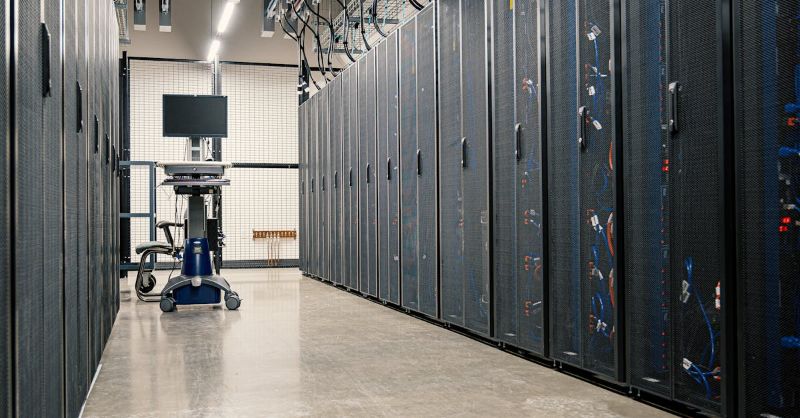
Private labs run four workload classes with different shapes: domain-model inference and fine-tuning (steady, moderate), simulation and molecular modeling (spiky, long-running), instrument-generated data processing (event-driven bursts around experiments), and exploratory analysis (small, sporadic) — the capacity plan is the allocation across these shapes, not one number.
| Class | Examples | Capacity shape |
|---|---|---|
| Domain-model inference and fine-tuning | Proprietary models over lab data; adapting open models to the domain | Steady baseline with periodic training pushes |
| Simulation and molecular modeling | Docking, dynamics, physics-based screens | Spiky, long-running jobs that queue |
| Instrument data processing | Sequencing, imaging, spectroscopy pipelines | Event-driven bursts tied to experiments |
| Exploratory analysis | Notebooks, prototype models, literature-scale experiments | Small, sporadic, elasticity-hungry |
Industry reporting on biotech AI compute catalogs the same use-case families — drug discovery, molecular simulation, clinical-adjacent analysis — and the catalog matters because each class buys capacity differently: the steady class justifies committed capacity, the spiky classes justify queue-and-burst designs, and the exploratory class should never own hardware. Lab missions differ — a wet-lab-adjacent informatics group and a computational-first team allocate differently — so inventory your own projects into the classes before sizing anything.
The IP Boundary: What Never Leaves the Lab
The lab's IP position decides its boundary: unpublished datasets, proprietary models, and candidate-molecule or patient-adjacent data typically justify a boundary where compute is dedicated and data paths are contracted — while public-data exploration and published-baseline work can run anywhere; the classification is a one-time exercise that pays off in every later capacity decision.
| Data or workload | Typical classification | Placement implication |
|---|---|---|
| Published baselines, public datasets, open models | Unrestricted | Anywhere — cheapest elastic capacity wins |
| Internal experimental results | Confidential | Contracted environments at minimum |
| Unpublished datasets and candidate compounds | IP-bearing | Dedicated boundary: controlled compute, contracted data paths |
| Patient-adjacent or regulated data | Regulated | Dedicated boundary plus the applicable compliance framework |
Private-infrastructure coverage for biomedical models states the motivation directly: dedicated GPU hosting exists to sidestep the data and IP concerns of public cloud, and hardware vendors position on-premise offerings for the same reason. The classification exercise is what turns that motivation into policy — two columns (inside the boundary, outside it), every project placed, reviewed annually. IP and confidentiality determinations involve counsel and funders; the infrastructure consequence of the determination is what this table frames: everything in the left rows can shop on price, everything in the right rows shops on control, and confusing the two columns is how labs either leak IP or massively overpay for elasticity they gated anyway.
The Staged Path: Cloud Validation to Dedicated Baseline
The staged path most labs follow: validate on cloud GPUs (pay for discovery speed), identify the steady baseline that emerges once projects stabilize, then move that baseline to dedicated capacity while keeping cloud for bursts — with the operating model (provider-managed versus self-run) chosen by whether a platform engineer exists on staff.
| Stage | What happens | Exit condition |
|---|---|---|
| 1. Cloud validation | Run everything on elastic cloud GPUs; measure what the lab's real shape is | Projects stabilize; usage history exists |
| 2. Baseline identification | From usage history, identify the around-the-clock steady load | The baseline is stable across a quarter or more |
| 3. Dedicated baseline | Move the steady load to dedicated capacity; keep cloud for bursts and the boundary-outside work | Steady state — re-derive on program change |
Biotech infrastructure guidance describes exactly this pattern — teams starting with cloud GPUs to validate before expanding — because the alternative (buying hardware on day one) bets scarce capital and scarce operating attention on a workload shape nobody has measured. The stage-3 decision has two parts: the capacity commitment, and the operating model. A lab with no platform engineer should choose provider-managed dedicated capacity — the lab writes workloads, the provider runs the fleet — because self-managing a GPU cluster is a second job nobody at a lab applied for. Dedicated environments such as OneSource Cloud's private AI infrastructure fit the stage-3, provider-managed cell: the boundary from the IP classification, the committed capacity from the baseline, and the operations on the provider. Labs with grant-purchased hardware skip stage one; the path describes the common sequence, not a rule.
FAQ
How small can a lab be before dedicated GPU capacity makes sense?
The trigger is a stable baseline, not headcount: once a lab's steady workload reliably consumes more than a part-time GPU's worth around the clock, dedicated capacity approaches cost parity — before that, cloud elasticity is cheaper even at high per-hour rates, because the lab is paying for zero between experiments.
How do grant and funding cycles change capacity commitments?
Align commitment terms to funding horizons: multi-year dedicated contracts need funding certainty across the term, so either phase commitments to grant cycles or use providers whose terms allow scaling down — and record the renewal decision date in the same calendar as the grant timeline, not the infrastructure one.
Instrument data arrives in bursts — how do we plan for that?
Treat instrument bursts as a separate workload class with elastic capacity: queue the burst, absorb it on rented or shared capacity, and reserve dedicated capacity for the steady classes — trying to size dedicated hardware for instrument peaks is the classic over-provisioning mistake in lab planning.
Related Articles
Recommended Reading
-
Google Cloud GPU Pricing: What Enterprise AI Teams Should Evaluate Before Provisioning
-
Paperspace Pricing 2026: GPU Cost Breakdown
-
CoreWeave Enterprise GPU Cloud: Evaluation for AI Teams
-
AI Infrastructure Costs: Controlling Enterprise GPU Spending
-
CoreWeave vs Lambda Labs: GPU Cloud Provider Comparison
latest articles
-
AI Infrastructure for Research Labs: IP, Control, and Staged Capacity
-
LLM Inference Engines Compared: vLLM, SGLang, TensorRT-LLM, TGI
-
Data Residency Strategy for Global AI Deployments
-
AI Logs and Data Residency: Jurisdictional Controls for Regulated Flows
-
Cloud GPU Quota Limits: Increases, Reality, and Alternatives
-
HIPAA Patient Communication AI: Content Policy, Consent, and Controls
-
Clinical Documentation AI Under HIPAA: Evaluating the Pipeline
-
GPU Availability: Planning Capacity When Lead Times Run a Year
-
AI Meeting Assistants Under HIPAA: Architecture and Evaluation
-
Training AI on PHI: The HIPAA Pipeline, Not Just the Environment