
Private GPU Cloud Support Model: 4 Tier RACI Framework
Investing in a dedicated private GPU cloud represents a multi-million-dollar strategic commitment for enterprise artificial intelligence programs. Yet when evaluating infrastructure partners, organizations frequently overlook the operational support model, assuming standard cloud ticketing procedures are sufficient to maintain high-density accelerator clusters.
A private GPU cloud support model is a formalized operational agreement and shared responsibility framework that defines the roles, escalation protocols, hardware replacement timelines, and uptime SLAs between an enterprise tenant and an infrastructure hosting provider. Unlike generic enterprise IT environments where 24-hour ticket resolution is acceptable, high-density GPU clusters require immediate, specialized intervention to prevent multi-node training interruptions that cost tens of thousands of dollars per idle hour.
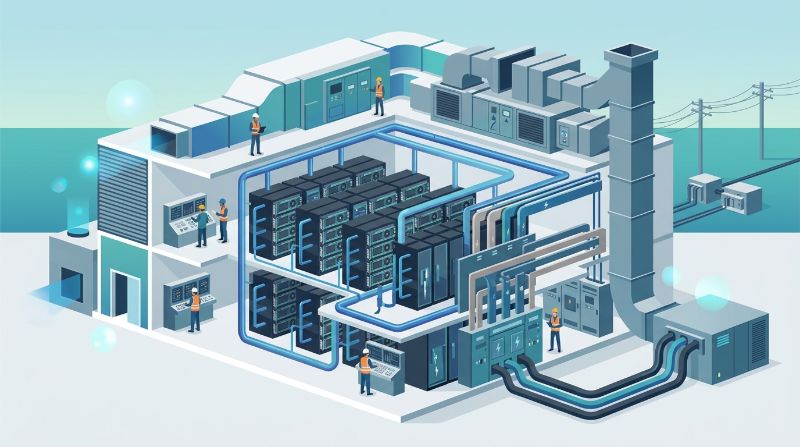
By establishing a four-tier RACI (Responsible, Accountable, Consulted, Informed) framework, engineering executives and infrastructure providers can eliminate operational ambiguity and ensure high-availability cluster execution.
The Flaw in Generic Cloud Ticketing for AI Workloads
Traditional public cloud customer support models are built around asynchronous web portals and tiered call centers. An engineer logs a ticket, waits hours for initial triage by generalist helpdesk personnel, and endures prolonged escalation chains before reaching a systems engineer who understands low-level hardware diagnostics.
In distributed deep learning, this delay is financially catastrophic. When a single accelerator in a 128-GPU training cluster experiences an uncorrectable Double-Bit ECC error or an optical transceiver flap, the entire distributed job stalls. Every minute spent waiting for vendor support burns compute budget while data science teams sit idle.
Enterprise AI programs require white-glove support models characterized by direct Slack/Teams bridge access to specialized HPC engineers, predictive hardware telemetry, and aggressive contractual Mean Time to Recovery (MTTR) commitments.
The 4 Tiers of the Private GPU Cloud Support Model
A comprehensive operational support structure organizes cluster governance across four functional operational tiers.
Tier 1: Physical Data Center and Facilities Infrastructure
The foundation of cluster reliability resides in physical facilities management. This tier encompasses high-voltage electrical substation distribution, backup uninterruptible power supplies (UPS), diesel generator readiness, chilled water liquid-cooling loops, and physical facility access controls.
The infrastructure provider maintains exclusive responsibility for facility availability, guaranteeing 99.99% power and cooling uptime. Provider technicians continuously monitor ambient thermal gradients and liquid coolant pressures to eliminate thermal throttling across high-TDP accelerator chassis.
Tier 2: Bare-Metal Server Hardware and Network Fabric Operations
Tier 2 governs the physical compute nodes, accelerators, and inter-node networking switches. Support operations focus on proactive hardware monitoring, predictive component failure detection, and physical remediation.
Top-tier providers maintain on-site cold spare hardware pools within the facility. If a GPU, motherboard, or InfiniBand Host Channel Adapter (HCA) fails, the provider's on-site technicians swap the defective component and restore the node to the compute pool within contractual SLA windows (typically two to four hours), completely bypassing slow manufacturer warranty queues.
Tier 3: Host Operating System, Drivers, and Cluster Orchestration
This operational layer represents the shared boundary between hosting vendor and enterprise platform teams. It encompasses the Linux kernel, proprietary GPU display drivers, NVIDIA Fabric Manager, container runtimes, and cluster schedulers (such as Slurm or Kubernetes).
The hosting provider typically manages driver installation, firmware synchronization, and low-level network tuning (such as PFC/ECN calibration). The enterprise platform team manages namespace creation, user role allocations, and job scheduling queues. Maintenance windows for driver updates are scheduled collaboratively to prevent disrupting long-running training epochs.
Tier 4: Deep Learning Frameworks and Application Workloads
The highest tier encompasses the client's proprietary machine learning models, training scripts, data ingestion pipelines, and inference serving logic.
The enterprise customer retains exclusive ownership and accountability for this layer. Data science teams write the training code, optimize PyTorch distributed routines, manage checkpoint lifecycles, and fine-tune hyperparameters. The infrastructure provider acts purely in a consultative capacity, offering guidance on NCCL communication flags or CUDA performance profiling when requested.
Private GPU Cloud RACI Operational Matrix
The RACI matrix below explicitly defines accountability across common infrastructure events (R = Responsible, A = Accountable, C = Consulted, I = Informed).
| Operational Activity / Infrastructure Task | Infrastructure Hosting Provider | Enterprise Platform Team | Enterprise Data Science Team |
|---|---|---|---|
| Facility Power, Cooling & Physical Security | R / A | I | I |
| GPU Silicon Hardware Replacement (RMA) | R / A | I | I |
| InfiniBand / RoCE Fabric Performance Tuning | R / A | C | I |
| Host OS Security Patching & Driver Updates | R | A | I |
| Kubernetes / Slurm Job Queue Governance | C | R / A | I |
| Model Checkpoint Storage & Lifecycle Policies | C | R / A | C |
| Application Code & Training Loss Debugging | I | C | R / A |
Frequently Asked Questions About GPU Support Models
What is an acceptable hardware replacement SLA for an enterprise GPU cluster?
For mission-critical production clusters, contractual SLAs should guarantee physical hardware replacement within two to four hours of diagnosis. Providers achieve this by maintaining dedicated on-site cold spare servers and individual GPU modules directly in the data center, rather than waiting for third-party courier dispatches.
What role does a Dedicated Technical Account Manager (TAM) play?
A Dedicated TAM acts as the primary technical liaison between your engineering organization and the infrastructure provider's network operations center (NOC). The TAM participates in weekly architectural reviews, coordinates maintenance windows around major training runs, and manages rapid incident escalation.
How does proactive hardware telemetry prevent training failures?
Advanced telemetry collectors continuously track hardware indicators—such as PCIe bus correctable error counters, GPU temperature differentials, and optical signal attenuation. When metrics exceed normal operating envelopes, the support team schedules proactive node drainage and component replacement before a catastrophic failure halts active training.
Establishing Operational Excellence in Private AI Hosting
Procuring raw GPU compute power is only the first step toward building an enterprise AI capability. Without a rigorous, well-defined support model, even the most advanced accelerator silicon will suffer from prolonged downtime, unresolved communication deadlocks, and costly operational friction.
By enforcing a four-tier RACI governance model—clarifying boundaries across facility maintenance, bare-metal hardware operations, platform orchestration, and application code—enterprise technology leaders insulate their data science programs from infrastructure disruptions.
OneSource Cloud delivers an enterprise-grade private GPU cloud support model designed for 24/7 production excellence. Featuring direct engineer-to-engineer communication channels, proactive hardware telemetry, 4-hour on-site hardware replacement SLAs, and dedicated Technical Account Managers, OneSource Cloud provides the operational foundation required to run continuous, mission-critical artificial intelligence programs.
Related Articles
Recommended Reading
-
How Paged Attention Manages Inference KV Cache
-
Google Cloud GPU Pricing: What Enterprise AI Teams Should Evaluate Before Provisioning
-
Paperspace Pricing 2026: GPU Cost Breakdown
-
AI Infrastructure Costs: Controlling Enterprise GPU Spending
-
CoreWeave Enterprise GPU Cloud: Evaluation for AI Teams
-
CoreWeave vs Lambda Labs vs OneSource Cloud: GPU Provider Decision Guide
-
AWS GPU Pricing: Instance Types, Cost Structure & Alternatives Guide
-
U.S. Data Residency in the Cloud: Requirements, Regulations & Compliance Guide
latest articles
-
Private GPU Cloud Failover Without Breaking Data Isolation
-
GPU Telemetry Release Correlation to Diagnose Model Regress
-
Managed AI Infrastructure vs Self-Managed Clusters: Real TCO
-
Multi-Tenant GPU Governance for Healthcare and Clinical AI
-
Data Center Power Planning for AI Workloads and High Density
-
AI Network Latency Component Map: Where Microseconds Vanish
-
AI Model Runtime Portability: How to Prevent Cloud Lock-In
-
H100 Dedicated GPU Cloud Planning: Sizing, Power, and Fabric
-
Industrial AI GPU Infrastructure for Factory Vision Systems
-
Single-Tenant GPU Cloud vs Multi-Tenant GPU Cloud Security