
Private AI Compute: Use Cases, Benefits, and Provider Evaluation
Private AI compute refers to dedicated, single-tenant computing resources used exclusively for running artificial intelligence and machine learning workloads. Unlike public cloud AI services where compute resources are shared across multiple customers, private AI compute gives organizations exclusive use of GPU and CPU hardware, supporting stronger data security, consistent performance, and greater infrastructure control. This model is increasingly relevant for enterprises running sensitive, regulated, or high-stakes AI applications.
What Is Private AI Compute?
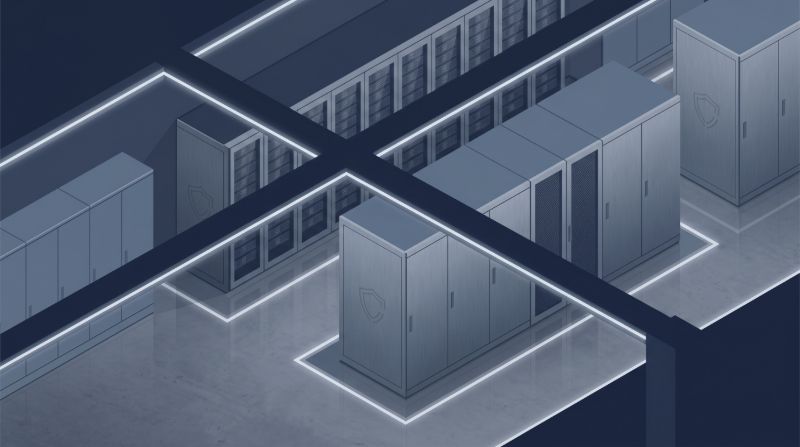
Private AI compute is an infrastructure model where GPU and CPU resources are dedicated to a single organization rather than shared across multiple tenants. The compute environment is isolated and exclusive, meaning no other organization's workloads run on the same physical hardware.
This model differs from public cloud AI services, where multiple customers share underlying compute resources through virtualization. In private AI compute deployments, organizations get dedicated access to GPUs, memory, storage, and networking, along with greater control over configuration, security policies, and data handling.
Private AI compute can be deployed in several ways: on-premises in an organization's own data center, through colocation facilities, or via managed service providers that operate dedicated infrastructure on the customer's behalf. Each approach has different trade-offs in terms of capital expense, operational complexity, and time to deployment.
OneSource Cloud's private AI infrastructure delivers dedicated GPU compute resources in U.S.-based data centers, combining the security and control of private infrastructure with the operational simplicity of a managed service.
Private AI Compute vs Public Cloud AI: Key Differences
Understanding the distinctions between private and public cloud AI compute helps organizations choose the right model for their specific workloads and requirements.
| Dimension | Private AI Compute | Public Cloud AI |
|---|---|---|
| Resource sharing | Single-tenant, dedicated resources | Multi-tenant, shared infrastructure |
| Data security | Stronger isolation and control | Shared security boundaries |
| Performance consistency | Predictable, consistent performance | Variable due to neighbor workloads |
| Cost model | Often capacity-based or committed | Typically pay-as-you-go |
| Customization | Highly configurable | Limited to provider offerings |
| Operational ownership | Varies by deployment model | Provider-managed infrastructure |
| Compliance support | Easier to meet strict requirements | Shared responsibility model |
Many enterprises use both private and public cloud AI compute for different workloads, selecting the model that best matches each application's performance, security, and cost requirements.
Common Private AI Compute Use Cases
Private AI compute serves a broad range of enterprise applications. The following use cases are particularly well-suited to dedicated, single-tenant infrastructure.
Training Models on Sensitive Data
Organizations building AI models on proprietary or regulated data often choose private AI compute to maintain full control over data access and processing. Training in a private environment ensures sensitive information never leaves the organization's controlled infrastructure, reducing exposure and simplifying compliance.
Production Inference for Customer-Facing Applications
AI applications that serve end users require reliable, consistent performance. Private AI compute delivers predictable latency and throughput, helping teams meet service level objectives. Dedicated resources also eliminate the risk of performance degradation caused by other customers' workloads on shared infrastructure.
Regulated Industry Workloads
Healthcare, financial services, government, and other regulated sectors often have strict requirements for data handling, security, and auditability. Private AI compute provides the isolation and control needed to support compliance with regulations such as HIPAA, GDPR, and industry-specific data protection standards.
Research and Development at Scale
Research teams running large-scale experiments, model development, and iterative training benefit from dedicated compute resources. Private AI compute provides consistent performance for long-running jobs and allows teams to customize the software stack for specific research needs without the constraints of shared cloud environments.
Internal Enterprise AI Platforms
Organizations building internal AI platforms for multiple teams or business units often deploy private AI compute as a shared internal resource. This model centralizes infrastructure investment while maintaining security boundaries, and can be more cost-effective than individual teams using separate public cloud accounts.
Private AI Compute Deployment Models
Organizations can deploy private AI compute through several models, each with different trade-offs in cost, control, and operational complexity.
On-Premises Deployment
Organizations purchase and own GPU hardware deployed in their own data centers. This provides maximum control but requires significant capital investment, facilities, and in-house infrastructure expertise. Deployment timelines are typically the longest of all models.
Colocation Deployment
Organizations own the hardware but place it in a third-party data center facility. This reduces facilities and power management burden while retaining hardware ownership and control. Colocation still requires organizations to manage the hardware and software themselves.
Managed Private AI Compute
A service provider owns and operates dedicated infrastructure on the customer's behalf. The customer gets exclusive use of the hardware without the capital expense or operational burden. This model balances control, security, and operational simplicity. Providers like OneSource Cloud offer fully managed private AI compute with 24/7 operations and support.
Virtual Private Cloud with Dedicated Hosts
Some public cloud providers offer dedicated host options where customers get exclusive use of physical servers within the cloud environment. This provides stronger isolation than standard shared instances but still operates within the public cloud provider's infrastructure and pricing model.
Core Benefits of Private AI Compute for Enterprises
Enterprises invest in private AI compute for several key advantages that are difficult to achieve with shared public cloud infrastructure.
Enhanced Data Security
Single-tenant infrastructure reduces attack surface and provides stronger isolation for sensitive data and AI workloads.
Predictable Performance
Dedicated resources deliver consistent GPU performance without noisy-neighbor effects, critical for production and training workloads.
Greater Infrastructure Control
Organizations control hardware configuration, software stack, security policies, and data handling procedures.
Compliance Support
Easier to meet regulatory requirements for data residency, access control, auditability, and security certifications.
Cost Predictability
Capacity-based or committed pricing makes budgeting easier compared with variable consumption-based cloud costs.
Customization Flexibility
Ability to configure hardware, networking, and software to match specific workload requirements and optimize performance.
How to Evaluate Private AI Compute Providers
Choosing the right private AI compute provider requires evaluating technical capabilities, operational support, and alignment with organizational requirements.
Hardware and Infrastructure Quality
Assess the GPU models available, server configurations, and whether the provider can support custom hardware setups. Look for current-generation GPUs, sufficient system memory, and high-speed storage options. Also consider data center quality, power reliability, and physical security measures.
Networking Capabilities
For multi-node workloads and distributed training, evaluate the provider's networking infrastructure. High-speed, low-latency interconnects between GPU nodes are critical for performance. Ask about bandwidth, latency, and whether the provider supports technologies like RDMA or InfiniBand.
OneSource Cloud's high-performance AI networking is designed to support demanding distributed training workloads on private GPU clusters.
Security and Compliance Posture
Review the provider's security practices, access controls, encryption capabilities, and compliance certifications. For regulated industries, confirm whether the provider can support specific compliance requirements and offer appropriate agreements such as business associate agreements for HIPAA-covered work.
Operational Support and SLAs
Understand what level of operational support the provider offers. Managed private AI compute providers should offer monitoring, maintenance, troubleshooting, and uptime commitments. Clarify response times, support channels, and whether the provider offers 24/7 coverage.
OneSource Cloud's managed AI infrastructure provides 24/7 monitoring, maintenance, and support for private GPU compute environments, handling infrastructure operations so teams can focus on AI development.
Orchestration and Management Tooling
Evaluate the tools and platforms available for workload management, model deployment, and resource allocation. Good orchestration tooling makes it easier to manage private compute resources across teams, track utilization, and deploy models efficiently.
OnePlus Platform, OneSource Cloud's AI orchestration platform, provides unified management for private AI compute resources, including model deployment, multi-team resource allocation, and usage analytics.
Pricing and Commercial Terms
Compare pricing models, commitment terms, and flexibility. Look for transparent pricing without hidden fees. Consider whether the provider offers proof-of-concept periods, flexible scaling options, and clear terms for capacity adjustments as needs change.
Getting Started with Private AI Compute
Organizations considering private AI compute can follow a structured approach to evaluate options and deploy successfully.
Start by identifying specific workloads and requirements. Not all AI workloads need private compute. Focus on applications where security, performance consistency, or compliance requirements make shared infrastructure less suitable. Define clear success metrics and performance expectations.
Next, evaluate deployment models and providers. Consider whether on-premises, colocation, or managed private compute best fits the organization's resources, expertise, and timeline. Compare providers across the dimensions outlined above, and if possible, run proof-of-concept deployments to validate performance and compatibility.
Finally, plan for operations and governance. Private AI compute requires clear processes for resource allocation, access management, monitoring, and cost tracking. Establish governance frameworks to ensure secure, efficient use of the infrastructure across teams and projects.
FAQ
Is private AI compute the same as on-premises AI?
Not exactly. On-premises AI is one form of private AI compute where hardware is located in an organization's own data center. However, private AI compute also includes dedicated infrastructure hosted and managed by third-party providers. The key distinction is that private AI compute is single-tenant and dedicated, regardless of where the hardware physically resides.
How much does private AI compute cost compared with public cloud?
Cost comparison depends on utilization patterns, workload types, and specific pricing from providers. For consistently high-utilization workloads, private AI compute can be more cost-effective on a per-unit-of-work basis. For variable or sporadic workloads, public cloud pay-as-you-go models may be more economical. Organizations often use both models for different workloads to optimize overall cost.
Can private AI compute support HIPAA compliance?
Private AI compute can be configured to support HIPAA compliance requirements, with dedicated infrastructure, access controls, encryption, and audit capabilities. Providers offering managed private AI compute may provide business associate agreements and HIPAA-ready configurations. Each organization remains responsible for implementing proper data handling, governance, and compliance processes alongside the infrastructure.
Do I need a large team to manage private AI compute?
Not necessarily. The operational burden depends on the deployment model. On-premises deployments require significant in-house expertise for hardware management, networking, and maintenance. Managed private AI compute services handle most infrastructure operations, allowing organizations to benefit from dedicated resources without building a large infrastructure team.
Can I scale private AI compute as my needs grow?
Yes, private AI compute can scale, though the process differs from public cloud. Managed private AI compute providers typically offer capacity expansion options with predictable lead times. Organizations plan capacity based on projected growth rather than instant, on-demand scaling. For workloads with highly unpredictable demand, a hybrid approach combining private compute for steady workloads and public cloud for peaks may be appropriate.
What GPU options are available for private AI compute?
Private AI compute providers typically offer a range of GPU options, including NVIDIA H100, A100, and other data center GPUs. The optimal choice depends on workload type, model size, performance requirements, and budget. Training large models and high-throughput inference generally benefit from higher-end GPUs, while smaller models and development workloads may work well with mid-range options.
Summary
Private AI compute provides dedicated, single-tenant infrastructure for running AI and machine learning workloads, delivering enhanced security, predictable performance, and greater control compared with shared public cloud environments. It is particularly valuable for organizations working with sensitive data, operating in regulated industries, or running production AI applications where consistency and reliability are critical.
Organizations can deploy private AI compute through several models, from fully on-premises infrastructure to fully managed services. The right choice depends on factors including in-house expertise, capital availability, compliance requirements, and operational preferences. For many enterprises, managed private AI compute offers an optimal balance of control, security, and operational simplicity.
OneSource Cloud delivers private AI compute with dedicated GPU clusters in U.S.-based data centers, backed by managed operations and enterprise-grade tooling. This approach gives organizations the security and performance benefits of private infrastructure without the complexity and capital expense of building and maintaining it in-house.
Related Articles
Recommended Reading
-
Google Cloud GPU Pricing: What Enterprise AI Teams Should Evaluate Before Provisioning
-
Paperspace Pricing 2026: GPU Cost Breakdown
-
CoreWeave Enterprise GPU Cloud: Evaluation for AI Teams
-
AI Infrastructure Costs: Controlling Enterprise GPU Spending
-
CoreWeave vs Lambda Labs: GPU Cloud Provider Comparison
latest articles
-
Open-Source LLM Deployment: Requirements and Real Cost Breakdown
-
AI Search Assistants Under Data Residency: Architectures and Evidence
-
LLM Inference GPUs Compared: A100, H100, H200, or B200 for Production
-
LLM Deployment Best Practices: An Enterprise Stage-by-Stage Checklist
-
HIPAA Patient Scheduling AI: Controls, Consent, and Evidence
-
Cloud-Agnostic LLM Deployment: Architecture Principles Against Lock-In
-
HIPAA-Compliant AI Tools for Healthcare: Categories and Evaluation
-
Batch vs Real-Time LLM Inference: Cost, Latency, and Fit
-
Model Deployment Strategies Compared: Canary, Blue-Green, Shadow, Rolling
-
GPU Rental vs Owning: Cost, Commitment, and When to Buy