
Private AI Cloud Data Residency Requirements for US Teams
As generative artificial intelligence systems integrate into regulated enterprise workflows, corporate legal and compliance teams face mounting regulatory scrutiny over where proprietary data is physically processed and stored. Traditional public cloud infrastructure often relies on opaque, multi-region load balancing that routes computational workloads across geographic boundaries during peak traffic windows.
AI data residency is a compliance and architectural requirement mandating that training datasets, model weights, inference prompt tokens, and system logs remain strictly stored and processed within designated sovereign geographic borders. For United States enterprises operating in healthcare, financial services, defense, and critical infrastructure, failing to maintain verifiable physical boundaries introduces severe regulatory penalties and compromises intellectual property.
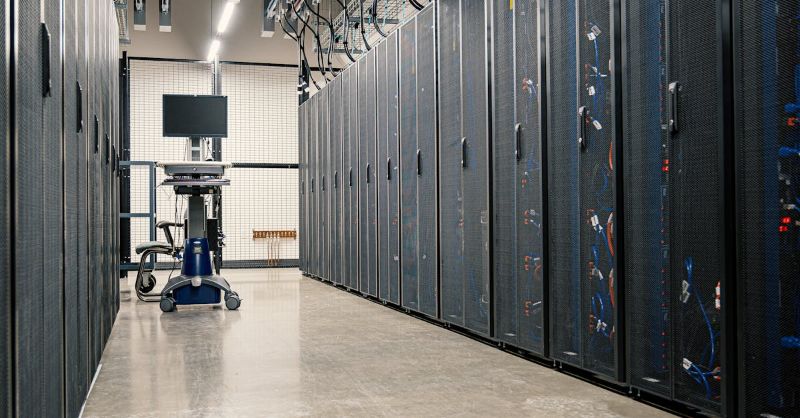
Deploying workloads on private AI infrastructure establishes deterministic physical boundaries, ensuring that every GPU accelerator, storage array, and network switch complies with strict sovereign data governance policies.
The Difference Between Data Residency and Data Sovereignty in AI
While frequently used interchangeably, data residency and data sovereignty represent distinct operational concepts within enterprise risk management frameworks.
Data Residency as Physical Geographic Containment
Data residency refers specifically to the physical, geographic location of an organization's digital assets. In an AI context, this mandates that raw training corpora, fine-tuned model checkpoints, temporary vector embeddings, and inference cache files reside exclusively within the borders of a specified nation, such as the United States.
Data Sovereignty as Legal Jurisdiction and Governance
Data sovereignty extends beyond physical geography to govern which legal frameworks and governmental authorities possess jurisdiction over that data. Even if data physically sits in a domestic facility, utilizing a foreign-owned cloud vendor can expose enterprise assets to extraterritorial discovery subpoenas.
True sovereign AI infrastructure requires both physical domestic data residency and domestic operational ownership, shielding enterprise models from foreign regulatory overreach.
Critical Technical Pillars of a Sovereign Private AI Cloud
Meeting comprehensive data residency mandates requires enterprise engineering teams to enforce deterministic architectural controls across compute, networking, and persistence layers.
| Infrastructure Component | Public Cloud Multi-Tenant Vulnerability | Private Sovereign Cloud Architectural Control |
|---|---|---|
| Physical Compute Placement | Automated failover routes workloads to arbitrary global availability zones | Guaranteed single-tenant GPU nodes tied to designated domestic data centers |
| Inference Prompt Caching | KV caches and prompt tokens buffered in shared multi-tenant memory pools | Isolated, encrypted on-node memory allocations with automatic zeroization |
| Network Transit & Routing | Traffic travels over public backbones and multi-region transit gateways | Dedicated non-blocking private fabrics with sovereign interconnect endpoints |
| Storage at Rest & Checkpoints | Object storage replicates across cross-border availability clusters | All-flash NVMe arrays strictly confined to domestic facility boundaries |
| Access & Audit Logging | Telemetry centralized in global log aggregates with mixed tenancy | Immutable, cryptographically signed local audit trails for regulatory proof |
Preventing Data Leakage During Training and Real-Time Inference
The operational mechanics of deep learning present unique data leakage vectors that standard enterprise software does not encounter. During foundation model pre-training and supervised fine-tuning, training datasets are sharded across thousands of memory ranks. If cluster nodes communicate across unencrypted public backbones, raw enterprise tokens are exposed to interception.
Similarly, in real-time inference, Retrieval-Augmented Generation (RAG) pipelines extract sensitive corporate knowledge and inject it into model context windows. Without strict network isolation, vector database lookups and cached embeddings can inadvertently leak across shared tenant boundaries within commercial multi-tenant AI platforms.
Why U.S.-Based Dedicated Infrastructure Solves Residency Mandates
Relying on hyperscale public clouds for sovereign AI workloads introduces persistent compliance anxiety. Hyperscalers design their global platforms to maximize hardware utilization by dynamically balancing workloads across global regions, frequently obscuring the physical location of individual GPUs.
Transitioning regulated AI initiatives to dedicated private infrastructure eliminates this ambiguity. Through OneSource Cloud's Private AI Infrastructure, enterprises deploy dedicated GPU clusters housed entirely within secure, enterprise-grade Texas data center facilities. This guaranteed U.S. presence ensures that training data, active parameters, and inference queries never cross sovereign borders.
Enterprise administrators utilize OnePlus Platform, OneSource Cloud's AI orchestration platform, to enforce role-based access controls, verify cryptographic audit logs, and isolate departmental workloads. Paired with high-throughput AI Storage Architecture and non-blocking AI Networking Services, OneSource Cloud delivers uncompromised performance while satisfying the most stringent domestic data residency requirements.
FAQ
What is the primary risk of running regulated AI on public multi-tenant clouds?
The primary risk is opaque workload routing and automated failover. Public clouds dynamically shift compute tasks across regional data centers during congestion, creating unpredictable cross-border data transfers that violate domestic data residency compliance policies.
Do model weights fall under data residency regulations?
Yes. If model weights are trained on regulated domestic data, proprietary corporate IP, or classified information, the resulting model artifacts, fine-tuned adapters (such as LoRA weights), and checkpoint files are subject to the same geographic residency restrictions as the source data.
How does dedicated private AI infrastructure ensure auditability?
Dedicated infrastructure provides immutable, physically verifiable audit trails. Because hardware is dedicated to a single enterprise tenant, security officers can physically audit data centers, inspect dedicated network topologies, and verify that telemetry never leaves the facility.
Can data residency requirements be met using encryption alone?
No. While encryption protects data in transit and at rest, data residency specifically regulates physical geography. Encrypted data stored in a non-compliant foreign jurisdiction still violates data localization laws and remains vulnerable to foreign judicial discovery orders.
Summary
Enforcing rigorous data residency in artificial intelligence requires moving beyond superficial policy attestations to implement deterministic physical infrastructure controls. By choosing dedicated private AI infrastructure located strictly within domestic borders, enterprises protect their intellectual property, avoid catastrophic regulatory non-compliance, and build a trustworthy foundation for production AI. To deploy dedicated sovereign GPU clusters in secure U.S. data center facilities, review OneSource Cloud Private AI Infrastructure.
Related Articles
Recommended Reading
-
How Paged Attention Manages Inference KV Cache
-
Google Cloud GPU Pricing: What Enterprise AI Teams Should Evaluate Before Provisioning
-
Paperspace Pricing 2026: GPU Cost Breakdown
-
AI Infrastructure Costs: Controlling Enterprise GPU Spending
-
CoreWeave Enterprise GPU Cloud: Evaluation for AI Teams
-
CoreWeave vs Lambda Labs vs OneSource Cloud: GPU Provider Decision Guide
-
AWS GPU Pricing: Instance Types, Cost Structure & Alternatives Guide
-
U.S. Data Residency in the Cloud: Requirements, Regulations & Compliance Guide
latest articles
-
Private GPU Cloud Failover Without Breaking Data Isolation
-
GPU Telemetry Release Correlation to Diagnose Model Regress
-
Managed AI Infrastructure vs Self-Managed Clusters: Real TCO
-
Multi-Tenant GPU Governance for Healthcare and Clinical AI
-
Data Center Power Planning for AI Workloads and High Density
-
AI Network Latency Component Map: Where Microseconds Vanish
-
AI Model Runtime Portability: How to Prevent Cloud Lock-In
-
H100 Dedicated GPU Cloud Planning: Sizing, Power, and Fabric
-
Industrial AI GPU Infrastructure for Factory Vision Systems
-
Single-Tenant GPU Cloud vs Multi-Tenant GPU Cloud Security