
On-Premises vs Private Cloud AI: Control and Cost for Enterprises
Enterprises deploying AI face a foundational choice between two deployment models that are often confused. On-premises AI infrastructure means owned hardware running in a facility the enterprise controls. Private cloud AI means dedicated capacity provisioned by a provider, without the multi-tenant sharing of public cloud. Both are private; they differ in who owns the metal and who runs it.
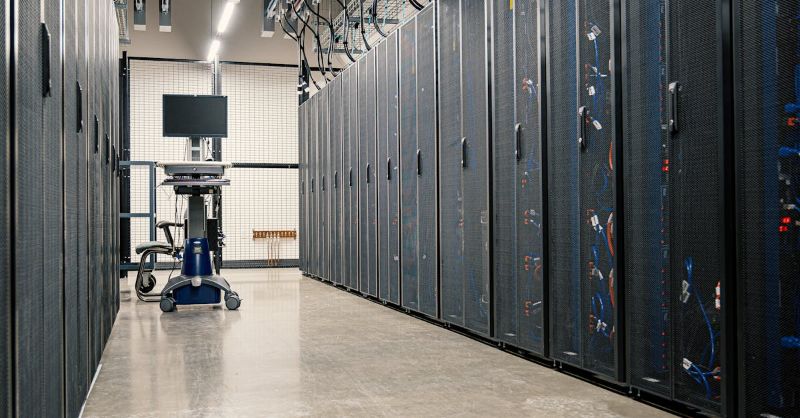
This article compares on-premises vs private cloud AI across control, cost, operations, and compliance, so enterprise teams can match the model to their constraints rather than defaulting to whichever option is more familiar.
On-premises AI is infrastructure an enterprise owns and operates in its own facility, while private cloud AI is dedicated capacity a provider provisions and runs on the enterprise's behalf without public cloud multi-tenancy. The distinction shapes capital structure, staffing, and risk.
What Each Model Actually Means
On-premises AI places the enterprise in the role of facility operator. The organization buys GPUs, storage, and networking, houses them in a corporate or colocation data center, and staffs the 24/7 operations, patching, and incident response. Control is maximal, but so is operational burden. Every firmware update, cooling failure, and capacity expansion is an internal responsibility.
Cost Decision Matrix: Enterprise GPU Infrastructure TCO
| Infrastructure Model | Billing Structure & Predictability | Data Egress & Transfer Surcharges | Idle Compute Wastage Risk | Long-Term TCO for Sustained AI |
|---|---|---|---|---|
| Public Cloud On-Demand & Spot | Per-hour metered billing with dynamic peak surge rates | Metered egress fees ($0.05–$0.09/GB) creating billing unpredictability | Severe runaway costs when idle instances remain unmonitored | High volatility; massive cost inflation under continuous utilization |
| On-Premises Hardware Purchase | Upfront capital expenditure (Capex) with 3–5 year depreciation | Zero egress fees within enterprise local network | Sunk capital cost whenever project workloads fluctuate or pause | Fixed asset depreciation plus unpredictable power and cooling overhead |
| OneSource Dedicated GPU Cloud | Predictable flat-rate monthly pricing with zero surprise surcharges | Zero data egress fees ($0.00 transfer penalties) | OnePlus platform automated idle shutdown eliminates compute waste | Highest TCO predictability and significant cost savings for sustained AI |
Private cloud AI moves the operational layer to a provider while preserving isolation. The provider owns or dedicates hardware to a single tenant, handles facility power and cooling, and runs the orchestration platform. The enterprise still gets dedicated capacity and strong isolation, but without standing up an internal hardware operations team. For a deeper view of the dedicated model, see the private AI infrastructure overview.
Control: Where Sovereignty Lives
Control is the most cited reason enterprises choose on-premises. When the hardware sits in your facility, you decide who touches it, how it is networked, and when it is patched. There is no provider change window imposed on your schedule, and no third party can re-architect the platform beneath your workloads.
Private cloud trades some physical control for contractual control. You do not own the rack, but you own the agreements that govern residency, access, and isolation. For regulated teams, contractual control plus audit evidence can satisfy requirements that pure physical ownership was once needed to meet. The question is whether you need hands-on hardware control or whether documented, enforceable isolation is sufficient.
Cost: CapEx, OpEx, and Utilization
Cost structure is where the two models diverge most sharply. On-premises is capital expenditure: a large upfront purchase followed by depreciation. Private cloud is operational expenditure: a recurring fee that scales with the capacity you actually consume. Neither is inherently cheaper; the right answer depends on utilization.
On-premises hardware that runs near full utilization over a three-to-five year lifecycle can deliver a lower total cost of ownership than private cloud. Hardware that sits idle between training runs, or that ages out of usefulness before it depreciates, can make on-premises the more expensive choice. Model your realistic utilization before committing to either path.
Cost comparison summary
| Dimension | On-Premises | Private Cloud |
|---|---|---|
| Payment model | CapEx, upfront | OpEx, recurring |
| Scaling | Buy more hardware | Add capacity on demand |
| Idle cost | You bear it | Scale down to reduce |
| Refresh cycle | Your budget cycle | Provider refreshes |
| Best for | Steady high utilization | Variable workloads |
Operations and Staffing
On-premises AI is not just a hardware purchase; it is a standing commitment to operate GPU clusters at production grade. That means staffing for power and cooling management, network engineering, storage tuning, orchestration platform maintenance, and 24/7 incident response. Talent for these roles is scarce and expensive, and attrition creates real continuity risk.
Private cloud shifts this burden to the provider. A well-run managed AI infrastructure engagement supplies the operations team, the patching cadence, and the on-call rotation. Your internal team focuses on model development and workload configuration rather than firmware and facility management. For enterprises without a deep hardware operations bench, this is often the deciding factor.
Compliance and Residency
Both models can support regulated workloads, but they reach compliance through different paths. On-premises gives you direct control over where data sits and who accesses it, which can simplify certain audit narratives. Private cloud reaches the same outcome through contractual residency, dedicated capacity, and third-party audit evidence such as SOC 2 and a Business Associate Agreement.
For healthcare, finance, and government teams, the compliance question is rarely "can this model be compliant?" It is "how do I prove it?" Private cloud providers that document residency, isolation, and shared responsibility can make proof easier than a self-operated facility that depends entirely on your internal controls. Learn how this applies to specific sectors on the AI for healthcare page.
Frequently Asked Questions
Is on-premises always cheaper than private cloud?
No. On-premises can be cheaper when hardware runs near full utilization over its lifecycle. When GPUs sit idle between training runs or age out before depreciation completes, private cloud's pay-for-capacity model can deliver lower total cost. Model realistic utilization before deciding.
Does private cloud mean multi-tenant like public cloud?
No. Private cloud AI provisions dedicated capacity to a single tenant. The provider may own the hardware, but it is not shared across unrelated customers the way public cloud capacity is. Isolation is enforced through dedicated partitions and tenant-scoped controls.
Which model gives better control for regulated workloads?
On-premises gives direct physical control. Private cloud gives contractual control backed by audit evidence. Both can support regulated workloads; the choice depends on whether your team needs hands-on hardware sovereignty or documented, enforceable isolation with third-party attestation.
How do I decide between the two?
Assess utilization patterns, available operations staff, capital budget, and compliance proof requirements. Steady high utilization and a strong internal ops team favor on-premises. Variable workloads, limited hardware operations talent, and a need for provider-supplied audit evidence favor private cloud.
Can I combine both models?
Yes. Many enterprises run steady-state inference on owned hardware while bursting variable training workloads to private cloud capacity. A hybrid approach lets you optimize cost and control, provided both environments share compatible orchestration and networking.
Summary
On-premises and private cloud AI are both private deployment models, but they differ in ownership, cost structure, operations, and the path to compliance. On-premises maximizes control for teams with steady utilization and deep operations staff. Private cloud preserves isolation while shifting the operational burden to a provider and converting cost to recurring OpEx. The right choice follows from utilization, staffing, capital, and compliance proof, not from default.
If your enterprise is weighing deployment models, connect with OneSource Cloud to compare on-premises and private cloud paths for AI workloads.
FAQ
What is the primary operational trade-off in this architecture?
The primary trade-off balances initial infrastructure dedication against runtime latency predictability and security isolation. While shared public cloud services offer rapid provisioning, dedicated private environments eliminate cross-tenant contention and provide deterministic performance for continuous workloads.
How does OneSource Dedicated GPU Cloud reduce total cost of ownership for AI workloads?
OneSource Dedicated GPU Cloud eliminates the high hourly premiums and hidden egress fees typical of multi-tenant hyperscalers. By offering transparent, flat-rate monthly contracts with zero data transfer surcharges and fully managed bare-metal hardware, enterprises achieve predictable budgeting, eliminate noisy-neighbor compute waste, and lower their total cost of ownership by 30% to 50% on sustained workloads.
Related Articles
Recommended Reading
latest articles
-
Thermal Soak and Rack Burn-In Protocols for Enterprise AI Racks
-
Sizing 3-Phase 415V Power Drops for 80kW Enterprise GPU Racks
-
When Is a BAA Required for Enterprise Healthcare AI Hosting?
-
AI Platform Scheduler Selection Criteria for Enterprise Training
-
Preventing Preemption Thrashing in Enterprise Multi-Tenant AI
-
Why Larger Batches Increase TTFT in Enterprise LLM Serving
-
Tokens Per Second vs User Latency in Enterprise LLM Serving
-
When Are Async Checkpoints Unsafe in Enterprise Model Training?
-
Should Checkpoint and Dataset I/O Share Enterprise AI Storage?
-
InfiniBand vs RoCE v2 for AI Training Gradient Synchronization