
Manufacturing AI Workloads on a Dedicated GPU Cloud
Manufacturing AI on dedicated GPU cloud is an infrastructure model that runs industrial training and inference workloads on reserved accelerators with controlled data paths and defined operating responsibility. It can fit manufacturers that need repeatable capacity for visual inspection, predictive maintenance, process optimization, or engineering models without placing every workload directly inside a plant.
The architecture must account for more than GPU performance. Plant connectivity, data classification, inference deadlines, production change windows, model release controls, storage throughput, and failure behavior determine whether a centralized dedicated environment will support operations. Some decisions stay at the edge, while training, fleet analytics, and governed model management can run in a private GPU platform.
Which Manufacturing AI Workloads Fit Dedicated GPU Cloud
The best candidates combine sustained compute demand with data or operational requirements that justify a controlled environment. Model training for visual quality inspection can aggregate approved image sets from several lines. Predictive maintenance teams may train across historical sensor windows. Engineering groups may run simulations or surrogate models that require scheduled multi-GPU capacity.
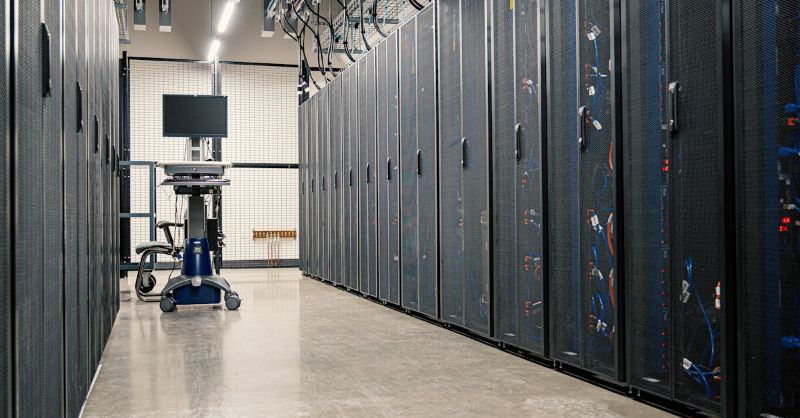
Not every workload belongs in the same place. A safety-critical control loop or millisecond-sensitive inspection decision may need local inference near the equipment. The dedicated cloud can still host training, validation, model registry functions, batch scoring, and central monitoring, while an edge runtime executes the approved model inside the plant.
| Workload | Typical placement | Infrastructure reason |
|---|---|---|
| Vision model training | Dedicated GPU cloud | Sustained compute, governed datasets, repeatable experiment environments |
| Real-time inspection inference | Plant edge or hybrid | Local latency, continuity during WAN disruption, equipment proximity |
| Predictive maintenance training | Dedicated cloud | Historical data aggregation and scheduled retraining |
| Fleet-wide batch analytics | Dedicated cloud | Central capacity and consistent reporting across sites |
| Closed-loop process control | Plant-local system | Deterministic behavior and production safety boundaries |
Keep OT and IT Responsibilities Explicit
Manufacturing AI crosses organizational boundaries. Operational technology teams protect production continuity and equipment networks. IT teams manage identity, enterprise networking, security, and shared services. Data and AI teams develop models. A dedicated GPU platform succeeds only when these groups agree on which data may leave a plant segment, how it is transferred, and who approves changes.
The design should not assume direct, unrestricted connectivity from GPU workloads to production equipment. A safer pattern uses approved ingestion paths, staged datasets, controlled service interfaces, and explicit outbound rules. This separates model development from plant control while still allowing useful feedback such as model health, drift signals, and validated release packages.
Design the Data Path Before Sizing GPUs
Visual inspection produces large files, while sensor pipelines may produce frequent smaller records. Both can make accelerators wait if ingestion, preprocessing, or storage cannot keep pace. Manufacturers should document source rate, retention, file size, preprocessing steps, training read pattern, checkpoint behavior, and the amount of data moved between plants and the central environment.
A purpose-built AI storage architecture can separate active training data, shared reference data, checkpoints, inference artifacts, and retained evidence. The goal is not to keep every copy on the fastest tier. It is to place each dataset according to access pattern, recovery need, governance, and cost while preserving a traceable path from source to model.
Use Edge and Dedicated Cloud as Complementary Layers
Edge and cloud are deployment locations, not competing ideologies. Edge infrastructure is appropriate when latency, disconnected operation, equipment integration, or local data restrictions dominate. Dedicated GPU cloud is appropriate when teams need centralized training capacity, shared governance, model lifecycle services, and a consistent operational boundary.
The connection between them needs version control and rollback. A release package should identify the model, preprocessing logic, runtime dependencies, hardware assumptions, acceptance results, and rollback target. Plants should receive only approved versions, and the central platform should record where each version is running. This reduces the risk of inconsistent behavior across lines or sites.
Protect Production Continuity During Model Changes
Manufacturing changes are constrained by maintenance windows and the cost of disruption. AI releases should therefore use staged validation. Start with offline evaluation against representative plant data, then shadow or observe without controlling production, and finally enable the model within a bounded scope. Each stage needs measurable acceptance and a defined rollback condition.
Infrastructure maintenance follows the same principle. Driver, orchestration, storage, and network changes should be tested against representative workloads before production adoption. A managed service can perform the technical work, but the manufacturer must still define which application and plant outcomes constitute acceptance.
Control Access to Industrial Data and Models
Industrial AI environments may contain product images, process parameters, equipment telemetry, engineering files, supplier information, and proprietary models. Security planning should cover dataset permissions, service identities, administrator access, secrets, encryption, logging, model artifact access, and user offboarding. Controls must apply across storage, workspaces, pipelines, and deployment endpoints.
Private AI infrastructure can provide a dedicated compute and network boundary for these workloads. It does not eliminate the need for enterprise identity governance, plant-side segmentation, secure data transfer, or application authorization. The environment should support the manufacturer's controls and produce evidence for internal review.
Schedule Capacity Around Production Demand
Manufacturing demand is rarely uniform. Model retraining may follow a product change, quality event, seasonal ramp, or new-site rollout. Capacity plans should distinguish baseline inference, scheduled training, engineering experiments, and urgent investigation. Each class needs a priority policy so a large experiment cannot consume resources required for production support.
The OnePlus AI orchestration platform, OneSource Cloud's AI workload orchestration layer, can help isolate workspaces, schedule jobs, track usage, and coordinate deployment workflows on private GPU capacity. Quotas should reflect production priority and project ownership rather than applying one identical limit to every team.
Choose Between Self-Managed and Managed Operations
A self-managed cluster requires coverage for hardware health, drivers, orchestration, storage, networking, observability, vulnerabilities, incidents, performance validation, and capacity changes. Manufacturers should compare those responsibilities with actual staff availability, including planned shutdowns, off-hours production, and escalation between plant and corporate teams.
Managed AI infrastructure can move defined platform and infrastructure operations to a provider. OneSource Cloud supports dedicated environments with lifecycle management, monitoring, performance validation, and capacity planning. The service boundary should document response responsibilities, maintenance coordination, evidence access, and the manufacturer's ownership of models and production decisions.
Evaluate Total Cost and Operational Risk Together
Hourly GPU price is only one input. A manufacturing TCO model should include reserved compute, edge devices, storage, data transfer, networking, software, platform engineering, operations, support, security controls, implementation, and hardware lifecycle. It should also account for unused capacity and for the operational impact of missed model-training or deployment windows.
Dedicated capacity becomes more attractive when workloads are sustained and several plants or AI teams can share a governed environment. Public cloud can remain appropriate for temporary experiments or occasional bursts. A hybrid sourcing model may preserve flexibility while placing recurring, sensitive, or operationally important workloads on dedicated infrastructure.
Manufacturing AI Infrastructure Acceptance Checklist
- Validate representative data flow: Test ingestion, preprocessing, training reads, checkpoint writes, and artifact delivery using realistic formats and volumes.
- Test edge continuity: Confirm local inference behavior during central-platform or network interruption and verify reconciliation after connectivity returns.
- Verify access boundaries: Exercise user, service, administrator, and plant integration permissions, including revocation and offboarding.
- Run release and rollback: Promote a model through approval, deploy it to a bounded target, capture evidence, and restore the previous approved version.
- Confirm operations ownership: Simulate a failed job, degraded storage path, unhealthy GPU, and urgent capacity request to verify escalation and response.
Manufacturers should also validate the high-performance AI networking layer that connects compute, storage, and approved data-ingestion paths. Network tests should reflect actual image, sensor, checkpoint, and artifact flows rather than relying only on nominal link capacity.
FAQ
What manufacturing AI workloads need dedicated GPU cloud?
Recurring vision training, predictive maintenance training, engineering simulation, fleet analytics, and governed model-serving workloads are common candidates. The deciding factors are sustained demand, data control, capacity predictability, and operating responsibility. Millisecond-sensitive or safety-related decisions may still require plant-local execution even when central training runs on dedicated infrastructure.
Should visual inspection inference run at the edge or in the cloud?
Edge deployment usually fits when inspection must continue during WAN interruption or respond within a tight production window. Cloud or centralized inference can fit less time-sensitive analysis and cross-site workloads. Many manufacturers use a hybrid pattern: centralized training and release governance with approved inference models deployed near the production line.
How does dedicated GPU cloud protect manufacturing data?
Dedicated infrastructure can provide reserved resources and clearer network, storage, and administrative boundaries. Protection still depends on identity controls, encryption, approved transfer paths, logging, secrets management, application authorization, and plant segmentation. Manufacturers should verify those controls through configuration evidence and acceptance tests instead of relying on a general private-cloud label.
How should manufacturers budget dedicated GPU capacity?
Model baseline production demand, scheduled retraining, engineering experiments, expected growth, and burst requirements separately. Include storage, networking, edge systems, software, operations, support, implementation, and refresh costs. Compare the total with public cloud and hybrid alternatives, accounting for both idle capacity and the business effect of unavailable compute.
What should a manufacturing AI operations agreement include?
It should define monitoring scope, incident routing, response coverage, maintenance coordination, security responsibilities, capacity changes, performance validation, evidence access, and exit procedures. The agreement should also distinguish infrastructure recovery from application or model decisions, which normally remain with the manufacturer and its production owners.
Summary
Dedicated GPU cloud can support manufacturing AI when sustained workloads, industrial data controls, predictable capacity, and managed operations justify a reserved environment. The architecture should combine central training and governance with plant-local execution where latency or continuity requires it. A OneSource Cloud architecture review can map workloads, data paths, edge dependencies, and operating responsibilities before the manufacturer commits to capacity.
Related Articles
Recommended Reading
-
Google Cloud GPU Pricing: What Enterprise AI Teams Should Evaluate Before Provisioning
-
Paperspace Pricing 2026: GPU Cost Breakdown
-
CoreWeave Enterprise GPU Cloud: Evaluation for AI Teams
-
AI Infrastructure Costs: Controlling Enterprise GPU Spending
-
CoreWeave vs Lambda Labs: GPU Cloud Provider Comparison
latest articles
-
Open-Source LLM Deployment: Requirements and Real Cost Breakdown
-
AI Search Assistants Under Data Residency: Architectures and Evidence
-
LLM Inference GPUs Compared: A100, H100, H200, or B200 for Production
-
LLM Deployment Best Practices: An Enterprise Stage-by-Stage Checklist
-
HIPAA Patient Scheduling AI: Controls, Consent, and Evidence
-
Cloud-Agnostic LLM Deployment: Architecture Principles Against Lock-In
-
HIPAA-Compliant AI Tools for Healthcare: Categories and Evaluation
-
Batch vs Real-Time LLM Inference: Cost, Latency, and Fit
-
Model Deployment Strategies Compared: Canary, Blue-Green, Shadow, Rolling
-
GPU Rental vs Owning: Cost, Commitment, and When to Buy