
Managed Private GPU Cloud: When You Need Both Isolation and Operations
A managed private GPU cloud is a single-tenant GPU environment where the provider enforces the isolation boundary and also runs the day-to-day operations that keep it available. It exists for teams caught between two hard requirements: sensitive data that demands a private boundary, and limited internal capacity to operate GPU infrastructure around the clock.
Many regulated teams assume they must choose — operate a private cluster themselves to keep control, or accept shared cloud to avoid the operations burden. A managed private GPU cloud is the intersection, giving the tenant both a protected boundary and provider-run operations under a service agreement.
The Two Pressures a Managed Private GPU Cloud Resolves
Two pressures often pull teams in opposite directions. The first is data sensitivity: workloads involving PHI, financial records, or proprietary research require a private, isolated boundary that shared cloud makes hard to prove. The second is operational capacity: most of these teams cannot staff round-the-clock GPU operations, so running a private cluster themselves becomes a liability.
A managed private GPU cloud resolves both by letting the provider own the isolation boundary and the operations, while the tenant retains control over data location, access policy, and audit. The value is not in either piece alone but in combining them under one accountable provider.
What the Managed Layer Adds to a Private GPU Boundary
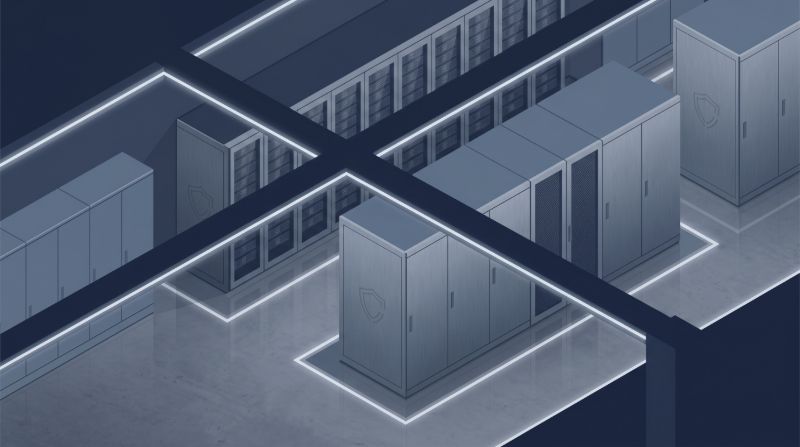
A private boundary without operations is just exclusive hardware the tenant must run. The managed layer turns that boundary into a sustained, available service. The capabilities below define what a credible managed private GPU cloud should deliver, each tied to an operational risk that compounds when sensitive data is involved.
Provider-Enforced Isolation, Documented for Audit
The provider should enforce single-tenancy structurally and document the isolation and wipe procedures so the tenant can prove the boundary during audit. For sensitive data, this is preferable to configuring isolation on shared cloud and reconstructing the proof afterward.
24/7 Monitoring of the Private Environment
Continuous monitoring should cover GPU health, job status, and security-relevant access events inside the private boundary. Because the environment is isolated, the provider's monitoring must reach into it under agreed rules, not rely on the tenant to surface problems.
BAA-Covered Operations Staff
For regulated workloads, the people operating the environment must be authorized to interact with it. Operations staff should be covered by the Business Associate Agreement or equivalent, follow documented runbooks, and produce records that feed the tenant's compliance process.
Change Control and Lifecycle Management
Patching, scaling, and retiring capacity inside the private boundary must happen under change control with recorded approvals. Lifecycle management also includes documented data wipe when hardware is decommissioned, so no sensitive data remains on retired nodes.
Managed Private GPU Cloud vs Alternatives
Three deployment patterns compete for teams with sensitive workloads. The table compares how each handles the isolation and operations pressures that drive the managed private decision.
| Dimension | Shared Public Cloud | Self-Operated Private | Managed Private GPU Cloud |
|---|---|---|---|
| Isolation boundary | Configured, hard to prove | Strong, tenant-owned | Strong, provider-enforced |
| Operations burden | Low (provider runs cloud) | High (tenant staffs it) | Low (provider runs it) |
| Control over data path | Limited | Full | High, within boundary |
| After-hours coverage | Provider | Internal on-call | Provider under SLA |
| Fit for sensitive data | Weak without heavy config | Strong but costly to run | Strong and operated |
When a Managed Private GPU Cloud Is the Right Fit
This model is the strongest fit when both conditions hold: the workload needs a private boundary for sensitive or regulated data, and the team cannot sustain compliant GPU operations internally. Several common situations meet both criteria.
Regulated Teams Without GPU Operations Depth
A hospital or payer running clinical AI needs isolation for PHI but rarely has deep, round-the-clock GPU operations staff. A managed private GPU cloud gives the boundary compliance requires and the operations the team cannot easily provide.
Financial Teams With Audit and Residency Needs
Banks and FinTech firms need fixed data residency and audit-friendly boundaries for risk and fraud models, but their infrastructure talent is focused on trading and core banking, not GPU clusters. Outsourcing operations to a BAA-covered provider closes the gap.
Research Institutions Sharing Sensitive Data
Research teams working with controlled datasets need a private boundary, but operating it across many departments is complex. A managed private environment with governance lets them share capacity safely without becoming an operations team.
Evaluating a Managed Private GPU Cloud Provider
Because this model combines isolation and operations, the evaluation must cover both. The checklist below condenses the criteria into verification points for procurement.
| Criterion | What to Verify |
|---|---|
| Isolation proof | Documented single-tenancy and wipe procedure |
| Operations under BAA | Ops staff named in the agreement |
| Monitoring reach | Provider monitors inside the boundary under agreed rules |
| Change control | Recorded approvals for patches and scaling |
| Data residency | Fixed region commitment |
| SLA scope | Availability and response for the private environment |
Common Gaps When Isolation and Operations Split
When the isolation boundary and the operations team come from different providers, or when a provider's operations are not truly covered by the compliance agreement, specific failures appear. These gaps are subtle during sales conversations but visible during an incident.
Operations Staff Outside the Compliance Scope
A provider may enforce isolation but route operations to engineers not covered by the BAA. If those engineers can access the environment, the workforce security safeguard is incomplete. Confirm every operational role with potential access is named in the agreement.
Monitoring That Stops at the Boundary
If the provider's monitoring cannot reach inside the private environment, the tenant becomes responsible for detecting problems, which defeats the purpose of managed operations. Confirm the provider monitors inside the boundary under agreed rules.
Unclear Accountability During Incidents
When an incident spans the boundary and the operations layer, unclear ownership slows recovery. The provider should define, in advance, who responds, under what SLA, and how root-cause analysis is delivered.
How OneSource Cloud Combines Private Boundary and Managed Operations
OneSource Cloud's private AI infrastructure provides the dedicated, single-tenant boundary that sensitive workloads require, with U.S.-based data centers supporting data residency. The managed AI infrastructure layer adds the 24/7 monitoring, lifecycle management, and incident response that keep that boundary available without the tenant staffing operations.
For regulated teams, the healthcare AI infrastructure and financial services AI infrastructure offerings tailor the managed private model to specific compliance contexts, while the OnePlus Platform, OneSource Cloud's AI orchestration platform, adds governance for teams sharing the private environment across multiple workloads.
FAQ
What is a managed private GPU cloud?
It is a single-tenant GPU environment where the provider enforces the isolation boundary and also runs the operations that keep it available. It combines the data protection of a private boundary with the operations support of a managed service, suited to teams that need both.
When should a team choose managed private GPU cloud?
When the workload needs a private boundary for sensitive or regulated data and the team cannot sustain compliant GPU operations internally. Hospitals, financial firms, and research institutions with controlled datasets commonly fit this profile.
How is managed private different from managed dedicated GPU cloud?
The emphasis differs. Managed dedicated focuses on single-tenant hardware plus operations for teams that want reserved capacity run for them. Managed private emphasizes the protected data boundary plus operations for teams whose primary concern is sensitive data isolation, often under a BAA.
Can operations staff access a managed private GPU environment?
They can, but only under the compliance agreement. For regulated workloads, operations staff must be covered by the BAA or equivalent, follow documented runbooks, and have their access logged. Confirm every operational role with potential access is named in the agreement.
Is a managed private GPU cloud more expensive than shared cloud?
It carries a higher baseline cost than shared cloud, but for sensitive continuous workloads it bundles isolation and operations that shared cloud would require the tenant to configure and staff. The value depends on how much the team needs a provable boundary and outsourced operations.
How do I verify a managed private GPU provider is compliant?
Ask for documented single-tenancy and wipe procedures, confirmation that operations staff are covered by the BAA, evidence that monitoring reaches inside the boundary, fixed data residency commitments, and an SLA scoped to the private environment. Verifiable documentation, not claims, confirms compliance.
Summary
A managed private GPU cloud serves teams caught between the need for a protected data boundary and the inability to operate GPU infrastructure themselves. The right provider enforces isolation structurally, runs operations under the compliance agreement, monitors inside the boundary, and documents everything for audit. For regulated teams that cannot staff round-the-clock GPU operations, combining a private boundary with managed operations under one accountable provider is what makes sensitive AI workloads sustainable.
Next step: Explore OneSource Cloud's managed AI infrastructure to see how private isolation and managed operations work together →
Related Articles