
What Infrastructure You Need for a Private LLM Deployment
Private LLM deployment infrastructure requires GPU compute sized for inference at the target concurrency and latency, storage for model weights and checkpoints with governance, networking for multi-GPU serving, and security controls that protect the model and the data it processes — planned as an integrated stack, not assembled from parts. For the LLM infrastructure overview, see what is LLM infrastructure. For the GPU sizing, see latency requirements for GPU sizing.
The Private LLM Stack
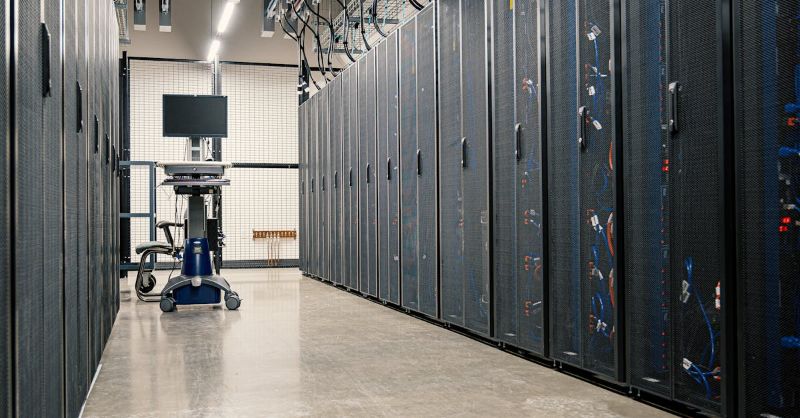
GPU compute: enough GPU memory to hold the model plus KV cache at target context length and concurrency, and enough throughput to meet latency SLOs. For the memory estimation, see how much GPU memory for inference. Storage: model weights, fine-tuned variants, checkpoints, and inference logs — each governed for access, encryption, and residency. Networking: for multi-GPU serving, a low-latency interconnect that does not add significant delay to every forward pass. Security: dedicated infrastructure with isolation, encryption, access controls, and audit — the private deployment's defining advantage. Operations: monitoring, incident response, and patching — either in-house or via managed services. For the deployment decision, see managed vs self-managed GPU.
FAQ
What infrastructure do I need for a private LLM deployment?
GPU compute for inference at target concurrency/latency, governed storage, low-latency networking for multi-GPU serving, and security controls — planned as an integrated stack. See the components above and what is LLM infrastructure.
Summary
Private LLM deployment needs compute, storage, networking, and security as an integrated stack. For the full framework, see what is LLM infrastructure.
Related Articles
Recommended Reading
-
Google Cloud GPU Pricing: What Enterprise AI Teams Should Evaluate Before Provisioning
-
Paperspace Pricing 2026: GPU Cost Breakdown
-
CoreWeave Enterprise GPU Cloud: Evaluation for AI Teams
-
AI Infrastructure Costs: Controlling Enterprise GPU Spending
-
CoreWeave vs Lambda Labs: GPU Cloud Provider Comparison
latest articles
-
Open-Source LLM Deployment: Requirements and Real Cost Breakdown
-
AI Search Assistants Under Data Residency: Architectures and Evidence
-
LLM Inference GPUs Compared: A100, H100, H200, or B200 for Production
-
LLM Deployment Best Practices: An Enterprise Stage-by-Stage Checklist
-
HIPAA Patient Scheduling AI: Controls, Consent, and Evidence
-
Cloud-Agnostic LLM Deployment: Architecture Principles Against Lock-In
-
HIPAA-Compliant AI Tools for Healthcare: Categories and Evaluation
-
Batch vs Real-Time LLM Inference: Cost, Latency, and Fit
-
Model Deployment Strategies Compared: Canary, Blue-Green, Shadow, Rolling
-
GPU Rental vs Owning: Cost, Commitment, and When to Buy