
GPU Confidential Computing: Hardware Attestation and HBM Encryption
As enterprise foundation models and fine-tuned proprietary architectures become core corporate intellectual property, protecting model weights, proprietary dataset embeddings, and confidential inference prompts against unauthorized exposure has emerged as an urgent cybersecurity mandate. In traditional multi-tenant cloud environments and managed hosting facilities, infrastructure operators, hypervisor root administrators, third-party maintenance contractors, and rogue container processes share physical access to host buses and hardware memory controllers. Even with end-to-end TLS encryption in transit and AES-256 at rest, data during execution—in use within GPU High Bandwidth Memory (HBM) and traversing high-speed PCIe Gen5 interconnects—has historically remained completely unencrypted. GPU Confidential Computing revolutionizes AI infrastructure security by extending hardware-enforced Trusted Execution Environments (TEEs) directly into modern accelerators (such as NVIDIA Hopper H100 and Blackwell architectures). By combining on-the-fly HBM memory encryption, hardware PCIe root-of-trust firewalls, and cryptographic remote attestation, confidential computing establishes a mathematically provable security boundary that blinds host operating systems, hypervisors, and cloud provider administrators from inspecting active AI workloads.
Regulatory and Technical Scope: Threat Models for High-Value Model Weights
Securing enterprise AI in regulated industries—including healthcare (HIPAA/PHI), financial services (PCI-DSS/GLBA), and national defense—requires evaluating infrastructure against rigorous threat models.
Attack Vectors Mitigated by GPU Confidential Computing
GPU Confidential Computing is engineered to neutralize three primary classes of severe security vulnerabilities:
- Compromised Cloud Host and Hypervisor Escape: In virtualized or multi-tenant clouds, an attacker achieving root privilege on the host KVM/QEMU hypervisor can execute DMA memory dumps, inspect host page tables, or attach kernel debuggers to siphon proprietary model weights directly from accelerator memory. With confidential computing enabled, all host-to-GPU channels are hardware-encrypted.
- Physical Interposer and Bus Snooping: In shared colocation datacenters, untrusted third-party staff with physical access can attach logic analyzers or interposers to PCIe Gen5 bus traces. Hardware encryption across the PCIe interface ensures that physical bus captures reveal only ciphertext noise.
- Unauthorized Telemetry and Prompt Scraping: Cloud provider management agents and background monitoring daemons are physically blocked from capturing unencrypted memory pages during automated crash dump generation or performance profiling routines.
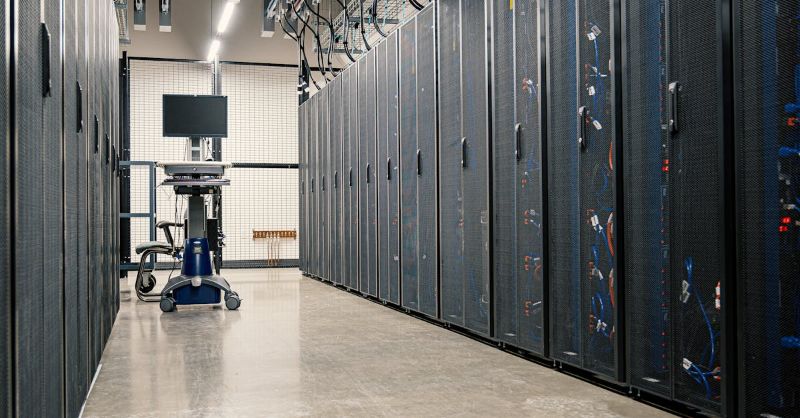
The following table delineates the protection scope across standard cloud hosting, software enclaves, and full GPU confidential computing:
| Security Threat Vector | Standard Cloud Hosting | CPU-Only Enclaves (Intel SGX) | GPU Confidential Computing (Hopper/Blackwell) |
|---|---|---|---|
| Host OS / Hypervisor Root Memory Dump | Vulnerable (Unencrypted HBM) | CPU DRAM Protected; GPU VRAM Exposed | Protected (Hardware AES-XTS-256 HBM Encryption) |
| PCIe Gen5 Bus Interposer Snooping | Vulnerable (Cleartext PCIe DMA) | Vulnerable (Cleartext Host-to-Device) | Protected (SPDM Hardware Encryption Session Keys) |
| Hardware Firmware Tampering (BMC/Rootkit) | Undetected at runtime | CPU measurement only | Protected (Cryptographic Firmware Attestation / RIMs) |
| Large Model Execution Capability | Full GPU throughput (100%) | Severe CPU bottleneck (<5% GPU speed) | Near Line-Speed Hardware Acceleration (95% to 98% MFU) |
Shared Responsibility Model: Silicon Cryptography vs Cloud Operator Perimeter
Operating inside a confidential compute environment does not eliminate security responsibilities; it redistributes them across a precise shared responsibility model:
- Silicon Manufacturer Responsibility (Silicon Root-of-Trust): The hardware manufacturer (e.g. NVIDIA) owns the internal hardware cryptographic engines, the factory-provisioned device certificate authority (e.g. NVIDIA Device CA), and the Golden Reference Image (RIM) signing infrastructure that mathematically defines untampered hardware and microcode states.
- Cloud Infrastructure Provider Responsibility: The cloud provider (e.g. OneSource Cloud) owns physical datacenter facility security, hardware supply chain integrity, host motherboard firmware maintenance, and non-blocking out-of-band network connectivity to attestation verification services.
- Enterprise Tenant Responsibility: The enterprise tenant owns the guest operating system, container runtime security, application code, model weight encryption keys, and the automated execution of remote attestation verification scripts prior to injecting decryption keys into the enclave.
Audit Evidence and Attestation Artifacts: Validating Non-Tampered Execution
In high-compliance audit environments, claiming hardware encryption is insufficient; security teams must generate cryptographically signed proof that execution occurred within a validated, untampered hardware environment.
Remote Attestation Architecture and SPDM Protocols
Hardware attestation utilizes the Security Protocol and Data Model (SPDM) standard. During boot and enclave initialization, the following cryptographic sequence executes:
- Measurement Generation: The on-die GPU Security Processor measures the cryptographic hashes of all internal firmware layers, microcode routines, and hardware security fuses.
- Evidence Signing: The GPU signs this measurement evidence using its factory-burned, unforgeable Device Private Key, which chains back to the manufacturer's root certificate.
- Evidence Retrieval: The tenant's verification software extracts this signed evidence bundle using standard driver APIs (such as the
nvtrustCLI or NVML libraries). - Relying Party Verification: The evidence is submitted to an independent verification service (or verified locally against offline Golden RIMs). The verifier validates the signature chain and confirms that all hash measurements match approved security baselines before authorizing the release of proprietary model weights.
// Bash: Generating and Validating GPU Remote Attestation Evidence
// 1. Query the GPU Security Processor for a signed attestation token
nvtrust-cli generate-evidence --output /var/run/attestation/gpu_evidence.bin
// 2. Verify evidence against manufacturer root certificate and Golden RIMs
nvtrust-cli verify-evidence \
  --evidence /var/run/attestation/gpu_evidence.bin \
  --rim-path /etc/nvtrust/golden_rims/ \
  --expected-security-state CC_ENABLED
// 3. Exit code 0 confirms non-tampered hardware state; proceed to unlock weights
Residual Security Risks: Side-Channel Vectors and Latency Tradeoffs
While GPU Confidential Computing provides the highest hardware security boundary available in modern computing, enterprise security architects must account for residual technical considerations:
Memory Bus Timing Side-Channels
Hardware encryption guarantees that data contents in HBM cannot be read in plaintext. However, statistical side-channel attacks—such as monitoring memory bus memory access frequencies, packet timing intervals across RoCEv2 fabrics, or micro-variations in chip power consumption—can theoretically allow sophisticated adversaries to infer structural token sequence lengths or layer activation patterns. Defending against these side-channels requires applying constant-time cryptographic primitives and randomizing batch padding.
Performance Latency Overhead
Hardware encryption engines integrated directly into memory controllers operate at wire speed, but introduced latency is not entirely zero. On distributed 70B and 405B parameter LLM inference workloads, enabling full confidential computing mode introduces an empirical throughput overhead of approximately 3.2% to 4.8%. This minor performance tradeoff is overwhelmingly acceptable for enterprise organizations securing proprietary models worth tens of millions of dollars.
Frequently Asked Questions
Can a cloud provider's root administrator inspect model weights inside a GPU confidential computing enclave?
No. When confidential computing is enabled, all data in transit across PCIe and at rest in HBM is encrypted with hardware-managed keys inaccessible to the host OS or hypervisor.
Does OneSource Cloud support GPU confidential computing and hardware attestation?
OneSource Cloud provides dedicated bare-metal Hopper and Blackwell GPU servers supporting full confidential computing mode with direct access to hardware attestation endpoints.
Related Articles
Recommended Reading
-
How Paged Attention Manages Inference KV Cache
-
Google Cloud GPU Pricing: What Enterprise AI Teams Should Evaluate Before Provisioning
-
Paperspace Pricing 2026: GPU Cost Breakdown
-
AI Infrastructure Costs: Controlling Enterprise GPU Spending
-
CoreWeave Enterprise GPU Cloud: Evaluation for AI Teams
-
CoreWeave vs Lambda Labs vs OneSource Cloud: GPU Provider Decision Guide
-
U.S. Data Residency in the Cloud: Requirements, Regulations & Compliance Guide
-
AWS GPU Pricing: Instance Types, Cost Structure & Alternatives Guide
latest articles
-
Direct-to-Chip Liquid Cooling for AI Clusters: Facility CDUs, Secondary Loops, and Leak Detection Runbooks
-
Concurrent Request Scaling and GPU Memory Sizing in LLMs
-
LLM Retrieval Quality Monitoring Pipeline in Enterprise RAG
-
Throughput Targets and Latency Trade-offs in LLM Inference
-
LLM Inference Cost per GPU Hour and Token Economics
-
GPUDirect Storage vs CPU Bounce Buffers: DMA Bypass, PCIe Topology, and High-Throughput AI I/O
-
GPU Requirements for Production LLM Inference Workloads
-
Disaggregated Prefill and Decode for Enterprise LLMs: KV Cache RDMA Transfer, TTFT, and Serving Economics
-
Distributed Training Encryption Policy for Enterprise AI
-
H100 Server Electricity Cost Model for High-Density AI