
GPU Cluster Storage: Design for the Data Path
Quick Answer: GPU cluster storage is a tiered data architecture that supplies datasets, model artifacts, checkpoints, caches, logs, and backups at the performance and governance level each workload requires. The practical decision is not based on a label. It depends on measurable workload behavior, control requirements, operating ownership, and evidence that the proposed environment can meet the intended service objective.
Buying fast storage without mapping the data path can leave GPUs waiting on metadata, small files, model loading, checkpoint bursts, or shared-client contention. Different stages of training and inference need different capacity and access behavior. A useful evaluation connects technical architecture to cost, risk, and the people who must operate the service after launch.
Why This Decision Matters for Enterprise AI
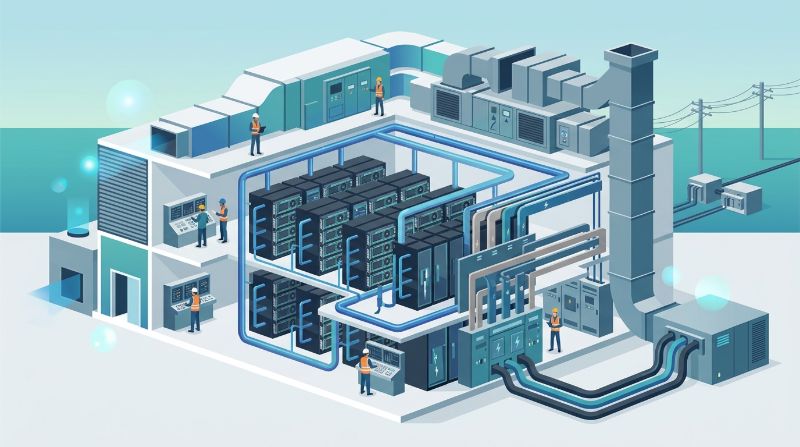
Enterprise AI systems connect models to data, GPU capacity, networks, storage, identity, release workflows, and support processes. A weakness in any layer can appear as slow delivery, unstable service, security exposure, or unexpected cost. The architecture should therefore be reviewed as an operating system around the model, not as a hardware purchase.
Buyers should separate facts from assumptions. A provider feature, benchmark, or reference architecture is useful only when it maps to the organization's model size, concurrency, data path, service target, and change process. Documenting that mapping also creates concise, reusable evidence for procurement, security review, and later capacity decisions.
Evaluation Framework
| Decision area | What to verify |
|---|---|
| Data class | Datasets, model artifacts, checkpoints, container images, caches, logs, and backups. |
| Access pattern | Sequential or random I/O, file size, read/write mix, client count, burst, and locality. |
| Service target | Throughput, latency, metadata rate, recovery point, retention, and access-control requirement. |
| Integration | Network path, GPU Direct options, scheduler, Kubernetes interfaces, observability, and lifecycle. |
The framework should be applied to the same workload profile for every option. Without a common baseline, one proposal may include managed operations and high-performance storage while another quotes only compute. Normalizing the scope prevents a lower headline price from hiding responsibilities that the enterprise must fund elsewhere.
How to Turn the Decision into an Executable Plan
- Inventory every data class and its movement through the workload.
- Measure representative access patterns instead of using peak vendor bandwidth.
- Assign data classes to performance, capacity, and protection tiers.
- Validate model loading, checkpoint, recovery, and multi-client contention before acceptance.
Evidence to collect before approval
Collect the workload profile, architecture diagram, responsibility matrix, capacity model, security and data-flow records, cost assumptions, benchmark method, risk register, and acceptance plan. Each item should name an owner and a review date. Evidence that cannot be reproduced should remain an open assumption rather than becoming an architectural fact.
Acceptance should test the complete path
Acceptance testing should include representative models and data, not only component health. Measure service behavior under normal load, peak load, maintenance, and selected failures. Record the exact hardware, software, configuration, request profile, and pass conditions so the result can be compared after upgrades or expansion.
How OneSource Cloud Fits the Operating Model
OneSource Cloud's Private AI Infrastructure is designed around dedicated environments, U.S.-based data center options, and architecture-to-operations delivery. Its Managed AI Infrastructure service can cover ongoing cluster monitoring, optimization, and lifecycle work when an enterprise does not want to own every Day 2 responsibility.
For teams that need a control plane above private GPU capacity, the OnePlus AI orchestration platform connects infrastructure visibility, developer environments, scheduling, and workload operations. Storage-heavy or distributed workloads should also review the AI storage architecture and network data path instead of treating GPUs as an isolated purchase.
FAQ
Why do GPUs wait on storage?
GPUs can wait when storage throughput, metadata performance, client concurrency, network paths, or data preparation cannot feed the workload. Small-file access, checkpoint bursts, model loading, and shared contention may matter more than a single sequential bandwidth number. GPU and storage telemetry should be reviewed together.
What storage is needed for LLM inference?
Inference commonly needs durable model artifact storage, fast local or shared cache, container images, logs, and backup or registry services. The design depends on model size, startup target, replica count, update frequency, and failure model. Large distributed services may also move model data across nodes.
How should checkpoint storage be designed?
Start with checkpoint size, frequency, concurrent writers, retention, recovery target, and failure domain. The storage path must absorb bursts without starving training data. Teams should test both write and restore behavior because a fast checkpoint that restores slowly can still extend recovery time.
Does low latency matter more than throughput?
It depends on the access pattern. Large sequential dataset reads may be throughput-bound, while metadata-heavy small files and model startup can be latency-sensitive. Distributed training and multi-client inference can expose both constraints. Benchmark with representative files, clients, network paths, and concurrency rather than choosing one headline metric.
Summary
GPU Cluster Storage: Design for the Data Path is ultimately an evidence-based operating decision. Define the workload, normalize scope, assign responsibilities, model realistic costs, and test the complete path. This approach makes the architecture easier to operate, audit, expand, and revisit as models and demand change.
Next step: Request a private AI infrastructure architecture review to map workload, capacity, data, and operating requirements before procurement or migration.
Related Articles
Recommended Reading
-
How Paged Attention Manages Inference KV Cache
-
Google Cloud GPU Pricing: What Enterprise AI Teams Should Evaluate Before Provisioning
-
Paperspace Pricing 2026: GPU Cost Breakdown
-
AI Infrastructure Costs: Controlling Enterprise GPU Spending
-
CoreWeave Enterprise GPU Cloud: Evaluation for AI Teams
-
CoreWeave vs Lambda Labs: GPU Cloud Provider Comparison
-
AWS GPU Pricing: Instance Types, Cost Structure & Alternatives Guide
-
CoreWeave Alternatives: Compare GPU Clouds
latest articles
-
Which GPU Quote Terms Break at Renewal: Price and Capacity Fixes
-
Biotech GPU Computing Requirements: Genomics and Drug Discovery
-
Training Network Encryption: Requirements and Throughput Costs
-
GPU Depreciation Schedule and Monthly Cost at 3, 5, and 6 Years
-
Inference vs Training Storage Requirements for AI Clusters
-
GB200 NVL72 Rack Power Requirements for Facility Planning
-
How to Verify Data-Center GPU Firmware Measurement and Security
-
Why GPUs Stall on NFS During Training: Diagnosis and Fixes
-
GPU Driver and Firmware Pairing Without Deployment Delays
-
Measuring CUDA Graph Impact on LLM Inference Response Times