
Enterprise AI Infrastructure Platform Evaluation Criteria
An enterprise AI infrastructure platform is a control layer that connects GPU resources, workload scheduling, developer environments, model deployment, observability, security, and operational policy. Buyers should evaluate whether the platform improves the complete path from infrastructure to production rather than counting isolated features.
The right platform depends on existing clusters, team skills, workload mix, compliance boundaries, and operating ownership. A credible evaluation uses representative training, inference, and developer workflows, then measures provisioning time, queue behavior, utilization, policy enforcement, recovery, and administrative effort. It should also expose which responsibilities remain outside the platform. Price those responsibilities before making a decision. Record exclusions.
Define the Platform Category Before Comparing Products
AI platforms operate at different layers. A cloud ML service may package notebooks, pipelines, and hosted endpoints. A Kubernetes distribution may provide cluster primitives. A scheduler may focus on placement and queues. An AI infrastructure management platform can combine cluster visibility, orchestration, developer workspaces, deployment, and operations.
Do not rank these as interchangeable products without explaining the category difference. Create a required-capability map first, then identify which components the platform supplies, integrates, or leaves to the customer. This prevents a broad product from appearing stronger merely because it covers more unrelated layers.
Evaluate Seven Decision Areas
| Decision area | What to test | Evidence of fit |
|---|---|---|
| Infrastructure integration | GPU, network, storage, Kubernetes or Slurm, and existing identity | Supported topology and successful discovery of the target environment |
| Scheduling and governance | Queues, quotas, priorities, tenancy, reservations, and fair sharing | Policy remains enforceable during contention and failure |
| Developer experience | Workspace launch, images, data access, secrets, reproducibility | A developer reaches an approved environment without manual tickets |
| Training and pipelines | Distributed jobs, checkpoints, retries, lineage, artifacts | A failed job can resume with traceable inputs and outputs |
| Inference operations | Deployment, versions, scaling, latency, rollback, health | A model release meets service objectives and can be reversed safely |
| Observability and cost | GPU, queue, job, model, storage, network, and tenant metrics | Teams can explain utilization, bottlenecks, and chargeback |
| Security and lifecycle | Access, isolation, audit, patching, backup, portability, support | Control evidence and an executable upgrade and exit plan |
Test GPU Scheduling Under Real Contention
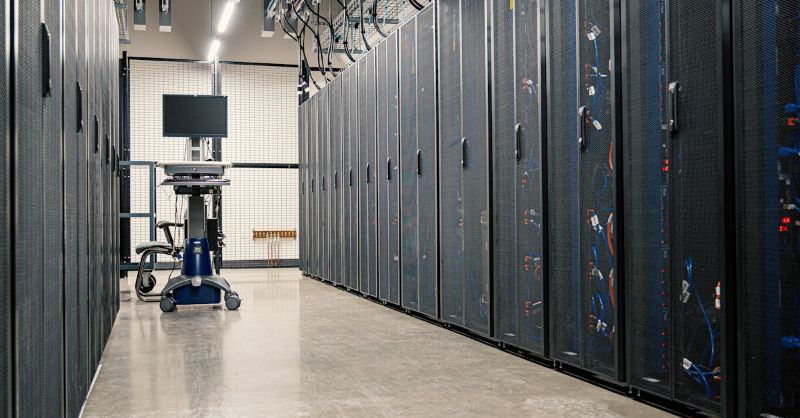
A platform should know which GPU resources exist and place workloads according to resource, topology, priority, and policy. Kubernetes exposes GPUs through vendor device plugins, but enterprise scheduling often needs additional queueing, quotas, reservations, multi-team isolation, and visibility.
Run a contention scenario with an interactive notebook, a distributed training job, a production inference service, and a lower-priority batch job. Verify queue order, preemption policy, quota enforcement, topology awareness, and recovery after a node becomes unavailable. Observe whether administrators can explain every placement decision.
Measure the Developer Path to a Reproducible Environment
Time how long a user takes to request access, launch a workspace, attach approved data, select an image, obtain GPU capacity, run code, and save an artifact. Self-service is valuable only when identity, secrets, network policy, resource limits, and data boundaries remain enforceable.
Evaluate image governance, dependency versioning, notebook and job conversion, Git integration, experiment metadata, and cleanup. A fast workspace that cannot be reproduced or audited moves effort downstream into debugging and compliance review.
Validate Training and Checkpoint Workflows
Submit representative single-node and distributed jobs. Confirm environment packaging, data access, topology, logs, failure detection, retry behavior, checkpoints, and artifact promotion. Measure queue time, startup, GPU utilization, failed-job diagnosis, and the operator steps required to resume.
The platform should expose storage and network bottlenecks rather than presenting low GPU utilization as a scheduling problem. Verify whether it can correlate jobs with the supporting infrastructure metrics or whether operators must assemble that view manually.
Evaluate Model Deployment as an Operational Lifecycle
Deployment should cover versioned artifacts, configuration, approval, rollout, health, traffic, scaling, monitoring, rollback, and retirement. Test a canary or staged change and introduce a controlled failure. Confirm how the platform protects an existing service while a new version is evaluated.
Measure time to first token, inter-token latency, throughput, queue time, errors, and resource use for LLM endpoints. Determine which runtime settings are visible and who owns tuning. A model catalog without service telemetry is not sufficient for production operations.
Require Infrastructure-to-Workload Observability
Dashboards should connect GPU health and utilization with jobs, users, queues, models, storage, and networking. Otherwise, operations teams cannot distinguish low demand from a scheduler, data, or network constraint. Retain event and change history so an incident can be reconstructed.
For cost allocation, define the resource unit, idle-capacity treatment, shared-service allocation, and ownership tags. Reports should let teams explain cost per job, project, model service, or token while preserving the infrastructure capacity view needed for planning.
Review Security, Portability, and Operating Ownership
Verify identity federation, role design, privileged access, tenant isolation, secret handling, network policy, artifact permissions, audit logs, and data-location controls. Ask which administrative actions are available to the provider and which evidence customers can export.
Portability should be tested, not promised. Export workload definitions, images, artifacts, metadata, logs, and policy configurations. Document proprietary dependencies and the process to operate during a platform outage or contract exit. Also assign ownership for upgrades, compatibility tests, backup, incident response, and support escalation.
Position OnePlus in the Evaluation
OnePlus is OneSource Cloud's AI orchestration platform for GPU cluster management, workload orchestration, developer environments, and infrastructure observability. It is most relevant when an organization wants a unified operating layer across private AI resources rather than a collection of disconnected cluster tools.
The platform evaluation should still include the underlying environment. Private AI Infrastructure covers dedicated compute, storage, and networking, while Managed AI Infrastructure addresses ongoing monitoring, optimization, lifecycle, and support. Buyers should score platform and operations as connected but distinct responsibilities.
FAQ
Is an AI infrastructure platform the same as an MLOps platform?
They can overlap, but the categories are not identical. MLOps commonly emphasizes model development, pipelines, registry, and deployment. AI infrastructure platforms may extend deeper into GPU clusters, scheduling, storage, networking, developer environments, and operations. Compare required workflows and boundaries instead of relying on the label.
Can Kubernetes alone manage an enterprise GPU platform?
Kubernetes provides important orchestration and device-management primitives, but many enterprises add queueing, quotas, topology-aware scheduling, developer workspaces, model serving, observability, governance, and operational processes. Kubernetes may be the foundation without being the complete user and operations platform. The operating model still matters.
Which proof of concept best evaluates an AI platform?
Use a cross-functional workflow that includes self-service development, a distributed training job with checkpoint recovery, a versioned inference deployment, team quotas, observability, and a controlled failure. It reveals integration and operating effort better than a scripted product demonstration of one feature.
How should enterprise teams weight platform criteria?
Weight criteria by workload risk and operating model. Regulated production teams may prioritize access evidence, isolation, recovery, and support. Research teams may prioritize flexible environments and scheduling. Keep mandatory controls as pass-fail gates so a high convenience score cannot compensate for a missing security boundary.
Summary
Evaluate enterprise AI infrastructure platforms through real workflows across scheduling, development, training, inference, observability, security, portability, and operations. A OneSource Cloud platform assessment can map these criteria to the existing GPU environment and target operating model.
Related Articles
Recommended Reading
-
Google Cloud GPU Pricing: What Enterprise AI Teams Should Evaluate Before Provisioning
-
Paperspace Pricing 2026: GPU Cost Breakdown
-
CoreWeave Enterprise GPU Cloud: Evaluation for AI Teams
-
AI Infrastructure Costs: Controlling Enterprise GPU Spending
-
CoreWeave vs Lambda Labs: GPU Cloud Provider Comparison
latest articles
-
Open-Source LLM Deployment: Requirements and Real Cost Breakdown
-
AI Search Assistants Under Data Residency: Architectures and Evidence
-
LLM Inference GPUs Compared: A100, H100, H200, or B200 for Production
-
LLM Deployment Best Practices: An Enterprise Stage-by-Stage Checklist
-
HIPAA Patient Scheduling AI: Controls, Consent, and Evidence
-
Cloud-Agnostic LLM Deployment: Architecture Principles Against Lock-In
-
HIPAA-Compliant AI Tools for Healthcare: Categories and Evaluation
-
Batch vs Real-Time LLM Inference: Cost, Latency, and Fit
-
Model Deployment Strategies Compared: Canary, Blue-Green, Shadow, Rolling
-
GPU Rental vs Owning: Cost, Commitment, and When to Buy