
Deploying Enterprise AI Models on Dedicated Private GPU Clusters
Transitioning enterprise foundation models, multimodal vision transformers, and fine-tuned domain-specific large language models (LLMs) from offline training pipelines into high-availability production serving environments is a pivotal operational milestone. While research teams prioritize total batch throughput and long-running job stability, production serving environments are judged by time-to-first-token (TTFT) latency, inter-token generation speed, concurrent request scalability, and absolute prompt confidentiality. Deploying enterprise models onto shared public cloud API endpoints or multi-tenant virtualized instances introduces severe operational friction: unpredictable noisy-neighbor latency spikes, unverified prompt caching, and risks of proprietary model weight extraction. Successfully operationalizing enterprise models requires deploying optimized inference runtimes onto physically dedicated, bare-metal GPU clusters engineered for high concurrency and microsecond latency.
The Production Vulnerabilities of Shared Inference Platforms
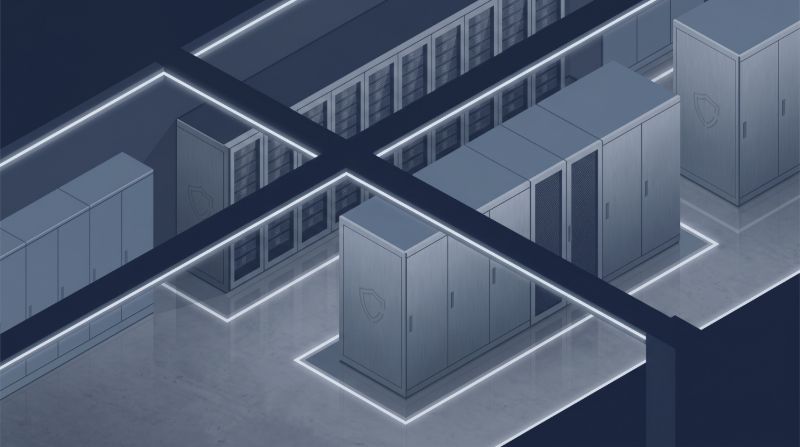
Serving sensitive proprietary models within multi-tenant cloud environments creates significant technical and compliance hazards:
- Noisy-Neighbor Tail Latency Jitter: In virtualized multi-tenant environments, neighboring tenants executing high-throughput kernels contend for shared CPU memory buses and PCIe switches. In synchronous user-facing applications, this contention causes erratic tail-latency spikes that breach customer-facing service level agreements.
- Context and Prompt Caching Leakage: Modern inference engines rely heavily on Key-Value (KV) cache optimizations (such as PagedAttention) to sustain high concurrency. In shared multi-tenant instances, memory fragmentation or hypervisor bugs create latent vulnerability windows where cached prompt tokens could be accessed by adjacent workloads.
- Proprietary Model Weight Vulnerability: Enterprises invest millions of dollars curating proprietary fine-tuned weights. Hosting models on unverified virtualized nodes exposes intellectual property to side-channel memory snooping and hypervisor escape exploits.
Architectural Principles for Dedicated Private Model Serving
Building a robust, enterprise-grade model serving platform demands implementing four foundational architectural pillars:
- Physically Dedicated Single-Tenant Bare Metal: Serving nodes must consist of dedicated bare-metal servers equipped with modern high-performance accelerators (such as NVIDIA HGX H100, H200, or L40S). Physical dedication eliminates virtualization hypervisor overhead, prevents memory contention, and guarantees full hardware exclusivity.
- Optimized Serving Runtimes (vLLM / TensorRT-LLM): Deploy modern, optimized inference runtimes that incorporate continuous batching, PagedAttention, and custom CUDA kernel fusions. Serving runtimes must maximize tensor core utilization and dynamically manage KV cache memory without memory fragmentation.
- High-Speed Tensor Parallelism across NVLink: When serving large models (such as 70B parameter models) that exceed single-GPU memory capacity, the serving engine must execute tensor parallelism across multi-GPU NVLink meshes (delivering 900 GB/s per GPU on H100 systems), preventing the communication bottlenecks inherent in standard PCIe buses.
- Strict Zero Data Retention (ZDR) Execution Policies: The serving stack must operate under strict zero-logging configurations. Prompts, intermediate activation states, and generated completions must reside strictly in volatile GPU High Bandwidth Memory (HBM) and be purged immediately upon request termination, with zero persistent logging to local disk arrays.
By leveraging OneSource Cloud's managed AI infrastructure, enterprise teams deploy isolated inference clusters on demand. OneSource combines dedicated bare-metal hardware, custom low-latency networking, and turnkey compliance isolation to deliver sub-50ms time-to-first-token responses and absolute intellectual property protection.
Serving Architecture Comparison: Public API vs. Dedicated Private GPU
The following architectural matrix contrasts commercial public AI APIs, multi-tenant cloud virtual GPUs, and OneSource Cloud's dedicated private model serving cluster:
| Serving Dimension | Public Commercial SaaS APIs | Multi-Tenant Cloud Virtual GPUs | OneSource Dedicated Private Serving Cloud |
|---|---|---|---|
| Hardware Exclusivity | Opaque multi-tenant shared server pools | Virtualized GPU partitions (vGPU/MIG) | 100% Physically Dedicated Single-Tenant Bare Metal |
| Prompt Privacy & Retention | Prompts often logged for vendor retraining | Shared host memory risks residual caching | Strict Zero Data Retention (ZDR) enforced in VRAM |
| Model Weight Protection | Vendor-hosted black box model | Shared hypervisor vulnerability surface | Hardware-isolated local NVMe-oF encrypted storage |
| Latency Determinism | High variance; erratic queue wait times | Tail-latency jitter from noisy neighbors | Predictable sub-50ms TTFT with dedicated NVLink |
| Inter-GPU Interconnect | Unknown virtual networking | Virtualized PCIe / software bridges | Direct 900 GB/s NVLink & 800G RoCE v2 fabrics |
| Compliance Alignment | Consumer terms of service; no custom controls | Generic cloud shared responsibility | Turnkey SOC 2 Type II, HIPAA, and ISO aligned |
This comparison confirms that physical hardware isolation delivers the latency consistency, security assurances, and intellectual property protection mandatory for production enterprise deployments.
Production Deployment and Serving Checklist
To ensure private model serving clusters maintain peak performance and ironclad confidentiality in production, engineering teams should implement four operational controls:
- Enforce Mutual TLS Authentication: Secure all inference API endpoints with mTLS, requiring cryptographic client certificates for every internal microservice communicating with the model serving cluster.
- Configure Ephemeral Memory Scratch Spaces: Ensure inference worker pods utilize high-speed local NVMe scratch disks for model weight swapping and compilation caching, avoiding reliance on remote network storage during real-time generation.
- Benchmark P99 Latency under Peak Concurrency: Conduct high-concurrency synthetic load testing using representative enterprise prompt distributions to validate that P99 TTFT meets strict corporate SLA thresholds.
- Automate Dynamic Warm-Spare Provisioning: Utilize topology-aware orchestration to maintain pre-warmed bare-metal nodes ready to scale serving capacity instantaneously without exposing the cluster to multi-tenant bursting risks.
FAQ
Why is physical bare-metal isolation required for enterprise production model serving?
Physical isolation prevents multi-tenant side-channel attacks, eliminates shared cache prompt leakage, protects proprietary model weights from host-level exfiltration, and guarantees deterministic low-latency performance free from noisy-neighbor interference.
How does OneSource Cloud deliver zero-retention model serving?
OneSource Cloud provides physically dedicated bare-metal GPU nodes running optimized serving runtimes that process prompts purely in ephemeral memory, combined with private network fabrics and strict zero-logging policies to ensure enterprise prompts and weights remain completely confidential.
Related Articles
Recommended Reading
-
How Paged Attention Manages Inference KV Cache
-
Google Cloud GPU Pricing: What Enterprise AI Teams Should Evaluate Before Provisioning
-
Paperspace Pricing 2026: GPU Cost Breakdown
-
AI Infrastructure Costs: Controlling Enterprise GPU Spending
-
CoreWeave Enterprise GPU Cloud: Evaluation for AI Teams
-
CoreWeave vs Lambda Labs: GPU Cloud Provider Comparison
-
AWS GPU Pricing: Instance Types, Cost Structure & Alternatives Guide
-
CoreWeave Alternatives: Compare GPU Clouds
latest articles
-
Which GPU Quote Terms Break at Renewal: Price and Capacity Fixes
-
Biotech GPU Computing Requirements: Genomics and Drug Discovery
-
Training Network Encryption: Requirements and Throughput Costs
-
GPU Depreciation Schedule and Monthly Cost at 3, 5, and 6 Years
-
Inference vs Training Storage Requirements for AI Clusters
-
GB200 NVL72 Rack Power Requirements for Facility Planning
-
How to Verify Data-Center GPU Firmware Measurement and Security
-
Why GPUs Stall on NFS During Training: Diagnosis and Fixes
-
GPU Driver and Firmware Pairing Without Deployment Delays
-
Measuring CUDA Graph Impact on LLM Inference Response Times