
Dedicated GPU Cloud Provider Residency Requirements
Dedicated GPU cloud provider residency requirements center on single-country data centers with verified locations, jurisdiction-bound operations, key residency, and in-region access — the controls that make dedicated infrastructure the preferred model for regulated workloads where residency must be architectural rather than configurational. For the broader residency framework, see AI provider residency requirements. For verification, see residency verification for AI vendors.
Why Dedicated Architecture Supports Residency
Dedicated infrastructure simplifies residency verification because the boundary is explicit — named data centers, a known subprocessor list (often just the provider itself), and physical isolation that prevents cross-tenant data movement. Unlike shared cloud where data paths are complex and subprocessor networks are broad, dedicated infrastructure's residency posture is easier to prove because the scope is smaller and the controls are architectural. The dedicated provider can demonstrate that every AI surface — compute, storage, backups, logs — operates at named locations with in-region access. For the residency cost implications, see AI provider residency cost.
FAQ
What residency does a dedicated GPU provider need to prove?
Single-country data centers with named locations, jurisdiction-bound operations, key residency, and in-region access controls. Dedicated architecture simplifies verification because the boundary is explicit. See above.
Summary
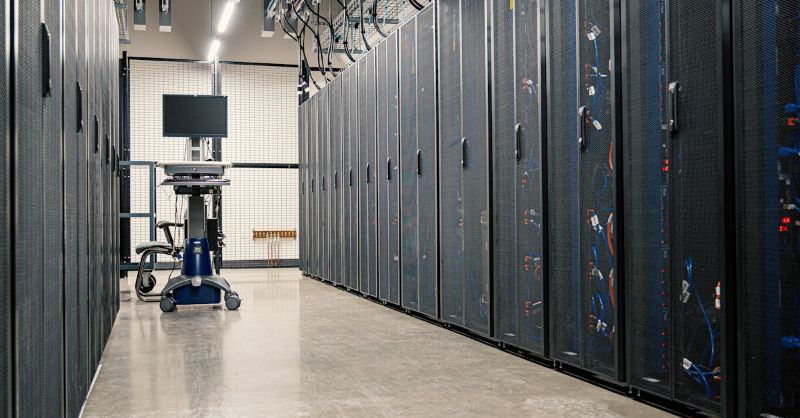
Dedicated GPU residency: named locations, clear jurisdiction, key residency, in-region access. For the full framework, see AI provider residency requirements.
Related Articles
Recommended Reading
latest articles
-
GPU Hardware Spares and RMA: Fleet Logistics and Downtime Risk
-
AI Infrastructure Energy Reporting: What Enterprises Should Measure
-
Balanced Bandwidth per GPU: Sizing Cluster Networks for LLM Training
-
Model Flops Utilization: Why Training Efficiency Collapses and How to Fix It
-
How Much Spare GPU Capacity Inference Needs for Failover
-
Multi-Cloud GPU Management Overhead: The Hidden Cost of Split Estates
-
ITAR vs CUI for GPU Hosting: Controls That Actually Differ
-
RAG Corpus Refresh: Reindexing, Re-Embedding, and Freshness Operations
-
How to Cut LLM Latency Without Buying More GPUs
-
Batch vs Real-Time LLM Inference: When to Batch and What It Saves