
Dedicated GPU Infrastructure for Enterprise AI Teams
Enterprise AI teams are moving beyond short-lived cloud GPU rentals toward infrastructure they can depend on for repeatable training, low-latency inference, and regulated workloads. Shared GPU pools introduce variability in availability, performance, and data handling that many organizations cannot tolerate once AI becomes central to their operations.
Dedicated GPU infrastructure is a full stack of compute, network, storage, platform, and operations resources reserved for a single organization's AI workloads. Unlike on-demand cloud GPUs, it provides predictable capacity, consistent performance, and an environment the enterprise controls end to end.
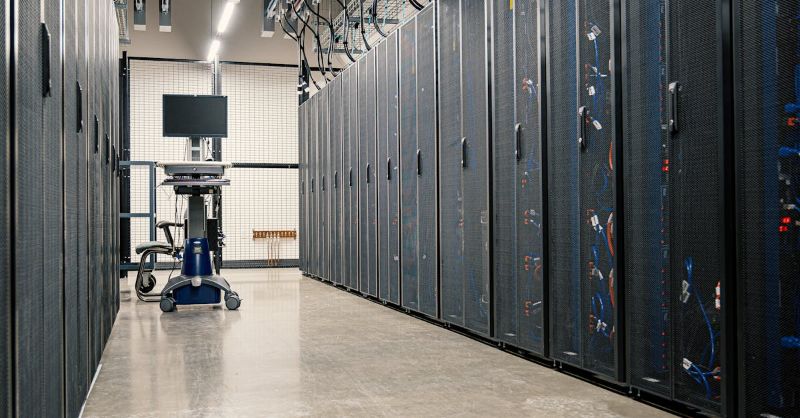
This article defines what dedicated GPU infrastructure includes, who benefits from it, and how it differs from shared cloud GPU offerings. For teams weighing the investment, understanding the components helps clarify whether dedicated capacity is a strategic fit or an unnecessary expense.
What Dedicated GPU Infrastructure Includes
Dedicated GPU infrastructure is not just a pile of accelerators. It is a coordinated stack where each layer must keep pace with the others. The five components below define what a complete dedicated environment contains.
1. Hardware
The hardware layer includes GPU accelerators, host CPUs, memory, and the servers that house them. Enterprise deployments typically standardize on a specific GPU model and server topology to simplify scheduling and support. Hardware also covers power distribution and cooling capacity sized for dense racks. The goal is a stable, repeatable footprint where capacity planning is predictable rather than reactive.
2. Network
GPU workloads, especially distributed training, depend on high-bandwidth, low-latency interconnects. The network layer includes specialized fabrics such as InfiniBand or high-speed Ethernet, plus the switching and routing that connect compute nodes to each other and to storage. A poorly matched network can bottleneck an otherwise powerful GPU cluster, so the fabric is treated as a first-class component rather than an afterthought.
3. Storage
AI workloads generate and consume enormous datasets, from training corpora to model checkpoints. The storage layer must deliver high throughput and low latency to keep GPUs fed rather than idle. Dedicated infrastructure typically pairs parallel file systems or high-performance object storage with fast local cache tiers. Storage architecture directly affects training time and checkpoint reliability, making it a critical design decision.
4. Platform
The platform layer is the software that orchestrates the hardware. It includes job schedulers, container runtimes, monitoring, and the interfaces teams use to submit and track workloads. A capable platform abstracts complexity so researchers and engineers focus on models rather than infrastructure. The OnePlus Platform, OneSource Cloud's AI orchestration platform, is one example of a layer that unifies scheduling, observability, and resource management across dedicated clusters.
5. Operations
Operations cover the human and process layer: patching, capacity planning, incident response, and performance tuning. Even the best hardware and platform need skilled oversight to stay healthy. Operations can be delivered by an in-house team, a managed services partner, or a hybrid model. Without strong operations, dedicated infrastructure underperforms and becomes a liability rather than an asset.
Dedicated vs Shared Cloud GPU Infrastructure
Understanding the difference between dedicated and shared GPU infrastructure helps teams justify the investment. The table below compares the two models across the dimensions that matter most to enterprise teams.
| Dimension | Dedicated GPU Infrastructure | Shared Cloud GPUs |
|---|---|---|
| Capacity availability | Reserved and predictable | On-demand, variable |
| Performance consistency | Stable, tuned | Subject to noisy neighbors |
| Data control | Team-defined boundary | Provider-managed |
| Cost profile | Fixed, amortized | Pay-per-use, variable |
Serving Decision Matrix: Enterprise LLM Inference Infrastructure
| Serving Infrastructure Model | Compute & Memory Contention | P99 Tail Latency Predictability | Multi-GPU Tensor Parallelism Support | Optimal Enterprise Workload Fit |
|---|---|---|---|---|
| Shared Multi-Tenant Model APIs | Multi-tenant shared workers; opaque resource pooling | Severe tail latency jitter during peak concurrency spikes | Black-box; no control over model parallelism or KV cache sizing | Low-volume prototyping or asynchronous background tasks |
| Virtualized Cloud GPU Instances | Hypervisor vGPU slices subject to CPU/PCIe interrupts | Moderate jitter caused by neighboring tenant network bursts | High inter-node latency limits multi-GPU tensor scaling (TP=4/TP=8) | General internal apps with modest throughput requirements |
| OneSource Dedicated Private GPUs | Dedicated bare-metal hardware with 100% VRAM & compute reservation | Deterministic microsecond P99 response times under peak load | Dedicated RoCE v2 RDMA fabric enables low-latency TP=4/TP=8 scaling | Mission-critical, low-latency, regulated enterprise production serving |
For teams that need predictable capacity and control, dedicated infrastructure pairs well with a private AI infrastructure strategy and a robust high-performance AI networking fabric.
Who Needs Dedicated GPU Infrastructure
Dedicated GPU infrastructure is not the right choice for every team, but for certain workloads and organizations it becomes essential. The following profiles describe where dedicated capacity delivers clear value.
- Continuous training teams - groups running frequent large-model training where idle GPU time or queue delays are costly.
- Regulated workloads - healthcare, finance, and government teams that require strict data control and auditability.
- Latency-sensitive inference - applications needing consistent, low-latency model serving without shared-tenant variance.
- Research organizations - labs that require reproducible environments and long-running experiments.
Healthcare teams can combine dedicated capacity with a HIPAA-ready AI environment, while research groups benefit from the same stack for reproducible, long-running jobs.
Cost and Value Considerations
Dedicated GPU infrastructure carries a higher upfront commitment than pay-per-use cloud GPUs, but the value calculation extends beyond sticker price. Predictable capacity reduces queue-related delays and lets teams plan roadmaps with confidence. Consistent performance shortens iteration cycles, and data control reduces compliance risk that can be expensive to remediate later.
The key is utilization. Dedicated infrastructure pays off when teams keep GPUs meaningfully busy, whether through training, inference, or a mix of both. Teams with bursty, unpredictable workloads may be better served by a hybrid model that combines dedicated baseline capacity with cloud overflow. Pairing the hardware with an AI storage architecture designed for throughput ensures the investment is not bottlenecked at the data layer.
Frequently Asked Questions
What is dedicated GPU infrastructure?
Dedicated GPU infrastructure is a reserved stack of compute, network, storage, platform, and operations resources allocated to a single organization. Unlike shared cloud GPUs, it provides predictable capacity, consistent performance, and a boundary the enterprise controls. It is designed for teams whose workloads demand stability, data control, or regulatory compliance.
Who needs dedicated GPU infrastructure?
Teams that benefit most include those running continuous large-model training, regulated workloads in healthcare or finance, latency-sensitive inference, and research requiring reproducibility. Organizations with bursty, low-volume workloads may find shared cloud GPUs more cost-effective. The decision hinges on utilization, control requirements, and performance consistency.
How does dedicated GPU infrastructure differ from managed AI infrastructure?
Dedicated GPU infrastructure refers to the resources reserved for an organization. Managed AI infrastructure adds operational oversight on top, covering scheduling, patching, monitoring, and performance tuning. Teams can own dedicated hardware and manage it themselves, or pair it with a managed services partner for day-to-day operations.
Is dedicated GPU infrastructure more expensive than cloud GPUs?
Upfront commitment is typically higher, but total cost depends on utilization. For teams that keep GPUs busy, dedicated capacity can be more economical than sustained cloud usage. For intermittent workloads, pay-per-use cloud GPUs may cost less. A hybrid model often balances cost and capacity effectively.
What storage does dedicated GPU infrastructure need?
AI workloads need high-throughput, low-latency storage to keep GPUs fed. Dedicated environments usually combine parallel file systems or high-performance object storage with fast local cache tiers. Storage architecture should match the workload profile, since bottlenecks at the data layer can negate the value of powerful GPUs.
Summary
Dedicated GPU infrastructure gives enterprise AI teams a reserved stack spanning hardware, network, storage, platform, and operations. It delivers predictable capacity, consistent performance, and data control that shared cloud GPUs cannot match. The investment pays off for teams with continuous training, regulated workloads, latency-sensitive inference, or research that demands reproducibility.
If your team is evaluating dedicated capacity, explore the OneSource Cloud approach and request a consultation to align a dedicated GPU infrastructure stack with your workload and growth plans.
FAQ
What is the primary operational trade-off in this architecture?
The primary trade-off balances initial infrastructure dedication against runtime latency predictability and security isolation. While shared public cloud services offer rapid provisioning, dedicated private environments eliminate cross-tenant contention and provide deterministic performance for continuous workloads.
Why deploy latency-sensitive LLM inference on OneSource private GPUs?
OneSource private GPU infrastructure delivers 100% dedicated bare-metal compute and VRAM, completely isolated from cross-tenant contention. This eliminates hypervisor scheduling jitter and shared-network packet collisions, ensuring deterministic P99 tail latency, sustained token throughput, and optimal tensor parallel scaling for production enterprise LLM serving.
Related Articles
Recommended Reading
-
How Paged Attention Manages Inference KV Cache
-
Google Cloud GPU Pricing: What Enterprise AI Teams Should Evaluate Before Provisioning
-
Paperspace Pricing 2026: GPU Cost Breakdown
-
AI Infrastructure Costs: Controlling Enterprise GPU Spending
-
CoreWeave Enterprise GPU Cloud: Evaluation for AI Teams
-
CoreWeave vs Lambda Labs: GPU Cloud Provider Comparison
-
AWS GPU Pricing: Instance Types, Cost Structure & Alternatives Guide
-
CoreWeave Alternatives: Compare GPU Clouds
latest articles
-
Which GPU Quote Terms Break at Renewal: Price and Capacity Fixes
-
Biotech GPU Computing Requirements: Genomics and Drug Discovery
-
Training Network Encryption: Requirements and Throughput Costs
-
GPU Depreciation Schedule and Monthly Cost at 3, 5, and 6 Years
-
Inference vs Training Storage Requirements for AI Clusters
-
GB200 NVL72 Rack Power Requirements for Facility Planning
-
How to Verify Data-Center GPU Firmware Measurement and Security
-
Why GPUs Stall on NFS During Training: Diagnosis and Fixes
-
GPU Driver and Firmware Pairing Without Deployment Delays
-
Measuring CUDA Graph Impact on LLM Inference Response Times