
Colocation for Private AI Infrastructure: Ownership and Control
Colocation for private AI infrastructure is a deployment model where the enterprise owns the GPU hardware and places it in a third-party data center that supplies power, cooling, physical security, and network connectivity, splitting ownership so the enterprise controls the compute while the facility handles the physical environment. It sits between building a proprietary data center and consuming cloud GPU capacity.
Teams choose colocation when they want hardware ownership and data control without the capital and operational burden of running their own facility. The model's value depends on whether the ownership boundary it draws matches the team's capacity and compliance needs.
Where Colocation Sits Among the Options
The three common paths for private AI infrastructure are building a proprietary data center, colocating owned hardware in a third-party facility, and consuming dedicated capacity from a provider who owns the hardware. Building gives maximum control but requires the most capital and facilities expertise. Consuming dedicated capacity shifts hardware ownership to the provider, lowering capital outlay but reducing control over the physical stack. Colocation splits the difference: the enterprise owns the hardware and its data, while the facility provides the environment.
This split is why colocation appeals to teams that have strong reasons to own their GPUs — depreciation economics, data sovereignty, or the need to configure hardware precisely — but lack the facilities capability or scale to build. It is less appealing to teams that prefer to treat infrastructure as an operating expense and let a provider own the full stack.
What the Enterprise Owns and Controls
Hardware and Configuration
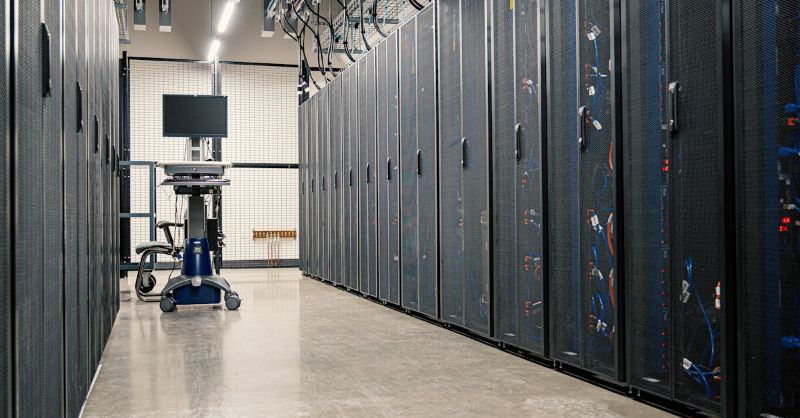
In colocation, the enterprise owns the servers, GPUs, networking, and storage it places in the facility, and it controls how that hardware is configured. This matters for teams with specific hardware requirements — particular GPU models, custom node configurations, or specialized networking — that a provider's standard catalog may not offer. Ownership also means the enterprise bears hardware lifecycle, replacement, and refresh, which is real work that consumption models transfer to the provider.
Data and Workload Control
Because the enterprise owns the hardware, it controls what runs on it and where the data resides. For regulated workloads, this strengthens the data-control story: the data sits on hardware the enterprise owns, in a facility whose location and residency posture the enterprise can verify. This is a meaningful distinction from shared cloud, where the data and the hardware are both provider-owned.
Architecture and Operations
The enterprise controls the cluster's architecture and day-to-day operations, including scheduling, monitoring, patching, and incident response. Colocation does not include operations; it includes the physical environment. Teams that colocate must either run operations themselves or engage a managed operations provider to run the cluster on their behalf. Confusing colocation with managed services is a common mistake that leaves a team with hardware in a rack and no one to operate it.
What the Facility Provides
The colocation facility supplies power, cooling, physical security, network uplinks, and often remote-hands support for basic physical tasks. The quality of these services varies widely, and for high-density GPU clusters the power and cooling capacity is the binding constraint. Not every colocation facility can host a dense GPU rack, so verifying electrical capacity, cooling method, and the facility's willingness to support high-density deployments is essential before committing.
Network connectivity is the other facility-provided element that matters for AI. The facility's carrier options, cross-connect costs, and peering affect how the cluster reaches data sources, users, and cloud services. AI networking design inside the cluster is the enterprise's responsibility, but the facility governs the paths in and out.
When Colocation Fits Private AI Infrastructure
Colocation fits teams that want hardware ownership for economic, sovereignty, or configuration reasons and that have, or can acquire, the operations capability to run the cluster. The clearest triggers are sustained compute demand that makes ownership cheaper than consumption at scale, regulatory requirements that favor owned hardware in a known location, and hardware requirements that standard provider catalogs do not meet.
Colocation fits less well for elastic demand, for teams without operations capacity, or when the capital outlay of hardware ownership is a barrier. There, consuming dedicated capacity from a provider — a private AI infrastructure service where the provider owns the hardware — is usually a better fit than colocation, because it transfers both the capital and the operations.
Cost and Compliance Tradeoffs
Colocation's cost structure is a capital expenditure for hardware plus a recurring facility fee for power, cooling, and space. Compared to consumption models, this is cheaper at high sustained utilization and more expensive at low or variable utilization, because the hardware depreciates whether or not it runs. The breakeven depends on utilization, hardware lifespan, and the facility's power cost.
For compliance, colocation can strengthen the data-control and residency posture because the enterprise owns the hardware and chooses the facility. But it does not by itself deliver compliance: the team still needs access controls, encryption, audit logging, and operational practice. A colocated cluster is only as compliant as the controls the team implements on it.
What to Verify Before Choosing Colocation
Confirm the facility can host the intended rack density, with measured power and cooling capacity rather than a brochure claim. Review the network options and cross-connect costs. Clarify what remote-hands support covers and what remains the enterprise's responsibility. For regulated workloads, confirm the facility's location supports the required residency posture and that the physical security meets the team's standards. Finally, be honest about operations capacity: a colocated cluster still needs to be run.
FAQ
Is colocation cheaper than cloud GPU?
It depends on utilization. At high sustained utilization, owned hardware in colocation is usually cheaper than equivalent cloud capacity over the hardware's life. At low or variable utilization, cloud's pay-per-use model wins because the enterprise is not paying for idle owned hardware. The breakeven is workload-specific and should be modeled, not assumed.
Does colocation include operations?
No. Colocation provides the physical environment — power, cooling, space, security, connectivity. Operating the cluster — monitoring, patching, scheduling, incident response — is separate. Teams that colocate must run operations themselves or engage a managed operations provider; assuming the facility runs the cluster is a common and costly misunderstanding.
Can colocated hardware serve regulated workloads?
Yes. Owned hardware in a verified facility can support a strong compliance posture because the enterprise controls the compute and the data location. The team still needs the full control set — access, encryption, logging, BAA where applicable — but ownership removes some of the cross-tenant and provider-access variables that complicate compliance on shared infrastructure.
How is colocation different from dedicated GPU cloud?
In colocation the enterprise owns the hardware and pays the facility for environment; in dedicated GPU cloud the provider owns the hardware and the enterprise pays for capacity. Colocation trades capital and operations responsibility for hardware control; dedicated cloud trades hardware control for lower capital and bundled operations. The choice follows whether ownership or operating-expense simplicity matters more.
Summary
Colocation for private AI infrastructure splits ownership so the enterprise controls hardware and data while the facility provides power, cooling, and connectivity. It fits teams that want hardware ownership for economic, sovereignty, or configuration reasons and that can operate the cluster. Teams weighing colocation against building or consuming can clarify fit through an OneSource Cloud deployment review.
Related Articles
Recommended Reading
latest articles
-
Thermal Soak and Rack Burn-In Protocols for Enterprise AI Racks
-
Sizing 3-Phase 415V Power Drops for 80kW Enterprise GPU Racks
-
When Is a BAA Required for Enterprise Healthcare AI Hosting?
-
AI Platform Scheduler Selection Criteria for Enterprise Training
-
Preventing Preemption Thrashing in Enterprise Multi-Tenant AI
-
Why Larger Batches Increase TTFT in Enterprise LLM Serving
-
Tokens Per Second vs User Latency in Enterprise LLM Serving
-
When Are Async Checkpoints Unsafe in Enterprise Model Training?
-
Should Checkpoint and Dataset I/O Share Enterprise AI Storage?
-
InfiniBand vs RoCE v2 for AI Training Gradient Synchronization