
Auditing Private GPU Cloud Data Plane Isolation for Enterprise AI
As enterprise organizations deploy generative AI models trained on proprietary trade secrets, customer financial records, and confidential source code, infrastructure security has become a critical governance priority. In standard public cloud environments, multiple enterprise tenants frequently share identical physical server hosts, relying on software virtualization hypervisors, virtual PCIe device sharing (SR-IOV), and software container firewalls to segregate workloads. In high-performance accelerated computing, these logical boundaries introduce severe vulnerabilities: shared memory buses, cross-chassis NVLink interconnects, and out-of-band management controllers expose physical hardware attack surfaces that software policies cannot protect. Security compliance officers and platform architects must implement an empirical audit methodology to verify that private GPU hosting partners deliver true physical hardware data plane isolation.
Scope of Hardware-Level Data Plane Isolation in Accelerated Systems
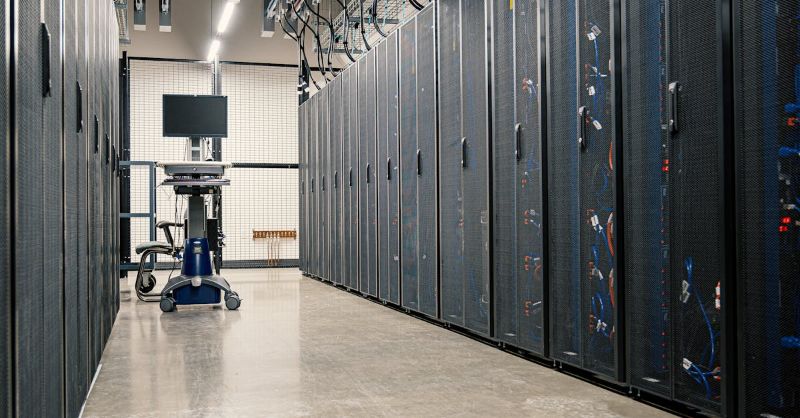
Data plane isolation requires zero multi-tenant virtualization: exclusive physical PCIe bus control, dedicated HBM3 memory channels, air-gapped NVLink fabrics, and dedicated switch ports. True data plane isolation in enterprise GPU environments requires complete physical segregation across four distinct architectural domains: accelerator compute silicon, High-Bandwidth Memory (HBM), host system interconnects, and intra-cluster network fabrics.
When an infrastructure provider claims 'dedicated private cloud' capabilities, auditors must distinguish between virtualized multi-tenancy (where a hypervisor carves a physical server into multi-tenant virtual machines) and single-tenant bare metal. In a virtualized environment, GPU memory addresses and PCIe direct memory access (DMA) transactions traverse shared host controller hubs. Research has repeatedly demonstrated that side-channel timing attacks across shared PCIe buses and host memory controllers can allow co-located tenants to reconstruct neural network architectures, infer training prompt lengths, and extract cryptographic keys.
To eliminate these threat vectors, hardware data plane isolation mandates: 1. 100% dedicated bare-metal server chassis with zero hypervisor software layers; 2. Physical PCIe root complex isolation preventing unauthorized Direct Memory Access (DMA); 3. Physically air-gapped NVLink and NVSwitch interconnects exclusive to a single tenant; 4. Dedicated physical switch ports and Layer 2 VLAN/VRF segmentation on the high-speed RoCE v2 storage and compute fabrics.
Shared Responsibility Matrix for Physical GPU and Host Isolation
The provider guarantees physical server custody, out-of-band network segregation, and certified hardware sanitization, while the enterprise retains ownership of the operating system kernel, container runtime, and encryption keys. Auditing private AI infrastructure requires establishing a transparent Shared Responsibility Matrix between the enterprise tenant and the managed hosting provider.
| Infrastructure Tier | Managed Hosting Provider Responsibility | Enterprise Tenant Responsibility | Audit Verification Artifact |
|---|---|---|---|
| Physical Facility & Chassis | Physical cage security, dual-factor biometric access, camera logs | N/A (covered by provider SOC 2) | SOC 2 Type II Facility Report |
| Baseboard Controller (BMC/IPMI) | Dedicated out-of-band network, cryptographically signed firmware | Enforce enterprise VPN / IP allowlisting | BMC firmware attestation logs |
| Compute & GPU Silicon | 100% dedicated bare-metal hardware, zero virtualization hypervisors | Host OS kernel hardening, container security | dmidecode & lspci physical traces |
| Inter-Node Network Fabric | Non-blocking Spine-Leaf RoCE v2, dedicated VLAN/VRF segmentation | mTLS encryption, workload network policies | Switch VLAN/VRF export configs |
| Storage & Decommissioning | NIST SP 800-88 Rev. 1 cryptographic purge upon release | Application-level data encryption at rest (AES-256) | Signed Media Sanitization Certificate |
| OneSource Cloud Managed Private AI | Single-tenant physical isolation, zero shared backplanes | Full administrative root access to bare-metal OS | SOC 2 Type II Audit Readiness Pack |
As delineated in the matrix, deploying on OneSource Cloud private AI infrastructure removes the hypervisor layer entirely from the compliance boundary. The enterprise retains absolute root-level control over the operating system kernel and container runtime, while OneSource guarantees single-tenant physical custody, dedicated non-blocking RoCE v2 networking, and certified hardware sanitization.
Audit Evidence Artifacts: Firmware Attestation, BMC Access, and PCIe Verification
Demand hardware BMC audit logs, dmidecode physical chassis serial verification, lspci bus topology traces, and cryptographically verified NIST SP 800-88 Purge records upon node reallocation. Compliance auditors should never accept verbal assurances or high-level marketing slides regarding tenant isolation. Instead, security teams must execute a forensic verification protocol directly on allocated GPU nodes:
- Verify Absence of Virtualization Hypervisors: Execute low-level system inspection commands to prove that the operating system has direct, bare-metal access to hardware registers without hypervisor translation:
If# Check for hypervisor signatures (should return 'none') systemd-detect-virt // Verify bare-metal motherboard and chassis serial numbers dmidecode -s system-manufacturer dmidecode -s system-product-namesystemd-detect-virtoutputskvm,xen, orvmware, the environment is virtualized and fails the physical isolation standard. - Audit Physical PCIe Bus and GPU Direct Memory Access: Inspect the PCIe bus tree to verify that all GPUs are attached to dedicated host root complexes without virtual SR-IOV mediation:
# Inspect PCIe tree topology and link bandwidth lspci -tv | grep -i nvidia // Verify physical GPU BAR memory allocation nvidia-smi -q -d MEMORY,PCI - Attest Baseboard Management Controller (BMC) Security: Audit out-of-band IPMI interfaces. The provider must demonstrate that BMC management networks are completely segregated from customer data planes, that IPMI default credentials are disabled, and that BMC firmware is cryptographically signed and up to date.
- Mandate NIST SP 800-88 Purge Certificates: Before putting GPU nodes into production or accepting hardware reassignment, demand cryptographic evidence that all local NVMe SSDs and non-volatile accelerator registers were purged using NIST SP 800-88 Rev. 1 compliant block erasure.
Residual Risk Management: Mitigating Hypervisor Remanence and Noisy Neighbor Contention
Shared hypervisors carry inherent risks of cross-VM side-channel attacks, GPU memory buffer remanence between job dispatches, and unpredictable noisy-neighbor PCIe bandwidth degradation. Understanding residual risk is essential for comprehensive security governance. In virtualized multi-tenant public clouds, organizations inherit significant residual vulnerabilities:
- Hypervisor Zero-Day Exploits: A memory escape vulnerability in the hypervisor can allow a sophisticated attacker in an adjacent virtual machine to access host kernel memory and eavesdrop on GPU memory buffers.
- Memory Remanence Hazards: If a multi-tenant cloud provider fails to completely scrub GPU High-Bandwidth Memory (HBM) and dynamic cache registers between customer job dispatches, sensitive prompt weights or training tokens can bleed into subsequent workloads.
- Noisy Neighbor Contention: In virtualized environments, co-tenants sharing the same PCIe root complex or switch uplink generate erratic bandwidth throttling, compromising throughput SLAs.
Single-tenant bare-metal hosting completely eliminates these residual risks by ensuring that hardware is physically dedicated to one enterprise, protected by verifiable cryptographic sanitization, and isolated across private network segments.
Frequently Asked Questions About GPU Cloud Data Plane Isolation
Why is software-level container isolation insufficient for regulated enterprise AI?
Container runtimes share the underlying host OS kernel, PCIe bus, and GPU memory drivers; any kernel vulnerability or GPU driver flaw can allow privilege escalation across co-located tenant containers, violating strict healthcare and financial regulatory separation mandates.
How does OneSource Cloud prove physical data plane isolation for enterprise security audits?
OneSource Cloud guarantees hardware data plane isolation by delivering single-tenant bare-metal GPU servers with zero shared hypervisors, physically isolated network fabrics, and verifiable SOC 2 Type II audit readiness documentation.
Related Articles
Recommended Reading
-
How Paged Attention Manages Inference KV Cache
-
Google Cloud GPU Pricing: What Enterprise AI Teams Should Evaluate Before Provisioning
-
Paperspace Pricing 2026: GPU Cost Breakdown
-
AI Infrastructure Costs: Controlling Enterprise GPU Spending
-
CoreWeave Enterprise GPU Cloud: Evaluation for AI Teams
-
CoreWeave vs Lambda Labs vs OneSource Cloud: GPU Provider Decision Guide
-
U.S. Data Residency in the Cloud: Requirements, Regulations & Compliance Guide
-
AWS GPU Pricing: Instance Types, Cost Structure & Alternatives Guide
latest articles
-
Direct-to-Chip Liquid Cooling for AI Clusters: Facility CDUs, Secondary Loops, and Leak Detection Runbooks
-
Concurrent Request Scaling and GPU Memory Sizing in LLMs
-
LLM Retrieval Quality Monitoring Pipeline in Enterprise RAG
-
Throughput Targets and Latency Trade-offs in LLM Inference
-
LLM Inference Cost per GPU Hour and Token Economics
-
GPUDirect Storage vs CPU Bounce Buffers: DMA Bypass, PCIe Topology, and High-Throughput AI I/O
-
GPU Requirements for Production LLM Inference Workloads
-
Disaggregated Prefill and Decode for Enterprise LLMs: KV Cache RDMA Transfer, TTFT, and Serving Economics
-
Distributed Training Encryption Policy for Enterprise AI
-
H100 Server Electricity Cost Model for High-Density AI