
How to Allocate GPU Capacity Across Teams and Workloads Fairly
Allocating GPU capacity across teams means choosing an allocation policy — quotas, fair-share, priority tiers, or preemptible work — that matches the organization's structure and priorities, so the cluster serves the organization rather than whichever team grabs the most GPUs. Without an explicit policy, allocation is negotiation, and negotiation wastes time and capacity. For the orchestration mechanics that enforce these policies, see how AI orchestration works.
For shared GPU clusters, allocation is the governance that determines whether the cluster is productive or contested. The right policy depends on the organization: a research lab may use fair-share; a product company may use quotas with priority tiers. The policy must be explicit, enforced by the scheduler, and transparent so teams know what to expect. This guide covers the allocation methods, when each fits, and how to implement them.
Quota-Based Allocation: Guaranteed Shares
Quota allocation gives each team a guaranteed fraction of the cluster — a minimum floor they can count on. This works well when teams need predictable access and the organization wants clear boundaries. Quotas can be fixed (always the same) or time-varying (more during business hours, elastic at night). The downside is that unused quota goes idle rather than being available to other teams, which lowers overall utilization unless combined with preemptible access to unused quota.
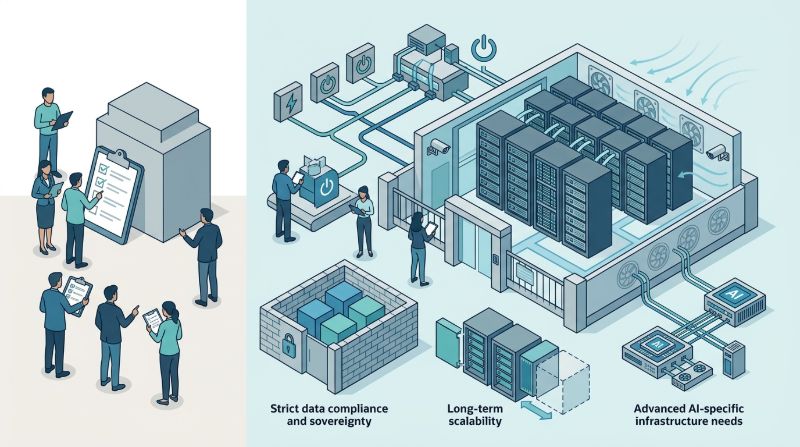
For quota enforcement, the scheduler must respect the guarantee — a team within quota gets priority over teams above quota for the same resource — but also allow teams to borrow unused capacity when no one is waiting. This "guarantee plus opportunistic" model combines the predictability of quotas with the efficiency of sharing. For the broader capacity planning context, see how to size AI infrastructure capacity.
Fair-Share Scheduling: Proportional Access
Fair-share allocates capacity proportionally to policy-defined weights rather than to fixed quotas. When demand exceeds supply, each team gets a share proportional to its weight; when demand is low, any team can use idle capacity. This is the standard for research clusters where teams have different sizes or priorities but no team should be starved. Fair-share adapts to demand dynamically, raising utilization over fixed quotas. For how fair-share interacts with orchestration, see how orchestration aids large model programs.
Priority Tiers and Preemptible Work
Priority tiers layer urgency on top of fairness: high-priority jobs preempt or queue ahead of lower-priority ones, and critical production work gets reserved capacity. Lower-priority work fills the idle capacity opportunistically and is preempted when higher-priority work arrives. This is the model for mixed training-and-inference clusters: inference is high priority (latency-sensitive), training is lower (queuable and preemptible). For the training vs inference scheduling, see capacity planning for training vs inference.
The combination — guaranteed quotas for critical teams, fair-share for the rest, preemptible best-effort filling idle capacity, and priority tiers for urgency — captures the best of all models. For the full orchestration approach, see how AI orchestration works and orchestration for large model programs.
Allocation methods compared
| Method | Best for | Utilization | Predictability |
|---|---|---|---|
| Fixed quotas | Teams needing guaranteed access | Lower (unused idle) | High |
| Fair-share | Research, dynamic sharing | Higher (dynamic) | Medium |
| Priority tiers | Production vs experimentation | High (fill with low priority) | High for priority work |
| Preemptible fill | Any work that can wait | Very high (fills idle) | None (preemptible) |
FAQ
How do I allocate GPU capacity across teams?
Choose a method that matches the organization: quotas for guaranteed shares, fair-share for proportional access, priority tiers for urgency, and preemptible fill for idle capacity. Combine them — quotas for critical teams, fair-share for the rest, priority for production workloads — enforced by a scheduler that the orchestration platform provides. For the full mechanics, see how AI orchestration works.
How do I prevent one team from using all GPUs?
Set allocation policies that bound each team's access: quotas that limit maximum usage, fair-share that ensures proportional access, or priority tiers that prevent low-priority work from starving high-priority work. The policy must be enforced by the scheduler — without enforcement, the loudest team wins. For the orchestration that enforces these, see orchestration for large model programs.
Summary
Allocating GPU capacity requires an explicit policy — quotas, fair-share, priority tiers, and preemptible fill — enforced by the scheduler, matched to the organization's structure. The combination of guaranteed quotas plus opportunistic sharing captures both predictability and utilization. Without policy, allocation is negotiation; with policy and enforcement, the cluster serves the organization. For the full orchestration and allocation framework, see how AI orchestration works.
Related Articles
Recommended Reading
-
Google Cloud GPU Pricing: What Enterprise AI Teams Should Evaluate Before Provisioning
-
Paperspace Pricing 2026: GPU Cost Breakdown
-
CoreWeave Enterprise GPU Cloud: Evaluation for AI Teams
-
AI Infrastructure Costs: Controlling Enterprise GPU Spending
-
CoreWeave vs Lambda Labs: GPU Cloud Provider Comparison
latest articles
-
Open-Source LLM Deployment: Requirements and Real Cost Breakdown
-
AI Search Assistants Under Data Residency: Architectures and Evidence
-
LLM Inference GPUs Compared: A100, H100, H200, or B200 for Production
-
LLM Deployment Best Practices: An Enterprise Stage-by-Stage Checklist
-
HIPAA Patient Scheduling AI: Controls, Consent, and Evidence
-
Cloud-Agnostic LLM Deployment: Architecture Principles Against Lock-In
-
HIPAA-Compliant AI Tools for Healthcare: Categories and Evaluation
-
Batch vs Real-Time LLM Inference: Cost, Latency, and Fit
-
Model Deployment Strategies Compared: Canary, Blue-Green, Shadow, Rolling
-
GPU Rental vs Owning: Cost, Commitment, and When to Buy