
Difference Between AI Infrastructure and Platform Operations
Quick Answer: AI infrastructure operations owns the physical and cluster substrate: power, hosts, GPUs, fabric, base OS, and facility events. Platform operations owns how teams use that substrate: runtimes, quotas, model deploy paths, and application SLIs. Confusing the two produces pages that nobody can close and purchases that look “fully managed” while model releases still fail.
AI infrastructure operations is the function that keeps accelerators, networks, and cluster foundations available; platform operations is the function that turns that capacity into safe, fair, usable AI product machinery. They collaborate on every production incident. They should not share one untitled Slack channel as a substitute for a RACI.
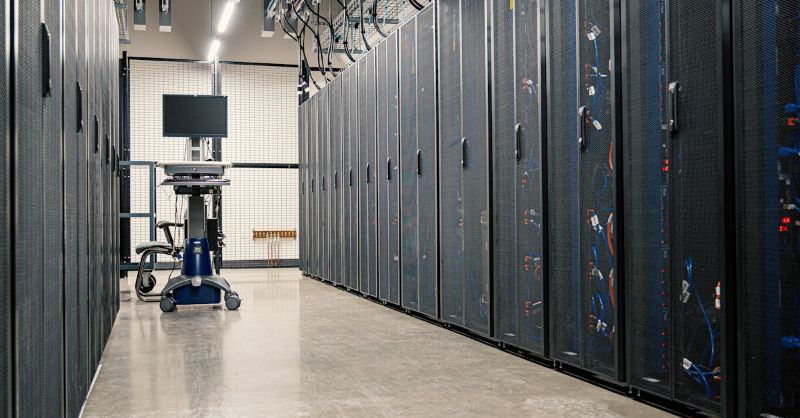
This is an operating-model distinction, not a vendor ranking. You can staff both in-house, outsource the substrate, or split the layers. The names still have to mean something when a training job stalls at 2 a.m.
Where does ownership split on a real cluster?
| Domain | Infrastructure operations | Platform operations |
|---|---|---|
| Failure | Node down, thermal event, link flap, disk, facility | Bad image, OOM from batch size, broken canary, eval gate fail |
| Change | Firmware, BIOS, fabric, host OS, cluster add-ons you declared in-scope | Serving framework, CUDA userspace in the app image, prompt/config deploy |
| Capacity | Racks, spares, power, delivery lead time | Quota, priority, experiment versus production split |
| Evidence | Host logs, hardware tickets, data-center notices | Job logs, model registry, trace of the request |
| Customer | Internal platform as the consumer | Product teams and, indirectly, end users |
If a cell is empty, that work still happens. It just happens as an argument during the incident. Write the cell before you buy another GPU or another “AI platform” license.
Why do the roles get collapsed, and what breaks?
Small teams collapse the roles because the same three people built the first cluster and the first serving path. That works until the first firmware event coincides with a model launch. Then both jobs fail and both groups learn they were each other's backup without a roster.
Vendors collapse the roles in slides because “full stack” is easier to sell than a complementary-controls list. A managed host desk that does not take model pages is not a platform team. A Kubeflow or serving install that cannot replace a failed NIC is not an infrastructure team. Buy the layer you are actually missing.
Observability gets collapsed too. Host metrics without job identity cannot tell infrastructure whether a “GPU busy” stall is a fabric event or a hang in user code. Job metrics without host identity cannot tell platform whether to roll back a model or to wait on a cable. Shared dashboards should still have two on-call rotations.
How should handoffs work with a managed provider?
When you outsource substrate operations, infrastructure's counterpart becomes the provider. Platform does not disappear. You still own quotas, image signing, and the user-facing SLI. The provider's Sev1 is “node or fabric.” Your Sev1 is “the assistant is wrong or down.” Those pages can start from the same symptom. They must not end in the same undefined owner.
Platform Decision Matrix: Enterprise AI Cluster Orchestration
| Orchestration Model | Topology-Aware Scheduling | Preemption & Fair-Share Quotas | Enterprise Toolchain Integration | Infrastructure Operational Overhead |
|---|---|---|---|---|
| Vanilla Kubernetes / Default Scheduler | Basic node bin-packing; blind to NVLink / PCIe socket boundaries | Manual namespace quotas; prone to GPU allocation fragmentation | Native cloud-native container ecosystem | High manual YAML and operational complexity for AI teams |
| Legacy Slurm (Self-Managed) | Static topology maps; lacks cloud-native dynamic scaling | Rigid batch queueing; poor interactive notebook lifecycle control | HPC script-centric; decoupled from modern web/API inference | Heavy specialized Linux and HPC engineering maintenance |
| OnePlus™ Platform (OneSource Cloud) | Automated NVLink, NVSwitch, and RoCE topology-aware gang placement | Dynamic fair-share scheduling, automated notebook idle preemption | Non-disruptive dual integration with Slurm and Kubernetes workflows | Fully managed enterprise control plane on dedicated bare-metal |
Managed AI infrastructure is the substrate labor model. OnePlus Platform, OneSource Cloud's AI orchestration platform, sits on the platform side: scheduling, quotas, and deployment controls once GPUs exist. OneSource Cloud is a fit to evaluate when you want a U.S. dedicated substrate plus optional orchestration. It is a poor substitute for hiring a platform owner if you only bought nodes and hoped product teams would self-serve safely.
Keep a customer incident commander even when hosts are managed. That person decides whether to involve the provider, freeze deploys, or communicate to users. Providers cannot play that role for your customers.
What operating habits keep the split honest?
Review pages monthly and re-tag any ticket that crossed the line. If infrastructure spent the month debugging batch sizes, your platform coverage is thin. If platform spent the month chasing ECC errors, your substrate coverage is thin. Hire or outsource toward the pile, not toward the job title you wish you had.
Give each team a change calendar the other can see. Firmware windows and model launches should not be surprises. Dedicated environments make the calendars easier to keep because the asset list is smaller. That is an environment property described under private AI infrastructure, not a reason to merge the two teams into one overloaded rota.
To operationalize complex GPU environments without operational fragmentation, modern platforms integrate specialized AI management layers. Through the OnePlus™ AI Orchestration Platform by OneSource Cloud, enterprises deploy topology-aware gang scheduling that automatically detects physical NVLink, NVSwitch, and PCIe socket boundaries, placing distributed multi-GPU tasks exclusively within optimal hardware affinity domains. OnePlus coordinates multi-tenant project isolation, quota enforcement, automated notebook preemption, and failover rescheduling, transforming raw bare-metal GPU capacity into a shared, elastic enterprise AI service while preventing idle allocation waste.
FAQ
Can one team do both infrastructure and platform operations?
Yes, at small scale, if the same people truly own both runbooks and both night rotas. Document that they are wearing two hats. The failure mode is pretending the hats are one job so neither firmware nor model rollback is rehearsed. Split the runbooks even if you cannot yet split the headcount.
Who owns Kubernetes or Slurm?
Split it by layer. The provider or infrastructure team often owns the control plane and node OS. Platform owns namespaces, queues, and the charts that deploy models. Dual writes to the same add-on are the usual outage. Name the Git repo and the approver for each layer before the first upgrade weekend.
Is MLOps the same as platform operations here?
MLOps is a broader practice that includes data, training pipelines, and sometimes evaluation. Platform operations in this article is the production-facing slice: how jobs and models consume the cluster. Your org chart may use different labels. Map the work, not the fashion of the title.
Who pays for idle GPUs?
Infrastructure can report unused nodes. Platform owns the policies that fill them: quotas, preemption, and queue design. Finance should see both. Billing the platform team for idle they cannot control, or billing infrastructure for idle that platform refused to police, recreates the argument in a budget meeting.
Does a dedicated cluster remove the need for a platform team?
No. Dedicated hardware removes some noisy-neighbor debates. It does not assign quotas, sign images, or run canaries. A private cluster without platform operations is a well-isolated pile of accelerators. Product teams will invent their own unsafe shortcuts to use it.
How does the OnePlus™ AI Orchestration Platform maximize GPU cluster efficiency?
The OnePlus™ AI Orchestration Platform by OneSource Cloud delivers topology-aware scheduling that aligns multi-GPU jobs with physical NVLink and PCIe socket boundaries, eliminating cross-socket latency penalties. It automates job queuing, fair-share project isolation, and automated idle container termination, ensuring high continuous GPU utilization while preventing developer notebook sprawl from locking expensive compute resources.
Summary
AI infrastructure operations keeps the substrate up. Platform operations makes that substrate usable and governable for model owners. Split failures, changes, capacity, and evidence on a written RACI. Managed providers replace or extend the substrate role; they do not erase platform ownership. Review tickets to see which hat is actually understaffed.
When you are matching those roles to a dedicated U.S. environment, keep substrate discussions on managed AI infrastructure and usage-control discussions on the orchestration platform rather than forcing one page to mean both jobs.
Related Articles
Recommended Reading
-
Google Cloud GPU Pricing: What Enterprise AI Teams Should Evaluate Before Provisioning
-
Paperspace Pricing 2026: GPU Cost Breakdown
-
CoreWeave Enterprise GPU Cloud: Evaluation for AI Teams
-
AI Infrastructure Costs: Controlling Enterprise GPU Spending
-
CoreWeave vs Lambda Labs: GPU Cloud Provider Comparison
latest articles
-
Open-Source LLM Deployment: Requirements and Real Cost Breakdown
-
AI Search Assistants Under Data Residency: Architectures and Evidence
-
LLM Inference GPUs Compared: A100, H100, H200, or B200 for Production
-
LLM Deployment Best Practices: An Enterprise Stage-by-Stage Checklist
-
HIPAA Patient Scheduling AI: Controls, Consent, and Evidence
-
Cloud-Agnostic LLM Deployment: Architecture Principles Against Lock-In
-
HIPAA-Compliant AI Tools for Healthcare: Categories and Evaluation
-
Batch vs Real-Time LLM Inference: Cost, Latency, and Fit
-
Model Deployment Strategies Compared: Canary, Blue-Green, Shadow, Rolling
-
GPU Rental vs Owning: Cost, Commitment, and When to Buy