
AI Infrastructure as a Service for Enterprise AI Teams
Quick Answer: AI infrastructure as a service is a managed delivery model that provides the GPU compute, storage, networking, orchestration, and operations support enterprises need to run AI workloads. It is different from generic cloud infrastructure because AI workloads require specialized capacity planning and performance design.
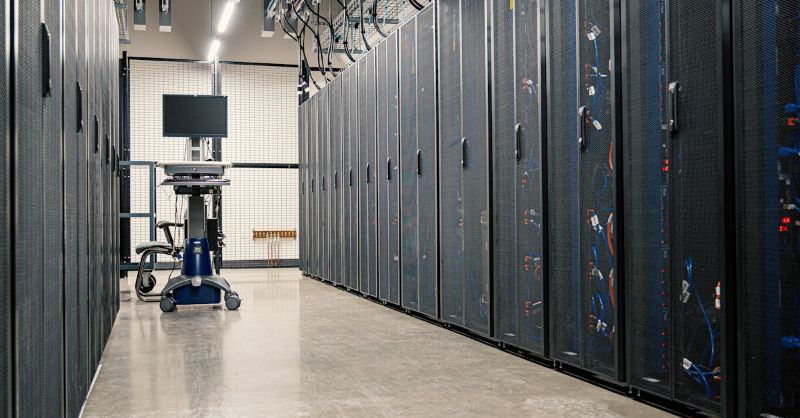
Enterprise AI teams use AI infrastructure as a service when they need production-ready environments without building every infrastructure layer internally. OneSource Cloud provides private AI infrastructure and managed services for teams that need dedicated control, U.S.-based options, and operational support for AI training and inference.
How AI Infrastructure as a Service Differs From Generic IaaS
Traditional infrastructure as a service provides compute, storage, and networking that customers configure for many types of applications. AI infrastructure as a service is narrower and more specialized. It focuses on accelerators, high-throughput data paths, model deployment environments, workload orchestration, and monitoring that can support training, fine-tuning, and inference.
The distinction matters because AI workloads stress infrastructure differently than standard web applications. A model training job may require sustained multi-GPU performance. A production inference endpoint may require low latency and predictable scaling. A RAG workload may depend on storage and data governance as much as GPU capacity.
What AI Infrastructure as a Service Should Include
A strong AI infrastructure service should give enterprises more than raw GPU access. It should combine architecture planning, deployment support, workload operations, monitoring, and lifecycle management. The exact mix depends on workload maturity and regulatory requirements.
| Service Layer | What It Provides | Why It Matters |
|---|---|---|
| GPU compute | Dedicated or planned accelerator capacity for training and inference. | Reduces workload delays caused by quota limits or unstable availability. |
| AI storage | Data paths for datasets, model artifacts, retrieval systems, and backups. | Prevents GPUs from waiting on slow or poorly governed data movement. |
| AI networking | Connectivity designed for multi-node training and model serving. | Supports the performance behavior required by distributed AI workloads. |
| Operations support | Monitoring, optimization, patching, lifecycle planning, and escalation. | Helps teams keep infrastructure useful after initial deployment. |
When Enterprises Need AI Infrastructure as a Service
AI infrastructure as a service becomes valuable when an organization has real AI workload demand but does not want to assemble every layer alone. The trigger is often operational pressure: public cloud GPU quota is unreliable, internal DevOps teams are overloaded, data sensitivity is increasing, or model deployment is becoming a production dependency.
The model is especially relevant for organizations in healthcare, financial services, SaaS, research, and other environments where AI systems need dedicated capacity and governance. In these cases, the service should support data residency planning, identity control, monitoring, and clear responsibility boundaries.
AI Infrastructure as a Service vs Cloud GPU Rental
Cloud GPU rental solves a narrower problem: access to accelerators. AI infrastructure as a service solves the broader operating problem around those accelerators. Buyers should evaluate whether they need temporary capacity or a managed environment for ongoing AI development and production workloads.
When Cloud GPU Rental Is Enough
Cloud GPU rental can be enough for short experiments, one-time benchmarks, early model testing, or teams that already have strong infrastructure operations. In those cases, temporary GPU access may be more practical than a managed private environment.
When AI Infrastructure as a Service Is Stronger
AI infrastructure as a service is stronger when workloads are recurring, sensitive, multi-team, or tied to production services. Dedicated capacity, monitoring, orchestration, and lifecycle support become more important than short-term access. OneSource Cloud's managed AI infrastructure addresses that operating model.
Security, Data Residency, and Governance
Enterprise AI infrastructure must support governance before workloads go live. Teams should evaluate where data is stored, how users access environments, how administrative actions are logged, how model artifacts are protected, and how network boundaries are designed. These controls influence whether AI systems can be adopted beyond small experiments.
OneSource Cloud is relevant when organizations need a private or dedicated AI environment with managed operations and U.S.-based infrastructure options. This can support regulated workload planning, but compliance still depends on customer policies, procedures, and data handling practices.
How to Evaluate an AI Infrastructure as a Service Provider
Provider evaluation should focus on operational fit. A buyer should understand what is included, what remains internal, how support works, and how the service evolves as workloads grow. The right provider should be able to discuss infrastructure design and AI workflow requirements together.
- Define the workload profile. Clarify training, fine-tuning, inference, data pipeline, and user access requirements before comparing providers.
- Review the managed service scope. Confirm whether monitoring, updates, optimization, and capacity planning are included.
- Check orchestration needs. Multi-team environments may need quota management, workspace access, and usage visibility through an orchestration layer such as OnePlus Platform.
- Validate governance controls. Data residency, access control, logging, and network isolation should be part of the infrastructure conversation.
FAQ
What is AI infrastructure as a service?
AI infrastructure as a service is a managed model for delivering the infrastructure needed to run AI workloads. It can include GPU compute, storage, networking, orchestration, monitoring, security controls, and operational support for training, fine-tuning, inference, and model deployment.
How is AI IaaS different from regular cloud IaaS?
Regular cloud IaaS provides general compute, storage, and networking. AI IaaS is optimized around accelerator capacity, data throughput, model runtime behavior, orchestration, and AI operations. It is built for workloads where GPU performance, storage design, and managed support affect model delivery.
Is AI infrastructure as a service only for large enterprises?
No. It is most useful for any organization with recurring AI workloads, sensitive data, or limited infrastructure operations capacity. Large enterprises may need it for governance and scale, while smaller teams may use it to avoid building specialized AI infrastructure operations from scratch.
What affects AI infrastructure as a service cost?
Cost depends on GPU capacity, storage design, networking, managed operations, data center requirements, security controls, and workload utilization. Teams should compare total operating cost, including internal staffing and downtime risk, rather than only the price of compute.
Can AI infrastructure as a service support private LLM deployment?
Yes, when the service includes dedicated GPU capacity, secure data access, model serving infrastructure, monitoring, and lifecycle support. Private LLM deployments should also include governance around model access, data residency, logging, and operational responsibilities.
Summary
AI infrastructure as a service gives enterprises a managed way to run AI workloads on infrastructure designed for GPU capacity, data movement, orchestration, security, and operations. It is most valuable when AI becomes a recurring production function rather than a temporary experiment.
Next step: Explore OneSource Cloud's managed AI infrastructure to evaluate whether AI infrastructure as a service fits your workload and operations model.
Related Articles
Recommended Reading
-
Google Cloud GPU Pricing: What Enterprise AI Teams Should Evaluate Before Provisioning
-
Paperspace Pricing 2026: GPU Cost Breakdown
-
CoreWeave Enterprise GPU Cloud: Evaluation for AI Teams
-
AI Infrastructure Costs: Controlling Enterprise GPU Spending
-
CoreWeave vs Lambda Labs: GPU Cloud Provider Comparison
latest articles
-
Open-Source LLM Deployment: Requirements and Real Cost Breakdown
-
AI Search Assistants Under Data Residency: Architectures and Evidence
-
LLM Inference GPUs Compared: A100, H100, H200, or B200 for Production
-
LLM Deployment Best Practices: An Enterprise Stage-by-Stage Checklist
-
HIPAA Patient Scheduling AI: Controls, Consent, and Evidence
-
Cloud-Agnostic LLM Deployment: Architecture Principles Against Lock-In
-
HIPAA-Compliant AI Tools for Healthcare: Categories and Evaluation
-
Batch vs Real-Time LLM Inference: Cost, Latency, and Fit
-
Model Deployment Strategies Compared: Canary, Blue-Green, Shadow, Rolling
-
GPU Rental vs Owning: Cost, Commitment, and When to Buy