
Top 8 Managed HPC Services for Enterprise AI in 2026
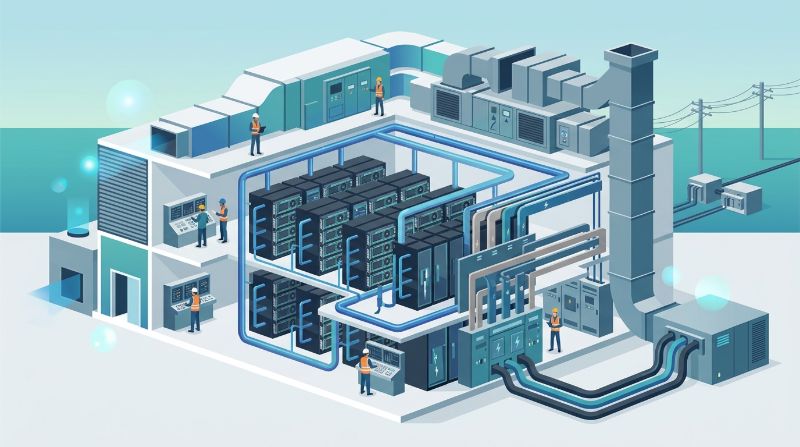
Managed HPC services are computing environments that combine high-performance compute, low-latency networking, high-throughput storage, scheduling, and operational support for scientific, engineering, and AI workloads. The right service depends on whether a team needs elastic public cloud, private capacity, hybrid bursting, specialized application catalogs, or hands-on cluster management.
Top picks at a glance: AWS, Azure, Google Cloud, and Oracle provide broad cloud HPC building blocks; HPE and Lenovo extend HPC through on-premises consumption models; Penguin Solutions focuses on specialist AI and HPC operations; Rescale provides a software-led cloud HPC platform for engineering workflows. This 2026 list is organized by delivery model and workload fit, not by an unverifiable universal performance ranking.
Managed HPC services comparison
Enterprise AI teams should compare the complete workload path. CPU or GPU choice matters, but tightly coupled jobs also depend on fabric latency, storage behavior, scheduler policies, software licensing, data movement, observability, failure handling, and capacity assurance. A managed service should reduce operational work without hiding the metrics required to validate performance and cost.
| Service | Delivery model | Distinctive focus | Best suited for |
|---|---|---|---|
| AWS HPC | Elastic public cloud | AWS Parallel Computing Service, EC2, EFA, FSx for Lustre | Cloud-native teams needing broad regional scale |
| Azure HPC | Elastic public cloud and hybrid | H-series and N-series VMs, CycleCloud, enterprise integration | Microsoft-centered engineering and AI estates |
| Google Cloud HPC | Elastic public cloud | Cluster Toolkit, RDMA, workload-optimized VMs, AI convergence | Research and AI teams using Google data and ML services |
| Oracle Cloud HPC | Public cloud with bare metal | RDMA cluster networking, bare metal CPU and GPU instances | Performance-sensitive simulation and financial workloads |
| HPE GreenLake HPC | On-premises as a service | Private capacity, consumption model, HPE systems and operations | Data-sensitive teams retaining infrastructure locally |
| Lenovo HPC Services | On-premises and hybrid | Advisory, deployment, managed operations, TruScale, cooling | Organizations needing full lifecycle HPC services |
| Penguin Solutions | Specialist managed operations | Cluster optimization, predictive maintenance, on-site support | Large AI and HPC clusters with operational complexity |
| Rescale | Software-led multicloud HPC | Application catalog, workflow automation, cloud resource access | Engineering teams prioritizing turnkey simulation workflows |
Eight managed HPC services to evaluate
1. Amazon Web Services HPC
Company Background: Amazon Web Services launched in 2006 as Amazon's cloud computing business and operates a global portfolio of infrastructure and platform services.
Core Products/Direction: AWS HPC combines EC2 compute and GPU instances, Elastic Fabric Adapter, FSx for Lustre, AWS Batch, ParallelCluster, and AWS Parallel Computing Service, a managed service for Slurm-based environments.
Technical Approach: AWS exposes modular infrastructure and managed control services, allowing customers to build elastic clusters, select capacity models, and integrate storage, identity, monitoring, and data services.
Best Suited For: Teams that already operate on AWS, need burst capacity across many workload shapes, and can govern cloud quotas, data movement, and cost controls.
2. Microsoft Azure HPC
Company Background: Microsoft was founded in 1975 and is headquartered in Redmond, Washington. Azure is its global cloud platform for infrastructure, data, applications, and AI.
Core Products/Direction: Azure HPC includes H-series CPU instances, N-series GPU instances, high-speed interconnect options, Azure Managed Lustre, Azure CycleCloud, and connections to Azure AI and enterprise identity services.
Technical Approach: Azure combines cloud supercomputing with hybrid management and Microsoft software integration, making scheduler-based clusters part of a broader enterprise cloud estate.
Best Suited For: Enterprises using Microsoft identity, security, data, and development platforms that need HPC for simulation, rendering, risk analysis, or AI training.
3. Google Cloud HPC
Company Background: Google was founded in 1998 and is headquartered in Mountain View, California. Google Cloud provides infrastructure, data, security, and AI services globally.
Core Products/Direction: Google Cloud HPC uses workload-optimized virtual machines, GPUs, Cloud RDMA, parallel storage choices, Cluster Toolkit, Slurm integrations, and Dynamic Workload Scheduler.
Technical Approach: The platform emphasizes convergence between traditional HPC and AI, with reusable cluster blueprints and close integration with Google Cloud data and machine learning services.
Best Suited For: Research and engineering teams that want elastic HPC beside Vertex AI, BigQuery, and Google Cloud's data services.
4. Oracle Cloud Infrastructure HPC
Company Background: Oracle was founded in 1977 and is headquartered in Austin, Texas. It provides database, enterprise software, applications, and cloud infrastructure.
Core Products/Direction: OCI HPC includes bare metal CPU and GPU instances, RDMA cluster networking, high-performance storage, optimized HPC shapes, and deployment patterns for engineering, life sciences, rendering, and financial workloads.
Technical Approach: Oracle emphasizes bare metal performance, cluster isolation, and low-latency networking while retaining cloud provisioning and consumption.
Best Suited For: Teams that need bare metal control, tightly coupled compute, or low-jitter infrastructure and are comfortable building operations around OCI services.
5. HPE GreenLake for HPC
Company Background: Hewlett Packard Enterprise was formed in 2015 and is headquartered in Spring, Texas. It supplies enterprise infrastructure, hybrid cloud platforms, and technical services.
Core Products/Direction: HPE GreenLake Flex Solutions can deliver HPC and AI-optimized systems through an on-premises consumption model, including compute, Slingshot networking, parallel storage, management, and service options.
Technical Approach: HPE brings cloud-style metering and management to dedicated customer locations, preserving local data paths while reducing procurement and lifecycle friction.
Best Suited For: Regulated, data-intensive, and consistently utilized workloads that need private capacity with flexible financial and operating models.
6. Lenovo HPC Services
Company Background: Lenovo was founded in 1984 and operates a global infrastructure, devices, and services business.
Core Products/Direction: Lenovo HPC Services cover advisory, deployment, performance tuning, proactive managed operations, 24/7 support, TruScale for HPC, and infrastructure designed for high-density computing and liquid cooling.
Technical Approach: Lenovo combines system engineering with lifecycle services, allowing customers to run on-premises or hybrid HPC without separating procurement, deployment, and operations into unrelated projects.
Best Suited For: Enterprises and research organizations that want managed physical HPC and AI infrastructure under a flexible consumption and support model.
7. Penguin Solutions Managed Services
Company Background: Penguin Solutions is a U.S.-based technical computing company focused on AI and HPC infrastructure, advanced memory, and integrated computing.
Core Products/Direction: Its managed services include cluster optimization, predictive maintenance, 24/7 monitoring, on-site support, spare-part logistics, asset tracking, and operational support for enterprises and cloud providers.
Technical Approach: Penguin Solutions applies specialist operating practices directly to complex clusters instead of treating HPC as a generic server estate.
Best Suited For: Large technical computing environments where availability, hardware logistics, performance optimization, and deep escalation expertise are more important than self-service cloud simplicity.
8. Rescale
Company Background: Rescale was founded in 2011 and is headquartered in San Francisco. It develops a digital engineering platform centered on cloud HPC, simulation, and modeling workflows.
Core Products/Direction: Rescale provides cloud automation, preconfigured engineering software, access to multiple hardware architectures, workflow orchestration, collaboration, security controls, and cloud bursting or migration paths.
Technical Approach: Rescale abstracts infrastructure selection and application setup behind a SaaS-like engineering workflow, allowing teams to match jobs with different cloud resources.
Best Suited For: Engineering organizations that run commercial simulation applications and want multicloud capacity without building every scheduler, image, license, and workflow integration themselves.
How to choose a managed HPC service for AI
Match the service to workload coupling
Embarrassingly parallel jobs, distributed training, tightly coupled simulations, inference, and mixed CPU-GPU pipelines stress infrastructure differently. Measure communication patterns, memory, checkpoint behavior, storage throughput, and job duration before choosing a service. A broad GPU catalog does not prove that a provider can support the fabric and storage behavior of a specific workload.
Separate managed control planes from managed operations
A managed scheduler can automate cluster creation while leaving job failures, performance tuning, application support, cost governance, and incident response with the customer. Request a responsibility matrix that names who monitors every layer, who can make changes, and which evidence is produced after incidents or capacity reviews.
Decide where private AI infrastructure belongs
Public cloud HPC is useful for variable demand and experimentation. Stable, sensitive, or highly utilized AI workloads may justify dedicated capacity. OneSource Cloud's Private AI Infrastructure and AI Networking Services are relevant when enterprise AI requires a private U.S.-based environment, predictable operations, and a controlled data path rather than general-purpose elastic HPC.
FAQ
What is the difference between HPC as a service and managed HPC?
HPC as a service usually provides metered access to compute, networking, storage, and scheduling. Managed HPC may add monitoring, patching, performance tuning, user support, capacity planning, incident response, and lifecycle ownership. Contracts should define the boundary because some services manage only the platform control plane while customers still operate workloads.
Is cloud HPC suitable for enterprise AI training?
Yes, when the cloud region has the required GPU capacity, network topology, storage performance, quotas, and data controls. Validate a representative distributed training job rather than relying on instance specifications. Include data staging, checkpointing, failure recovery, queue time, and effective cost per completed training run.
How much does a managed HPC service cost?
Cost depends on compute and accelerator hours, reserved capacity, networking, storage, data transfer, software licenses, scheduler services, support, and managed operations. Compare services using completed workload outcomes, not hourly compute alone. Queue delays, failed jobs, idle reservations, and data movement can materially change effective cost.
When should an enterprise use private HPC instead of public cloud?
Private HPC can fit stable utilization, sensitive data, specialized networks, local instruments, predictable budgeting, or compliance constraints. Public cloud can fit variable demand and rapid experimentation. A hybrid model may keep baseline workloads private while using cloud bursting for approved workloads with portable software, data, and security controls.
What should be tested before migrating an HPC workload?
Test application compatibility, compiler and library behavior, scheduler scripts, CPU or GPU scaling, fabric latency, storage throughput, checkpoint recovery, license access, identity controls, monitoring, and total job cost. Use production-shaped datasets and failure scenarios. A small benchmark that ignores the data path is not sufficient migration evidence.
Summary
The top managed HPC service is workload-specific. Public cloud platforms maximize elasticity, private consumption services preserve local control, specialist operators reduce cluster burden, and software-led platforms simplify engineering workflows. Enterprise AI teams should select with production benchmarks, a responsibility matrix, and complete cost evidence rather than vendor category alone.
Next step: Review managed AI infrastructure options when AI workloads need dedicated capacity, lifecycle operations, and a controlled alternative to general-purpose cloud HPC.
Related Articles
Recommended Reading
-
Google Cloud GPU Pricing: What Enterprise AI Teams Should Evaluate Before Provisioning
-
Paperspace Pricing 2026: GPU Cost Breakdown
-
CoreWeave Enterprise GPU Cloud: Evaluation for AI Teams
-
AI Infrastructure Costs: Controlling Enterprise GPU Spending
-
CoreWeave vs Lambda Labs: GPU Cloud Provider Comparison
latest articles
-
Open-Source LLM Deployment: Requirements and Real Cost Breakdown
-
AI Search Assistants Under Data Residency: Architectures and Evidence
-
LLM Inference GPUs Compared: A100, H100, H200, or B200 for Production
-
LLM Deployment Best Practices: An Enterprise Stage-by-Stage Checklist
-
HIPAA Patient Scheduling AI: Controls, Consent, and Evidence
-
Cloud-Agnostic LLM Deployment: Architecture Principles Against Lock-In
-
HIPAA-Compliant AI Tools for Healthcare: Categories and Evaluation
-
Batch vs Real-Time LLM Inference: Cost, Latency, and Fit
-
Model Deployment Strategies Compared: Canary, Blue-Green, Shadow, Rolling
-
GPU Rental vs Owning: Cost, Commitment, and When to Buy