
2025 Confidential Code on GPU Cloud
Running confidential code on GPU cloud in 2025 means isolating proprietary logic in a protected boundary where it cannot be observed, extracted, or influenced by other tenants or the provider's shared infrastructure. The protection covers the code itself, the data it processes, and the intermediate results it produces.
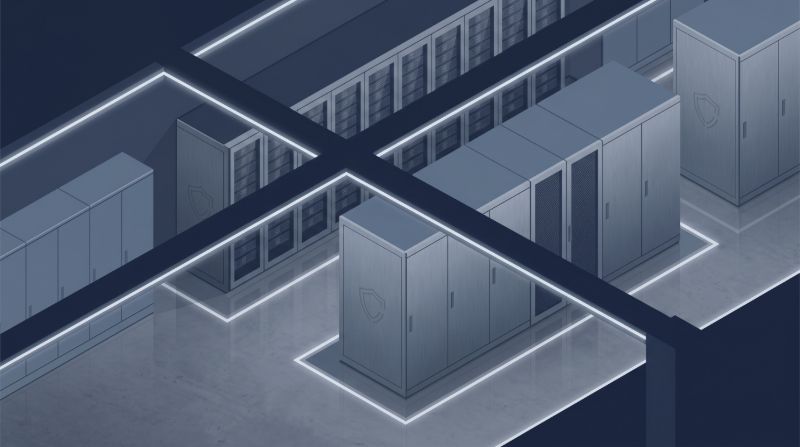
Teams that run proprietary algorithms, licensed models, or sensitive inference logic on shared GPU cloud face a specific risk: their code could leak to other tenants through residual memory, shared caches, or compromised platform components. Confidential code execution addresses this by creating a boundary around the code that no shared component can penetrate.
Why Code Confidentiality Differs From Data Confidentiality
Data confidentiality protects information at rest and in transit. Code confidentiality protects logic, which is harder, because code must execute, and execution creates intermediate states in memory, caches, and logs. A leak of code is not just a data breach; it is an intellectual property loss that can hand a competitor the algorithm itself.
This distinction matters because standard data encryption does not fully protect executing code. Encrypted data at rest becomes plaintext in GPU memory during execution, where a shared component could observe it. Confidential code execution extends protection into the execution environment, so the code stays protected even while running.
The Three Layers of Confidential Code Protection
Confidential code execution on GPU cloud rests on three protective layers. Each addresses a different path through which code could leak, and together they form a boundary that shared infrastructure cannot replicate.
1. Isolated Execution Environment
The code runs in an environment isolated from other tenants at the hardware level. This means dedicated GPU capacity where no other workload shares the accelerator, memory, or local storage. Isolation removes the residual-data path through which another tenant's workload could observe code left in memory.
2. Protected Memory and Intermediate State
During execution, the code's intermediate states — partial results, model weights, activation values — must be protected from observation. In a confidential setup, these states stay inside the isolated boundary and are cleared when the job completes, so no trace persists for a subsequent workload to find.
3. Secured Data Path
The data the code processes, and the outputs it produces, must travel paths that stay inside the protected boundary. Inputs enter the isolated environment, processing occurs, and outputs leave, without traversing shared networks or control planes where they could be observed. A secured data path closes the network-level leak route.
Confidential vs Standard Code Execution
The table contrasts confidential code execution with standard cloud execution on the dimensions that matter for proprietary logic. The confidential model trades some flexibility for protection that shared execution cannot provide.
| Dimension | Standard Execution | Confidential Execution |
|---|---|---|
| Hardware sharing | Shared with other tenants | Dedicated, isolated |
| Memory protection | Configured, may leak | Isolated, cleared after job |
| Data path | May traverse shared network | Stays in protected boundary |
| Code leak risk | Present via residual data | Removed structurally |
| Best fit | Non-sensitive code | Proprietary, licensed logic |
What Confidential Code Execution Requires From a GPU Cloud
Because confidential is a marketable label, teams must verify the protection is real. The requirements below define what a provider must deliver to support confidential code execution genuinely.
| Requirement | What to Verify |
|---|---|
| Isolated hardware | GPUs reserved for us, with wipe procedure |
| Memory clearing | Local memory and scratch cleared after job |
| Secured data path | Network stays inside the boundary |
| No shared components | No shared caches or control planes |
| Audit trail | Access to the environment logged |
When Confidential Code Execution Matters
Not all code needs confidential execution, but specific situations make it essential. The decision hinges on what is at stake if the code leaks.
Proprietary algorithms that represent a competitive edge need confidential execution, because a leak hands the logic to competitors. Licensed models or code with contractual restrictions need it, because a leak can trigger licensing violations. Sensitive inference logic for high-stakes domains like security or finance needs it, because the logic itself is the asset. For commodity code with no protection needs, standard execution suffices, but the choice should be conscious.
The Cost of Code Leakage
Choosing standard execution for proprietary code when confidential is warranted carries costs that surface only after a leak. Understanding these clarifies why the protection decision matters.
Competitive Loss
A leaked proprietary algorithm can hand competitors the logic that took years to develop. The cost is not just the development effort but the market position the algorithm represented. Confidential execution prevents the shared-infrastructure path that makes leakage possible.
Licensing Violations
Code with licensing restrictions that leaks through shared infrastructure can trigger contractual violations, with legal and financial consequences. Confidential execution keeps licensed code inside a boundary that prevents the exposure.
Reputational Damage
For teams in security-sensitive domains, a code leak undermines trust in their work. Clients and partners expect proprietary logic to stay protected, and a leak signals that the team cannot guarantee confidentiality. The reputational cost can exceed the direct IP loss.
How OneSource Cloud Supports Confidential Code Execution
OneSource Cloud's private AI infrastructure provides the dedicated, single-tenant GPU capacity where confidential code runs inside an isolated boundary, with local memory and scratch cleared between jobs. The model treats isolation, memory protection, and a secured data path as coordinated layers rather than separate features, with US-based data centers supporting fixed residency.
The managed AI infrastructure layer operates the isolated environment with monitoring that does not compromise the boundary, and the OnePlus Platform, OneSource Cloud's AI orchestration platform, governs access so only authorized teams reach the confidential environment. For teams running proprietary code on GPU cloud, the model is designed to keep the logic confidential by structural design rather than configuration.
FAQ
What is confidential code execution on GPU cloud?
Running proprietary logic in an isolated boundary where it cannot be observed, extracted, or influenced by other tenants or shared infrastructure. The protection covers the code, the data it processes, and the intermediate results, extending through execution rather than just at rest.
How is code confidentiality different from data confidentiality?
Data confidentiality protects information at rest and in transit. Code confidentiality protects logic that must execute, creating intermediate states in memory and caches. Standard data encryption does not fully protect executing code, because encrypted data becomes plaintext in GPU memory during execution.
What does confidential code execution require from a GPU cloud?
Isolated hardware where GPUs are reserved for one tenant, memory and scratch clearing after each job, a secured data path that stays inside the boundary, no shared caches or control planes, and an audit trail of access. Each requirement closes a path through which code could leak.
When does confidential code execution matter?
When code is proprietary and represents a competitive edge, when it carries licensing restrictions, or when it is sensitive inference logic for high-stakes domains. For these situations, a leak is an IP loss, a licensing violation, or a reputational damage that justifies the isolated boundary.
Can shared GPU cloud support confidential code execution?
Only partially. Shared cloud can encrypt data and configure isolation, but the residual-data path in shared memory remains a leak risk that configuration cannot fully close. Confidential execution on dedicated hardware removes that path structurally, which is why it is stronger for proprietary code.
How do I verify a provider supports confidential code execution?
Confirm GPUs are reserved for you with a documented wipe procedure, that memory and scratch are cleared after each job, that the data path stays inside the boundary, that no shared caches or control planes touch the environment, and that access is logged. Verifiable answers across all five confirm the protection is real.
Summary
Confidential code execution on GPU cloud in 2025 protects proprietary logic through three layers: an isolated execution environment, protected memory and intermediate state, and a secured data path. The protection differs from data confidentiality because code must execute, creating intermediate states that encryption alone cannot shield. For proprietary algorithms, licensed models, and sensitive inference logic, the structural isolation of confidential execution prevents the leaks that shared infrastructure cannot fully rule out, making it the right choice when the code is the asset.
Related Articles
Recommended Reading
-
Google Cloud GPU Pricing: What Enterprise AI Teams Should Evaluate Before Provisioning
-
Paperspace Pricing 2026: GPU Cost Breakdown
-
CoreWeave Enterprise GPU Cloud: Evaluation for AI Teams
-
AI Infrastructure Costs: Controlling Enterprise GPU Spending
-
CoreWeave vs Lambda Labs: GPU Cloud Provider Comparison
latest articles
-
Open-Source LLM Deployment: Requirements and Real Cost Breakdown
-
AI Search Assistants Under Data Residency: Architectures and Evidence
-
LLM Inference GPUs Compared: A100, H100, H200, or B200 for Production
-
LLM Deployment Best Practices: An Enterprise Stage-by-Stage Checklist
-
HIPAA Patient Scheduling AI: Controls, Consent, and Evidence
-
Cloud-Agnostic LLM Deployment: Architecture Principles Against Lock-In
-
HIPAA-Compliant AI Tools for Healthcare: Categories and Evaluation
-
Batch vs Real-Time LLM Inference: Cost, Latency, and Fit
-
Model Deployment Strategies Compared: Canary, Blue-Green, Shadow, Rolling
-
GPU Rental vs Owning: Cost, Commitment, and When to Buy